If you’ve been around digital marketing circles for a bit, you’ve probably heard people talk about content strategy using stages like TOFU, MOFU, and BOFU. At first, it sounds like someone’s talking about food.
But these stages are actually a key part of content marketing strategy and understanding it can make or break how well your blog or business converts visitors into loyal customers.
Let me break this down in the simplest way possible. I’m going to walk you through each stage step-by-step, using relatable examples (because no one likes marketing mumbo-jumbo), and by the end, you’ll know exactly what kind of content to create, when to share it, and how it helps your bottom line.
What Is a Marketing Funnel?
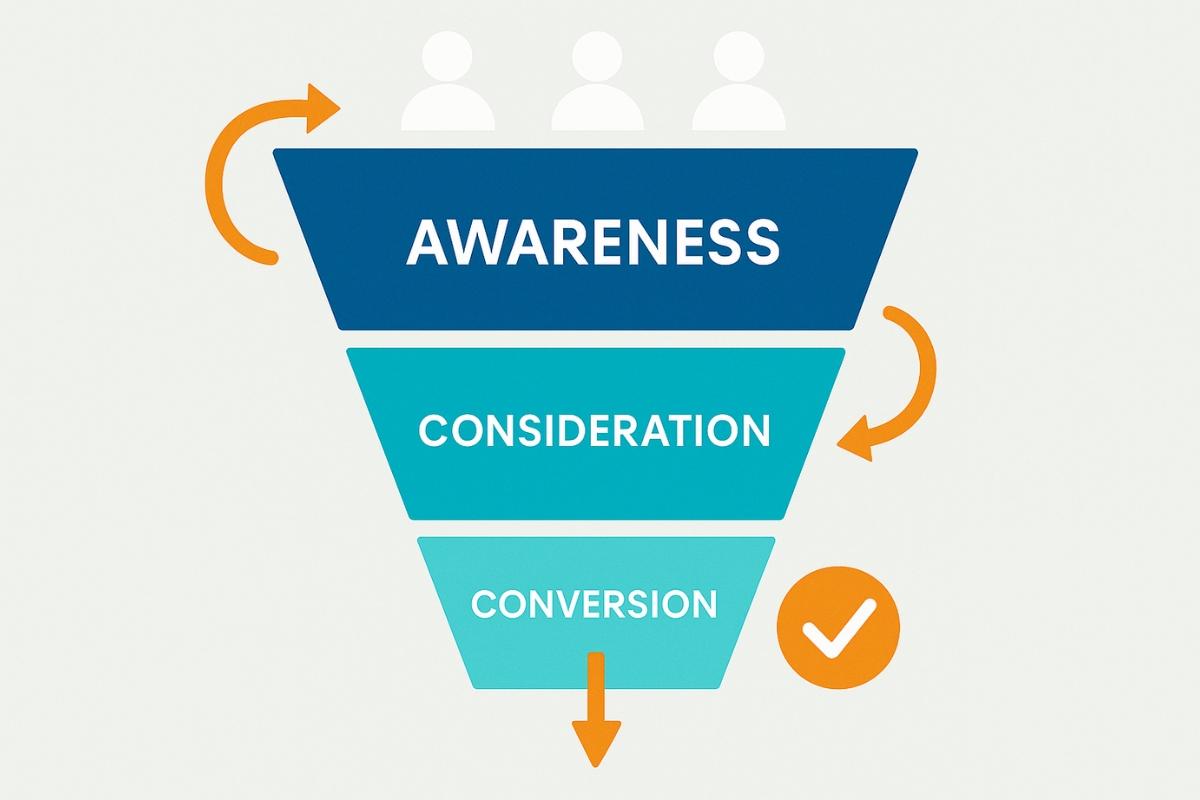
Think of a content funnel as your customer’s journey from “Who are you?” to “Take my money.” It starts wide, lots of people casually discovering your content, and narrows as only the most interested move forward to learn more and eventually make a decision.
The funnel has 3 main stages:
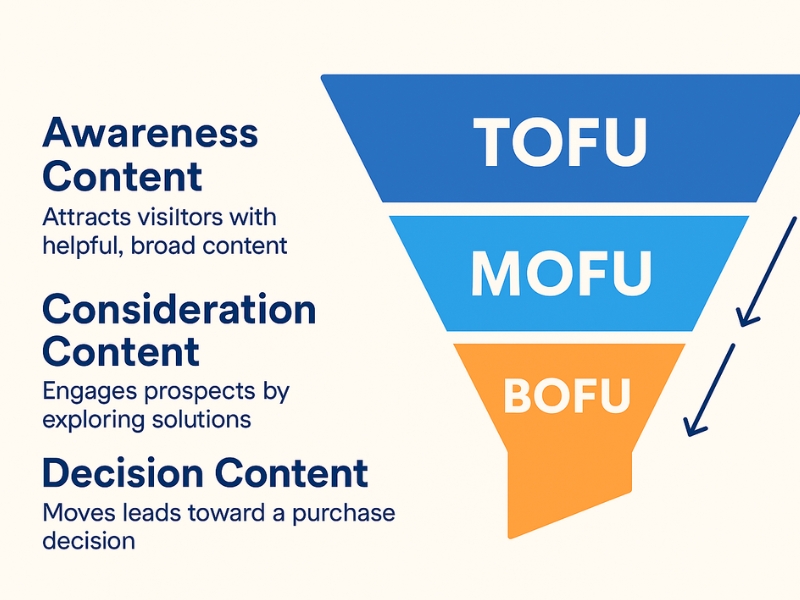
- Awareness → Top of funnel (TOFU) content: for first impressions and problem discovery
- Interest → Middle of funnel (MOFU) content: for exploring options and building trust
- Consideration → Bottom of funnel (BOFU) content: Making a decision and taking action
Each stage meets your audience where they are and nudges them forward, one piece of content at a time.
Awareness Stage: First Impressions That Attract
What it is:
This is your first impression, the handshake moment. People at this stage aren’t ready to buy – they’re just looking for answers or inspiration. Maybe they don’t even know what exact problem they’re trying to solve yet. Your goal is to show up helpfully, without asking for anything in return.
Think of it like this:
You’re meeting someone at a party. You wouldn’t pitch them a product out of the blue. You’d make small talk, share something useful, and ease into a connection.
Awareness Content Examples:

- Blog posts like “How to Train a Puppy Without Going Crazy”
- YouTube videos or TikToks answering common questions
- Infographics that simplify big ideas
- Free checklists or mini-guides
- Educational SEO-optimized articles
Where this content lives:
Search engines, Pinterest, Instagram Reels, YouTube – anywhere your audience might casually be browsing or researching.
Goal: Stand out as a helpful voice they want to return to – no pitch needed, just presence.
Interest Stage: Helping People Explore Their Options
What it is:
Now that they’ve seen your content and know who you are, they’re weighing their options. Interest content helps them explore solutions and decide if you’re the right one to guide them.
Real-life example:
You’ve been messaging someone you met at a party. Now you’re meeting up for coffee. You’re asking more meaningful questions – seeing if there’s something real there.
Interest Content Examples:
- Case studies that show real results
- Product or service comparisons
- Step-by-step tutorials or how-to articles
- Webinars, recorded trainings, or email courses
- Quizzes to help them discover their needs
- Lead magnets like downloadable templates or mini-guides
Where this content lives:
Your website, email sequences, webinar platforms, or gated resources. It’s more intentional and often requires the user to opt-in.
Goal: Help them feel seen, informed, and supported as they explore their options.
Consideration Stage: The Final Push Toward Action
What it is:
This is where trust has been built. The reader knows their problem, they know you offer a solution – now they just need a reason to act. Consideration content gives that final push.
Real-life example:
You’ve gone on a few great dates. The connection is there. Now it’s time to ask: “Are we doing this?”
Consideration Content Examples:

- Product demos or walkthroughs
- Customer reviews and video testimonials
- Limited-time offers, bonuses, or discounts
- Free trials or consultations
- Live chats or personalized sales calls
Where this content lives:
Sales pages, landing pages, email offers, cart abandonment flows, chat support — it’s all about helping them commit with confidence.
Goal: Turn trust into action with simple, confidence-boosting steps that make saying yes easy.
How to Build Your Funnel With Content
Creating a content funnel doesn’t have to be overwhelming. You don’t need hundreds of blog posts or a massive ad budget – just a clear plan that matches your content to where your audience is in their journey.
Here’s a simple way to start:
- Start with Awareness
Create content that answers the questions your ideal audience is already searching for. Think “how to,” “why does,” or “beginner tips.” This is your way of showing up in their world without being salesy.
Example: A blog post titled “Why Your Dog Keeps Barking at Night” naturally attracts curious pet owners. - Move to Interest
Once people land on your content and like what they see, invite them to go deeper. This could be a free downloadable, a helpful email series, or a quiz that gets them more engaged. This builds connection — and gives you a chance to keep the conversation going.
Example: A free guide on “5 Training Methods That Actually Work,” offered at the end of the barking blog. - Finish with Consideration
Once your audience feels like you “get” them, make it easy for them to take action. Whether that’s booking a call, trying your product, or signing up for a service, Consideration content helps turn interest into trust — and trust into a yes.
Example: A short video testimonial from a dog owner who fixed the barking issue with your course or service.
Think of your funnel like building a relationship – one meaningful interaction at a time. Every piece of content should move people from awareness to trust, and then to action.
Reminder: Each stage supports the next. Your Awareness content attracts, Interest nurtures, and Consideration converts — it’s all connected.
Funnel Content Ideas by Stage
Need help figuring out what to write or create? Below are ready-to-use examples tailored for each funnel stage — just plug them into your content calendar and go.
Awareness Content Ideas (Attract)
These are light, helpful, and often shared. The goal is to spark curiosity.
- “10 Ways to Start a Garden on a Budget”
- “Why Your Dog Keeps Barking at Night”
- “Beginner’s Guide to Freelance Writing”
- “5 Easy Dinner Ideas When You’re Too Tired to Cook”
- “How to Build a Morning Routine That Actually Sticks”
- Infographics: “What Your Dog’s Body Language Really Means”
- Reels: Quick before-and-after tips or mini tutorials
- Educational blog posts that answer specific questions
Interest Content Ideas (Guide)
This content helps people evaluate their options. It should educate and guide, but still feel personal and non-pushy.
- “Our Top 3 Organic Fertilizers Compared”
- “How One Family Reduced Barking With This Method”
- “Quiz: What Type of Writer Are You?”
- Case study: “How We Helped a Local Garden Double Its Yield”
- Webinar: “The 30-Minute Daily Dog Training Routine”
- Checklist: “What to Look for in a Freelance Contract”
- Email series: “3 Days to Better Sleep — Naturally”
Consideration Content Ideas (Convert)
Now it’s time to build confidence. Show proof, offer incentives, and make action easy.
- “Try Our Soil Booster With a 7-Day Free Trial”
- “Watch How This Trainer Helped a Rescue Pup in 10 Days”
- “Join Our Writing Bootcamp — Spots Are Limited!”
- “See Why 500+ Freelancers Trust Our Contract Template”
- Product demo video: Step-by-step setup walkthrough
- Testimonials: Short clips or written reviews with results
- Offer emails: “Get 15% Off — Today Only” with clear CTA
The Takeaway: Content With Purpose
Awareness, Interest, and Consideration aren’t just marketing buzzwords – they’re a simple way to create content that respects where your audience is in their journey. Too many businesses skip straight to the sale, but people need time to trust you.
When you understand what your audience needs at each step, it becomes easier to show up with the right message at the right time – without overwhelm. You don’t have to create everything all at once. Even a few well-placed pieces at each stage can build momentum.
Focus on clarity, consistency, and being genuinely helpful – the results tend to follow. No pressure to perfect it – just keep moving forward, one helpful post at a time.
Frequently Asked Questions
Yes, a single post can touch on both stages if it attracts new readers while also offering deeper insights or lead magnets for engaged users.
Not at all — while it helps with search traffic, Awareness content also builds brand visibility across social media, YouTube, and other platforms.
Track Awareness with traffic, Interest with email signups or engagement, and Consideration with conversions like purchases or demo requests.
Yes, even simple versions help guide readers from discovering you to trusting and buying from you over time.
Jumping straight to Consideration (selling) without building trust through Awareness and Interest content can turn potential readers away.
Nope — solopreneurs, creators, and small businesses can all use the Awareness–Interest–Consideration strategy to grow sustainably.