
Local SEO in 2026 is less about gaming algorithms and more about clarity, consistency, and real-world relevance.
Business owners no longer need to chase every new tactic. The focus has shifted toward prioritizing actions that directly influence rankings and local leads.
This guide breaks down what truly matters for local SEO in 2026, focusing only on actions that directly impact visibility, trust, and local leads. Each section focuses on practical actions that can be applied immediately.
Many local SEO principles remain the same, but their priority and execution have changed in 2026.
Key Takeaways
- Google Business Profile remains the strongest driver of local visibility
- Consistent business information matters more than volume of listings
- Customer-focused local content outperforms keyword targeting alone
- Reviews influence trust and conversions, not just rankings
- Outdated local SEO tactics are no longer worth the effort
Table of Contents
- How Local SEO Works in 2026
- Google Business Profile Optimization
- NAP Consistency and Local Listings
- Local Content That Actually Ranks
- Reviews and Reputation Signals
- On-Page Local SEO Basics
- What to Ignore in Local SEO in 2026
- Tracking Results Without Overthinking
- What to Focus on for Local SEO Moving Forward
- Frequently Asked Questions
How Local SEO Works in 2026

Local SEO is no longer driven by keyword density or mass directory submissions, but by how local search actually works for service-based businesses.
Search engines now prioritize three core signals that continue to shape what actually moves the needle in local rankings.
- Business relevance to the search
- Trust signals from real users
- Accuracy and consistency across platforms
Local results are influenced heavily by proximity, intent, and business legitimacy, including platform-specific ranking factors (like Yelp’s).
This means small businesses can compete without massive budgets, as long as the basics are handled correctly.
Google Business Profile Optimization
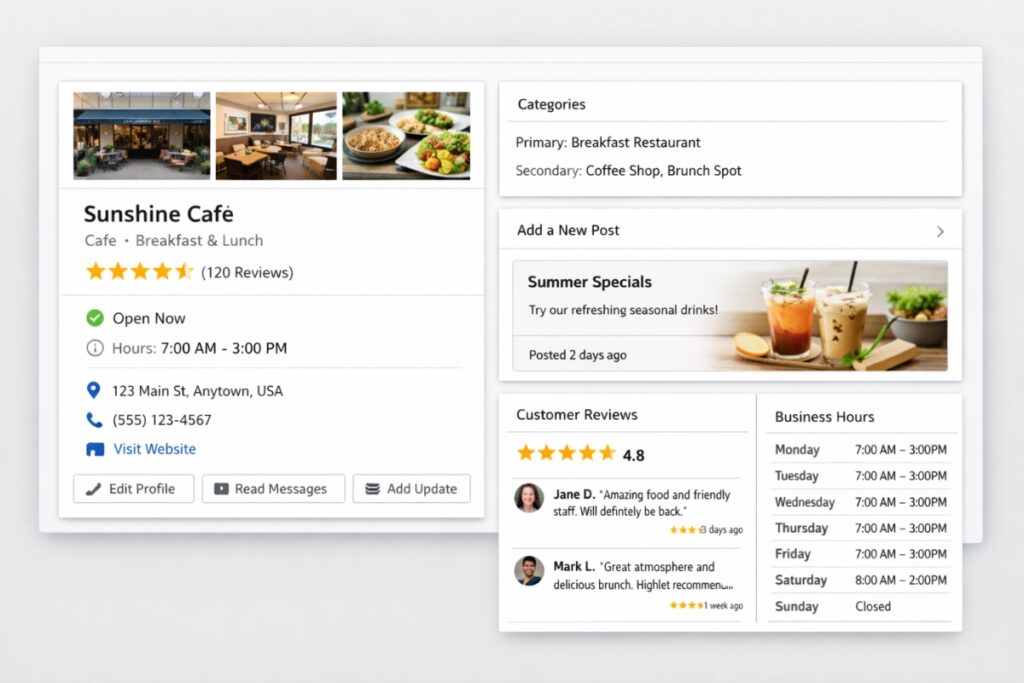
Google Business Profile remains the strongest local ranking signal in 2026, especially when properly set up and optimized from the start.
Most underperforming profiles fail because they are incomplete or inactive, or because profile issues go unresolved.
Step 1: Choose the Right Primary Category
Category selection directly affects rankings.
The primary category should reflect the main service, not everything the business offers.
Common mistakes include:
- Choosing a category that sounds broad but is inaccurate
- Changing categories too often
- Adding unnecessary secondary categories
Accuracy builds stronger trust signals than broad but unfocused coverage.
Step 2: Write a Clear Business Description
The description should explain what the business does, who it serves, and where.
Focus on:
- Services offered
- Target customers
- Service area
Avoid keyword stuffing. Natural language performs better.
Step 3: Understand Service-Area vs Location Businesses
Businesses that visit customers operate differently than storefronts.
Service-area businesses should:
- Hide the physical address if customers do not visit
- Clearly define service areas
- Avoid listing multiple addresses unnecessarily
This reduces confusion and improves trust signals.
Step 4: Use Photos That Build Trust
Photo quality influences engagement.
High-performing profiles include:
- Clear exterior photos
- Interior or workspace images
- Team or process photos
- Updated visuals every few months
Quantity helps, but relevance matters more.
Step 5: Post Updates With Purpose
Posting daily is not required.
One helpful post per week is enough.
Effective post ideas include:
- Service explanations
- Seasonal reminders
- Short FAQs
- Customer education tips
This signals activity without adding workload, while supporting stronger engagement signals that improve local visibility.
Step 6: Keep Business Hours Accurate
Accurate business hours reduce customer frustration and improve trust signals. Incorrect hours often lead to missed calls, poor engagement, and lower profile performance.
NAP Consistency and Local Listings
NAP stands for Name, Address, and Phone number, and plays a key role in achieving consistent local rankings.
Inconsistent information confuses search engines and customers, especially when duplicate listings are left unmanaged.
Step 1: Audit Existing Listings
Search the business name and phone number online.
Look for:
- Old addresses
- Duplicate listings
- Misspelled business names
Fixing errors often leads to quick ranking improvements, especially when business listings are properly optimized.
Step 2: Focus on Quality Listings
It is no longer necessary to be listed everywhere, only on platforms that make sense for the business and location.
Prioritize:
- Google Business Profile
- Major directories relevant to the industry
- Local or regional directories
- Trusted platforms customers actually use, including well-known local directory services
Consistent and accurate information prevents confusion for both search engines and customers.
Local Content That Actually Ranks
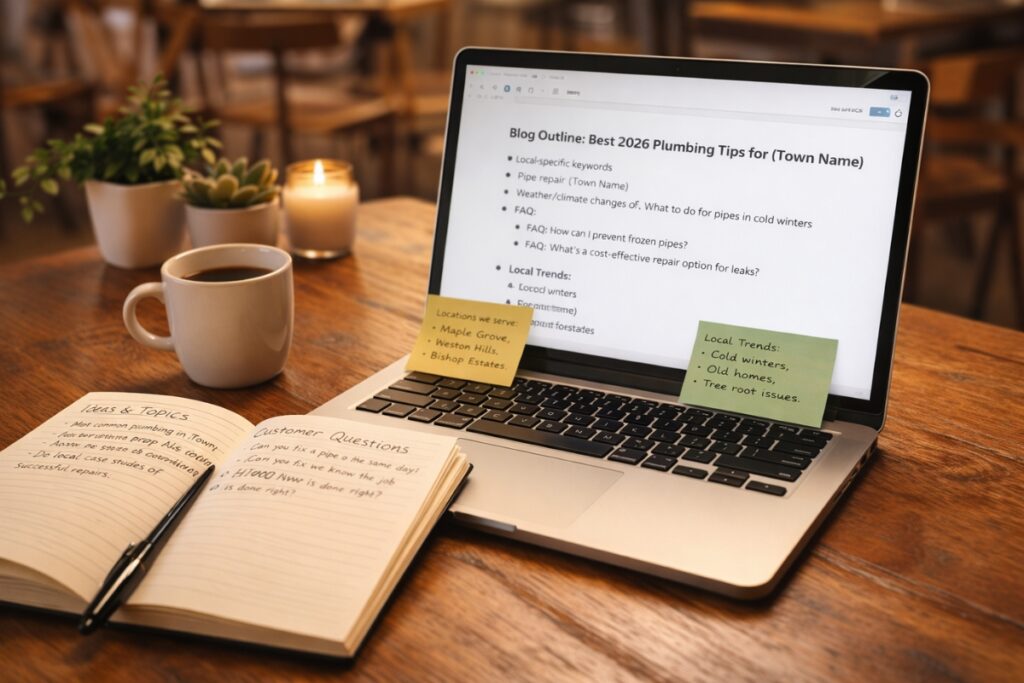
Local content in 2026 is about usefulness, not volume.
Search engines want proof that a business understands its local audience and services real people in specific places. Thin content that only swaps city names no longer works.
Step 1: Focus on Real Local Questions
The strongest local content answers questions customers already ask.
Examples include:
- How much a service typically costs in the area
- What affects pricing locally
- Common problems customers face in that city
- What to expect before booking a service
These topics build trust and relevance at the same time.
Keyword research is a great place to start if you aren’t sure what your customer are searching for in your area.
Step 2: Create Fewer, Better Pages
More pages do not equal better rankings.
A small number of well-written pages that clearly explain services, locations, and expectations performs better than dozens of low-quality posts.
Focus on:
- One strong page per main service
- Supporting blog content that answers related questions
- Clear internal links between pages
This helps search engines understand topical authority.
Google Keyword Planner can be very helpful in finding good keywords to use are you’re putting your content pages together.
Step 3: Make Content Location-Aware Without Overdoing It
Local relevance is more than adding a city name.
Good local signals include:
- Mentioning service areas naturally
- Referencing local conditions or regulations
- Using real examples that apply to the area
Avoid repeating the city name unnaturally. Clarity matters more than repetition.
Step 4: Keep Content Easy to Scan
Business owners often underestimate how important formatting is.
Use:
- Short paragraphs
- Clear subheadings
- Bullet points where helpful
This improves engagement, dwell time, and mobile usability.
Dwell time is how long your customer stays on your webpage. If they get onto your services page and spend 3 minutes browsing that sends a positive signal to search engines that your content is valuable.
Step 5: Use Content to Support Long-Term Growth
Local SEO benefits most from content that compounds steadily over time.
A simple blog published consistently helps:
- Support Google Business Profile visibility
- Answer future customer questions
- Build trust before contact
Publishing even one helpful post per month is enough to support long-term local visibility.
Reviews and Reputation Signals
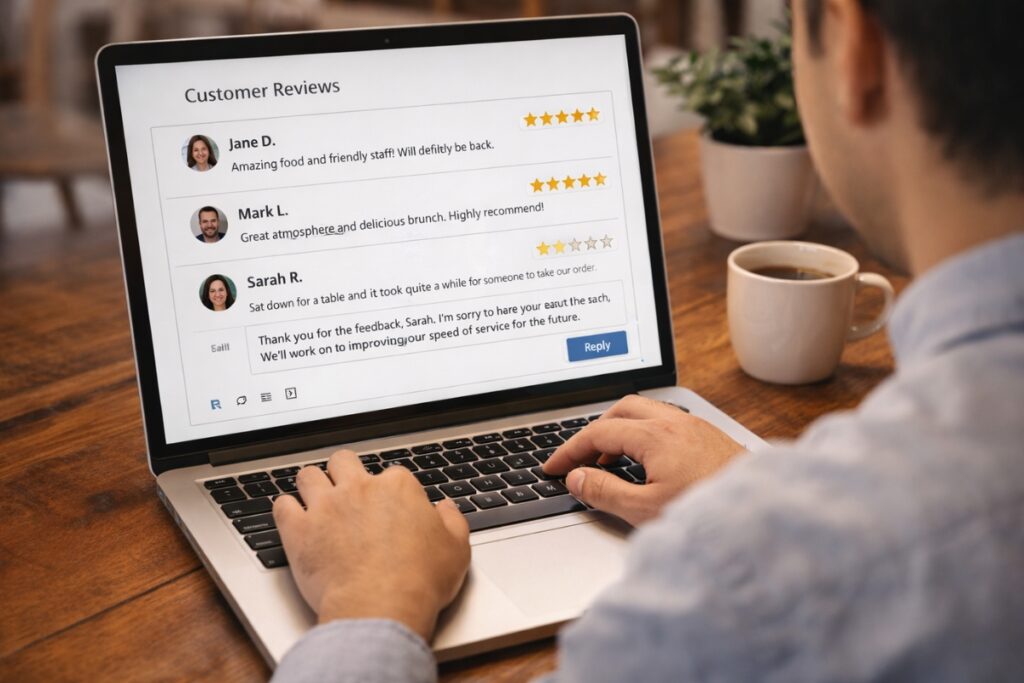
Reviews influence rankings, clicks, and decisions.
In 2026, consistency and recency matter more than total review count.
Google reviews have the strongest impact, while industry-specific platforms help reinforce credibility.
Step 1: Prioritize Review Freshness
New reviews signal active engagement.
A steady flow of recent reviews is stronger than a large number of old ones.
Even one or two reviews per month can make a difference.
Step 2: Respond to Reviews Strategically
Responses show professionalism and care.
Best practices include:
- Thanking positive reviewers briefly
- Addressing negative feedback calmly
- Avoiding defensive language
This improves trust for both users and search engines.
Step 3: Handle Negative Reviews Correctly
Negative reviews are not always harmful.
How they are handled matters more than their presence.
Strong responses:
- Acknowledge the issue
- Offer to resolve it offline
- Stay professional
This often increases trust instead of reducing it.
There is one exception to this rule: If you suspect that you’re being targeted by a malicious person intentionally leaving bad reviews to damage business reputation, don’t respond to those immediately.
It’s best to report those reviews to Google immediately as sometimes replying to them makes it more difficult to get them removed in the long run.
Step 4: Watch for Unnatural Review Patterns
Sudden spikes in reviews can look suspicious.
Avoid:
- Bulk review requests
- Incentivized reviews
- Copy-paste review language
Natural growth is safer and more sustainable.
On-Page Local SEO Basics
On-page SEO still supports local rankings when done correctly.
Step 1: Optimize Page Titles and Headings
Include location context naturally.
Examples:
- Service + city
- Business type + service area
Avoid repeating the same phrase across every page.
Step 2: Add Clear Contact Information
Contact details should be easy to find.
Include:
- Business name
- Address or service area
- Phone number
- Contact form
Consistency with Google Business Profile is essential.
Step 3: Use Schema When Possible
Local business schema helps search engines understand business details.
Many website platforms now offer built-in options.
What to Ignore in Local SEO in 2026
Not every tactic is worth the time.
These are commonly overused but low-impact.
Keyword Stuffing
Repeating keywords does not improve rankings.
It often hurts readability and trust.
Mass Directory Submissions
Hundreds of low-quality listings often create more risk than value. Accurate and relevant listings are safer and more effective.
Fake Reviews or Engagement
Artificial signals are easier to detect.
They can lead to profile suspensions or ranking drops.
Obsessing Over Rankings Alone
Traffic quality and conversions matter more than position numbers.
Tracking Results Without Overthinking
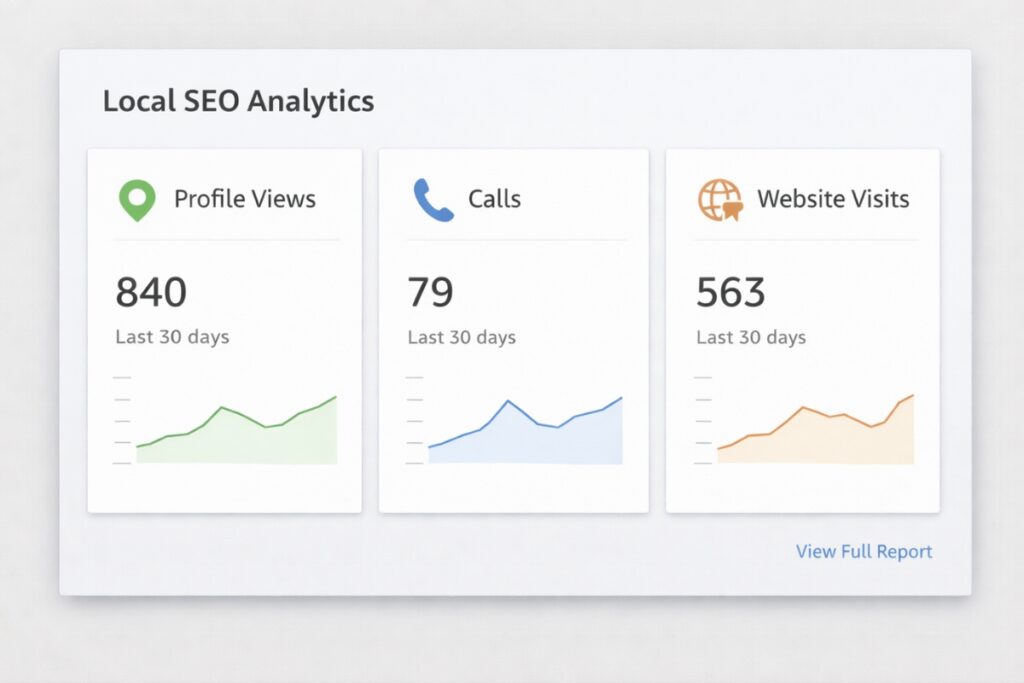
Local SEO tracking should stay simple.
Focus on trends, not daily fluctuations.
What to Monitor
- Profile views and actions
- Calls and direction requests
- Website traffic from local search
- Review growth
Avoid checking rankings every day.
Monthly reviews provide better insight.
Automation tools can help organize data, but clarity matters more than dashboards.
What to Focus on for Local SEO Moving Forward
Local SEO in 2026 rewards businesses that prioritize accuracy, relevance, and trust.
There is no need to chase every new tactic or tool to stay competitive locally.
Strong fundamentals outperform shortcuts.
For business owners building long-term visibility, pairing local SEO with educational content creates compounding results. A basic blog and structured systems can support growth without adding complexity.
The focus remains simple: be clear, be consistent, and be genuinely helpful.
Frequently Asked Questions
Yes. Local SEO remains one of the most effective ways for businesses to show up in location-based searches. Google still prioritizes relevance, proximity, and trust signals when ranking local results.
Google Business Profile is one of the strongest factors influencing local rankings. An accurate, complete, and active profile has more impact than most other local SEO efforts combined.
Initial improvements can appear within 30 to 90 days after fixing core issues. Long-term visibility builds as reviews, content, and engagement grow consistently.
Yes. While Google Business Profile drives visibility, a website supports credibility, service details, and long-term rankings. Both work best when used together.
There is no fixed number. Consistent, recent reviews matter more than volume. Businesses that respond to reviews and receive steady feedback tend to perform better.
Trying to use outdated tactics or doing too much at once. Focusing on a few high-impact actions delivers better results than chasing every new trend.