Local businesses often post content online but still struggle to convert that activity into real conversations, inquiries and booked appointments. The problem usually is not the business, the quality of the service, or even the consistency.
Many local businesses assume that posting regularly is enough. But with so many posts competing for attention, people scroll past without truly understanding what the business offers or why it matters. Posting alone isn’t the issue, what’s missing is a clear path that helps potential customers recognize the value of the service and feel comfortable taking the next step.
The main issue is that the content does not guide people from simply noticing the business to actually trusting it enough to reach out. A strong local business content strategy should move a potential customer from awareness to interest and eventually to booking.
This article breaks down how to create content that is simple to manage, easy to plan and actually leads to appointments instead of just likes. The goal is clarity and action, not complicated marketing theory.
Why Content Matters for Local Businesses
People often assume that customers book appointments because they saw a post or an ad. In reality, a person goes through a short but meaningful journey.
Most local customers take a moment before deciding to book. They look for clues that the business is genuine, steady and dependable. Even simple appointments require a sense of comfort and familiarity. Content helps create that sense of security by showing what the business is like and what people can expect before they reach out.
They see the business. Then they evaluate if it looks real. Then they check if the business seems trustworthy. Only after that do they consider reaching out.
Content is the way to support each stage of this journey. The local audience wants to see signs that the business is active, known in the area, respected by others and easy to talk to.
When people see this kind of steady activity, they feel more comfortable exploring the business further. It gives them a sense of what the experience might be like and shows that the business pays attention to its community. This small layer of reassurance often becomes the reason someone chooses to ask a question, send a message or check the available services.
Once this is established, appointments follow more naturally.
The Difference Between Views and Appointments
There is a big difference between content that gets likes and content that gets results. Content that gets likes is usually entertaining or visually pleasing, but it does not necessarily teach anything or build trust.
Many local businesses mistake high engagement for real interest, but these metrics rarely reflect intent. A video can go viral without bringing in a single inquiry because the audience may not be local, may not need the service or may simply enjoy the content without wanting to take the next step. This is why content must be created with the right viewers in mind, not just any viewers.
Content that leads to appointments shows expertise, solves small problems for the audience and demonstrates real experiences from real customers.
Likes mean attention. Bookings mean trust. The goal is to produce content that builds trust.
The Simple Content Ladder for Local Businesses
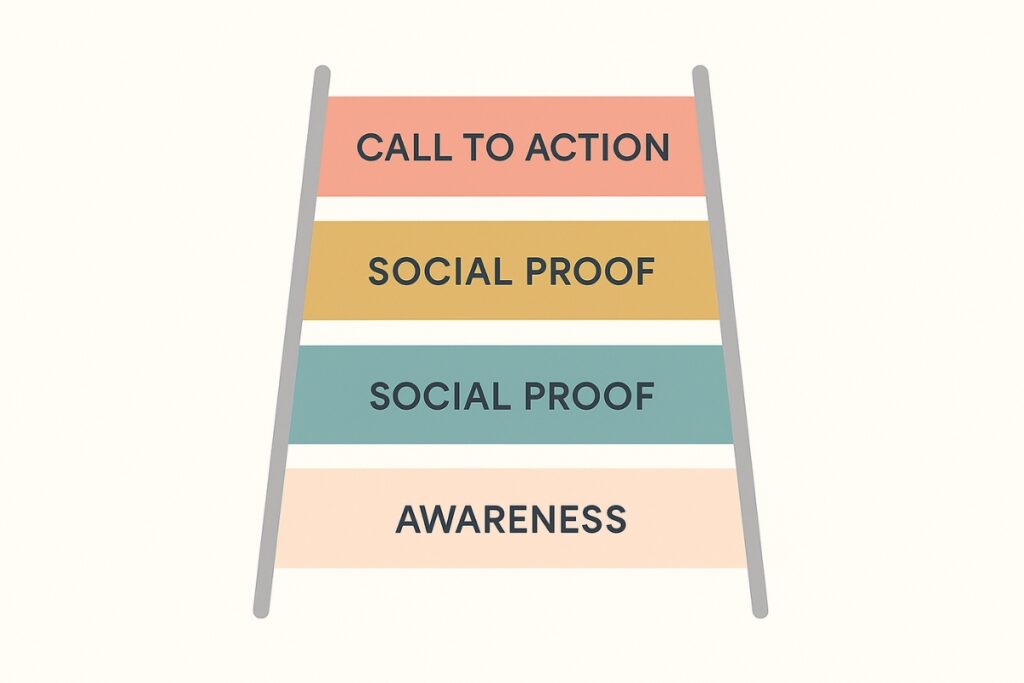
Local business content becomes easier when it is broken down into four clear stages. The audience moves through these stages as they learn more about the business.
- Awareness Content
- Education Content
- Social Proof Content
- Offer and Appointment Content
Think of this as a ladder. Each type of content moves the audience one step closer to booking.
These next steps explain how to use each stage intentionally so your content guides people from simply noticing your business to actually taking action.
Step 1: Know the Local Audience
Local marketing is different from broad, national marketing. The audience is specific. They live in the same area or nearby. The business should speak in a way that feels familiar to them.
To define a local audience clearly, establish three things:
- What neighborhoods or nearby places the business serves.
- What common problems or needs people in those areas have.
- The phrases or words they use to describe those problems.
For example, a dental clinic should not just say “general dental services available.” Instead, use locally familiar phrases like “quick cavity check-ups near downtown” or “same-day cleaning appointments near the main market.”
This small shift helps the business feel close and relevant.
Step 2: Awareness Content (Get Seen Locally)

Awareness content works best when it feels connected to the community, similar to how local content marketing highlights shared places, routines and daily life familiar to the audience. The goal here is not to sell. The goal is to show presence.
Examples of awareness content:
- Short videos of daily operations
- Photos of the storefront, staff and work environment
- Content mentioning local landmarks or neighborhoods
- Posts supporting local events or community activities
When a business consistently appears in local feeds, it slowly becomes familiar. Familiarity reduces hesitation later on.
Awareness content answers the question: “Who is this and are they real?”
Step 3: Educational Content (Build Authority)
Educational content should help the audience understand something quickly and feel more confident making a decision. It does not need to reveal every detail or overwhelm them. The goal is to show competence in a simple, reassuring way.
A helpful approach is to focus on answering common questions that customers typically ask before booking. This shows the business understands the customer’s concerns and has handled these situations before.
Examples of effective educational posts:
- Dentist:
“How to tell if tooth sensitivity needs professional attention”
“What to expect during your first cleaning appointment” - Salon:
“How to maintain color-treated hair between appointments”
“Styles that work best for humid weather in the area” - Fitness Coach:
“3 exercises to help reduce back stiffness from office work”
“How to choose the right workout shoes for your foot type” - Home Services (electrician, plumber):
“Warning signs that a breaker panel needs inspection”
“When slow drains indicate a bigger problem”
Educational posts work because they answer questions the audience already has.
To make educational content easy to create, use this formula:
Question → Short Explanation → Simple Tip → Invite to Ask
Example:
“Wondering how often a pet should get grooming? Most dogs need grooming every 4 to 6 weeks to prevent matting and skin irritation. A quick brushing at home helps maintain the coat between visits. Want a personalized recommendation for your pup? Send us a message, we’re happy to help!”
This approach builds authority while keeping the tone helpful and clear.
Educational content builds confidence. Confidence is what makes a potential customer feel ready to book.
Step 4: Social Proof Content (Build Trust)

People trust what others already trust. Social proof can be strengthened by regularly sharing customer reviews, even short thank-you messages, since getting reviews consistently builds trust faster than one-time testimonials.
Types of social proof:
- Testimonials
- Before and after photos
- Screenshots of positive messages received from customers
- Group photos with happy clients
- Local review highlights
Make sure the social proof is easy to recognize as real and local. If possible, include photos or videos with familiar surroundings or local landmarks in the background. It signals that the business is part of the community.
Social proof content answers the question: “Do other people trust this business?”
Step 5: Offer and Call to Action Content (Convert to Appointments)
Once awareness, education and social proof are in place, it’s time to guide people toward booking. Many local businesses hesitate at this step because it can feel too direct.
This stage becomes easier when you treat the call to action as part of the customer service experience. Instead of viewing it as a push to sell, think of it as helping people understand their options. Most potential clients simply appreciate knowing what to do next and how to get started.
In reality, most customers are waiting to be told what to do next. A clear and friendly invitation makes the decision easier, not uncomfortable.
Offer and call to action content should be short, clear and easy to follow. It should show that booking is simple and does not require a long process.
Soft Call to Action Examples
Soft CTAs are helpful for people who are curious but not ready to commit:
- “Message to check availability”
- “Ask any question before scheduling”
- “Send a DM for a quick price guide”
- “Not sure which service you need? Reach out and describe your situation”
These create a safe space for conversation. A person may not be ready to book yet, but they may be ready to talk.
Direct Call to Action Examples
Direct CTAs are useful when the audience is already familiar and trusting, like:
- “Book your appointment using the link”
- “Now accepting bookings for this week”
- “Reserve your spot today”
- “Tap to schedule your visit”
These take interested viewers and move them into action.
The Balance Between Soft and Direct Invitations
Both types of CTAs are needed. Some viewers need reassurance. Others are ready now. Rotating between the two prevents the content from feeling repetitive.
A simple posting rhythm:
- Early in the week → Soft CTAs to start conversations.
- End of the week → Direct CTAs to lock in weekend or next-week schedules.
Addressing Hesitation Before It Stops the Booking
If your educational content is done well, you have already answered many of their service-related concerns. Now the goal is to remove any remaining questions about the booking process itself.
Here are the usual factors that delay a booking:
- Not knowing the price
- Not knowing the available time slots
- Not knowing how long the appointment will take
- Fear of making the wrong choice
Call to action posts can remove these barriers.
Examples:
- “Appointments take about 45 minutes on average”
- “Evening and weekend slots are available”
- “Pricing depends on the service and can be discussed in chat”
Handling hesitation directly increases confidence and shows that you’re a trustworthy business that offers straightforward pricing and appointment information.
Keep the Invitation Easy
Every CTA post should answer one simple question: What should someone do next?
The answer should never require multiple steps, separate websites or long explanations. A direct message, a click or a tap is enough.
The goal is to make booking feel natural and comfortable.
Step 6: Make Booking Easy
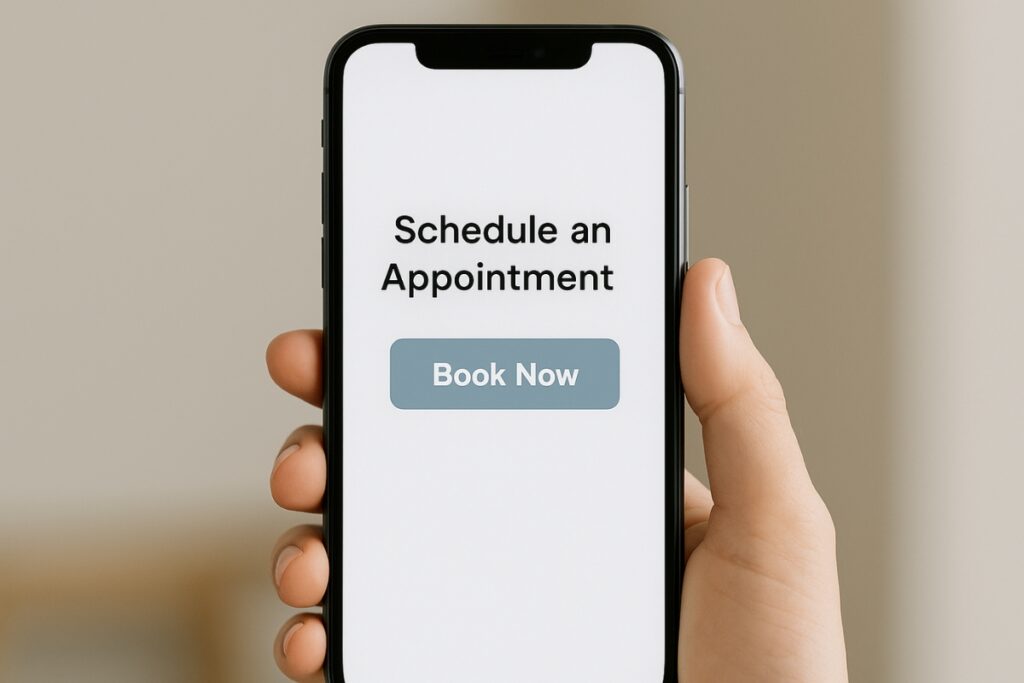
Even if someone is interested, they will not book if the process feels confusing or time-consuming. A clear and simple booking system encourages more appointments.
The business should have one primary booking method and feature it consistently. Avoid offering too many different options because this creates hesitation.
Clear booking systems also reduce second-guessing. When people understand exactly where to go and how to schedule, they move forward with more confidence and less hesitation. Keeping the process predictable helps more potential customers complete the booking instead of abandoning it midway.
One clear path is more effective than multiple choices.
Effective Booking Options:
- Clicking a booking link directly in social media profiles
- Sending a direct message to confirm a schedule
- Making the booking process visible on the Google Business Profile helps ensure people who discover the business locally can schedule without needing extra steps.
- Scanning a QR code posted on social media or in-store
Whichever method is chosen, it should take no more than a few steps.
Example of a Simple Booking Flow:
- Someone sees a call to action post.
- They click the link or send a message.
- They receive available dates and times.
- They confirm the slot.
- The appointment is booked.
Enhance Booking Confidence With an Auto-Reply Message
Set an automatic welcome message for direct messages to avoid delays and prevent people from losing interest.
Example:
“Thank you for reaching out. To help find an appointment, please share the preferred day or time and the service you’re interested in.”
This keeps the interaction moving without effort.
Tools like ManyChat and GHL can automate first replies, capture leads instantly and guide people toward booking even when the business is offline.
Make the Booking Link Easy to Find

The booking action should always be visible:
- In the bio of social media pages
- In pinned posts
- On the website homepage
- On the Google Business Profile
When booking feels easy, more people follow through. Interested individuals should not have to search, wait, or make a phone call. Clear access encourages commitment.
How Often to Post Each Type of Content
A simple weekly schedule functions like a basic content calendar, helping the business stay consistent without overthinking what to post each day.
Example weekly plan:
| Day | Content Type | Example |
| Monday | Educational Tip | “How to maintain results between sessions.” |
| Tuesday | Social Proof | Customer testimonial screenshot. |
| Wednesday | Awareness | Short video showing a normal day at the business. |
| Thursday | Call to Action | “Now booking appointments for next week.” |
| Friday | Local Connection | Feature a nearby store, event or location. |
Repeat weekly. Consistency creates compounding trust.
A simple schedule works because it removes decision fatigue. The goal is not perfection. The goal is to stay visible and familiar in the local community.
The Real Reason This Strategy Works
People rarely book immediately when they first see a business. They need to see proof of value, proof of trust and proof of reliability. This content structure moves them smoothly from curiosity to confidence.
Awareness makes them stop scrolling.
Education makes them respect the skill.
Social proof makes them trust the experience.
Call to action makes booking feel natural.
Consistent Content Creates Consistent Bookings
This approach works because it follows the way people naturally make decisions. It does not require complex marketing tactics or high-end production. It simply requires consistency and clarity.
When a business shares content that feels relatable, helpful and human, it becomes easier for the local audience to trust. Over time, this steady presence leads to more conversations, more inquiries and more booked appointments.
The goal is not to go viral. The goal is to become the familiar and trusted choice in your local community.
Frequently Asked Questions

Posting 3 to 5 times a week is enough when the content is consistent and follows the awareness to appointment structure. The goal is steady visibility, not constant posting.
Educational content and social proof content create the most impact. Educational posts show expertise. Social proof shows real results. These two together build trust, which leads to bookings.
No. Clear and natural content often performs better. Simple videos and photos that show real work, real people and real results feel more trustworthy than overly polished visuals.
Most businesses begin to see increased inquiries within 2 to 6 weeks when posting consistently. Trust builds gradually, then bookings increase as familiarity grows.
Start with educational content and behind-the-scenes posts. As new customers come in, ask for short reviews or simple feedback messages. Even a sentence or quick thank you can serve as early social proof.