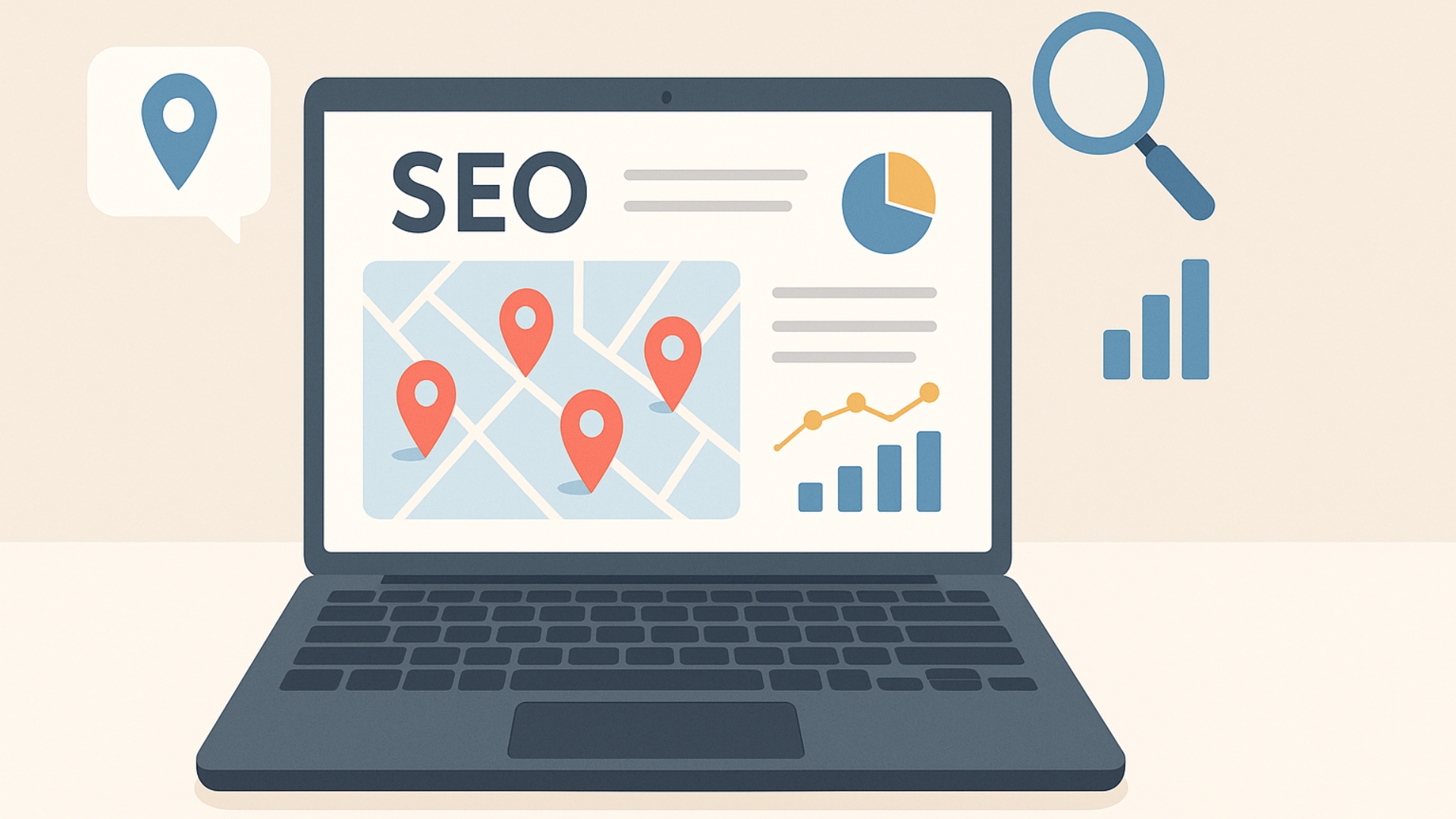
Creating content for a local business is more than just posting blogs or optimizing your Google Business Profile or managing your local listings.
It’s about knowing why you’re creating content, who it’s for, and how each piece fits into the bigger picture. That’s where content strategy comes in.
For local service providers trying to stand out in competitive search results, having a plan makes all the difference.
This guide breaks it down into simple, actionable steps, so even if you’re just getting started, you can build a strong content foundation that drives real results.
Why Content Strategy Matters for Local Businesses
Local service businesses often compete in a crowded online space, which makes understanding how local SEO works essential for standing out. You might be an electrician, plumber, law firm, or cleaning service, and your potential customers search for “service + location.”
Without a clear strategy, you may waste time on content that doesn’t help your business grow or rank.
A content strategy gives structure. It ensures your content speaks to local searchers, builds relevance, and supports your SEO goals (visibility, leads, trust).
Over time, every blog post, local directory listing, or FAQ page contributes to your overall “authority” in your service area.
What “Content” Means in Your Local SEO World
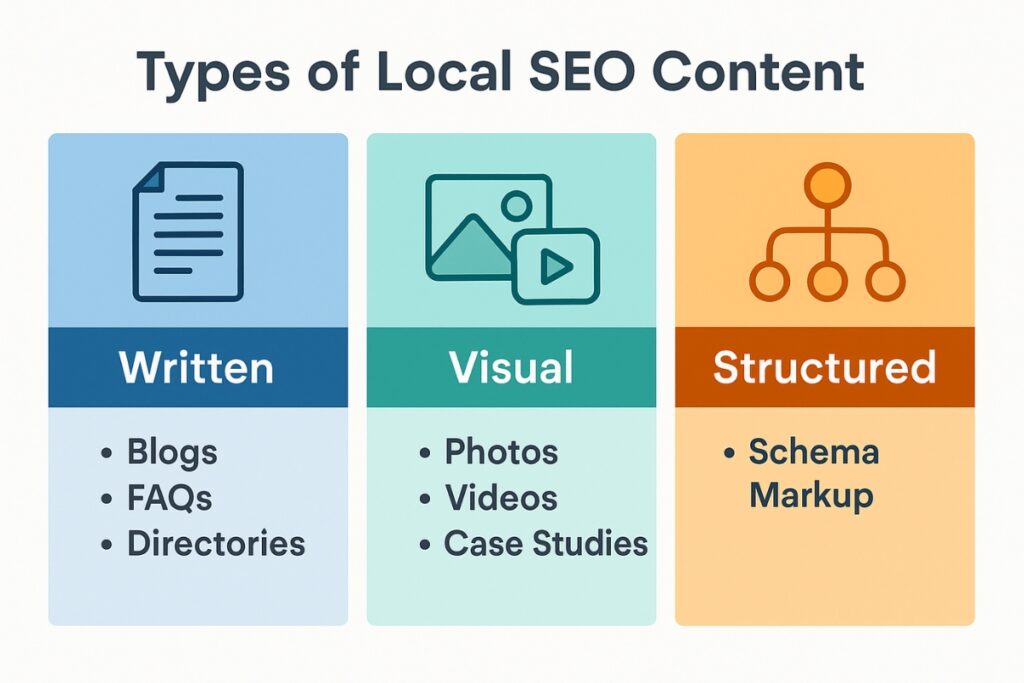
For your niche, content isn’t just blog posts. It includes:
Written content:
- Local blog articles
- Location pages
- FAQs
- Directory listings
Visual & multimedia content:
- Reviews, case studies
- Before & after photos
- Local videos
Structured data:
- Local business schema
Your content components should aim to answer the questions local customers ask.
Benefits of a Content Strategy for Local SEO
With a clear content strategy:
- Your content becomes more visible to people searching specifically in your service area
- You reduce duplication or random topics
- You build “local topical authority” so Google sees you as relevant to your area
- You can more easily track which content drives leads
- Over time, content compounds: older posts keep bringing visitors
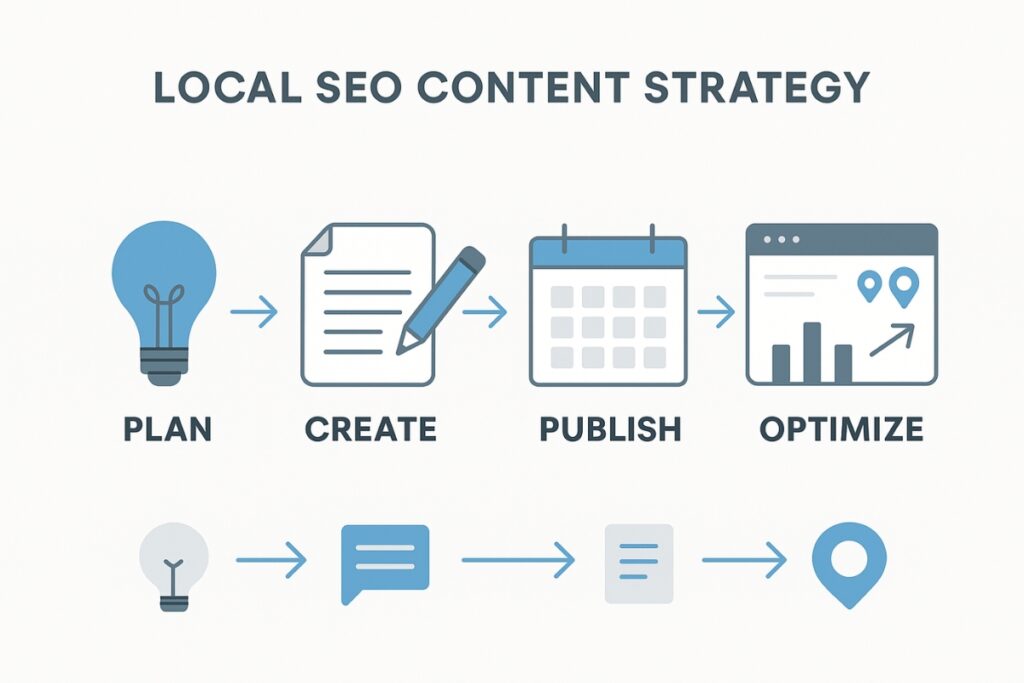
Step‑by‑Step: Build a Local SEO Content Strategy
Here’s your roadmap. Clear, actionable, no fluff.
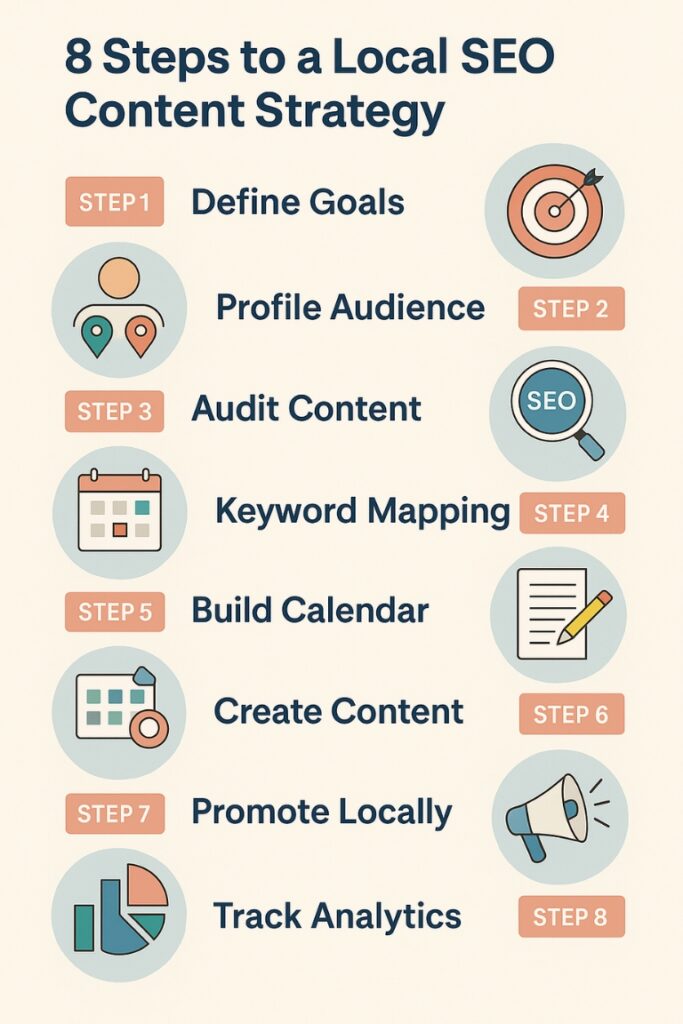
Step 1: Define One or Two Goals
Pick what you want content to do for your business, e.g.:
- Get more calls from people in your service area
- Get new leads via contact form (localized)
- Rank for local keywords (e.g. “service in [city/town]”)
Don’t chase too many goals at once. Focus on one then add additional goals once you’re comfortable with the results you’re getting.
Step 2: Profile Your Local Customer & Their Questions
To create content that ranks and converts, you need to understand your ideal local customer. Build a basic profile:
- Where do they live or work?
- What services are they searching for?
- What problems are they trying to solve?
Then, dig into the exact questions they ask using tools like:
- Google’s “People Also Ask”
- Search autocomplete suggestions
- Google Keyword Planner
- Conversations with past or current customers
Keyword tools like Google Keyword Planner can help identify what people search for in your area.
This step forms the base of your content. Every blog post, FAQ, or guide should aim to answer one of these real, local questions.
Step 3: Audit Any Existing Content / Directory Listings
If you already have a website with content or listings on local directory services, review how complete and accurate these are:
- List URLs, titles, performance
- Check which posts get traffic or calls
- Identify weak or outdated content (needs refresh or removal)
- Check directory listings: ensure your NAP (Name, Address, Phone) is consistent
This gives you a baseline: what to keep, update, drop.
Step 4: Topic & Keyword Mapping (Local Version)
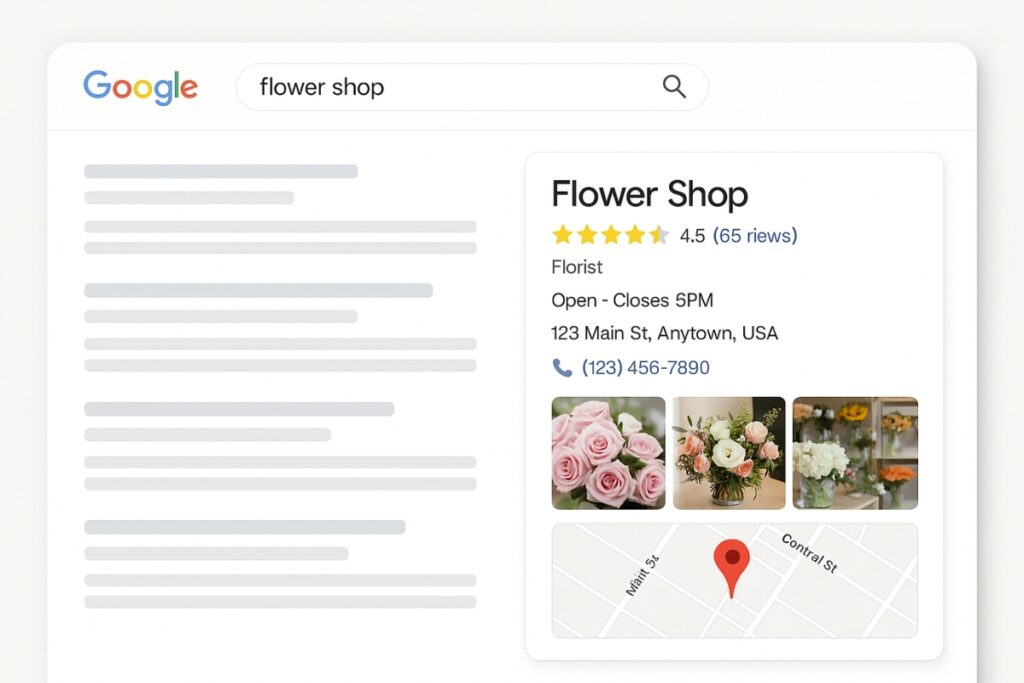
Now that you have a list of local questions and search terms, turn them into strategic content ideas. This step is about organizing and assigning formats, not repeating research.
Start by clustering related topics or questions under broader themes:
Theme: Google Business Profile
- Blog post: “How to Set Up and Optimize Your Google Business Profile”
- FAQ: “What to Do if My Business Profile Is Suspended?”
Theme: Reviews and Trust
- Blog: “How to Get Reviews for Your Local Business”
- Downloadable: Review Request Email Templates
Theme: Local Visibility
- Blog post: “NAP Consistency: Why It Matters for Local SEO”
- Infographic: Local Link Building Checklist
Choose the best content format for each topic:
- Blog post
- Case study
- Checklist
- FAQ page
- Location landing page
- Visual guide or infographic
This approach avoids duplicating efforts and helps you balance different content types that serve both search engines and local customers.
Step 5: Build a Content Calendar
Lay out when you’ll publish which post. For example:
| Week | Topic | Format | Channel (blog, directory, social) |
| Week 1 | How Local SEO Works | Blog post | Website & share on social |
| Week 2 | Google Business Profile Setup | Step guide | Blog + excerpt on directory site |
| Week 3 | Review Gathering Guide | Blog / checklist | Website + promote via email |
| … | … | … | … |
You can plan monthly or biweekly depending on your capacity.
If you want a faster start, follow a one-day framework to build your content marketing plan and set your publishing schedule.
Step 6: Produce & Optimize Content
When writing:
- Use your local keyword / phrase in title, headings, URL
- Keep paragraphs short
- Use headers (H2, H3)
- Link to your own local pages (e.g. your location page, service page)
- Include local mentions: landmarks, neighborhoods
- Use images with alt text referencing your area
- Use schema markup where possible (local business schema). You can improve click-throughs and visibility by adding local schema markup to your pages.
This helps search engines understand your content is local.
Link new posts to older related ones to strengthen SEO and help users discover more of your content.
Step 7: Distribute / Promote Locally
Creating content is just half. You must push it where local eyeballs are:
- Share on your Google Business Profile (Posts)
- Share on local Facebook groups / community pages
- Use local directory sites (if they allow content or updates). Consider link building through local partnerships, community sites, and niche directories to strengthen your authority.
- Ask partners (suppliers, local businesses) to share
- Email to your list
The more local signals and backlinks you get, the stronger your content.
Turn high-performing posts into short videos or carousel graphics for Facebook or Instagram, great for local engagement. Repurpose your best-performing content for community platforms like Nextdoor or Reddit to boost local engagement
Step 8: Monitor & Iterate
Decide on metrics (calls, form leads, local organic traffic). Use:
- Google Analytics (filter by location)
- Google Business Profile insights
- Search Console (for local queries)
Each month, check which content is working. Refresh or kill low performers. Expand what works.
Pro Tips for Local SEO Content Strategy
Create location-specific landing pages.
If your business serves multiple towns or neighborhoods, build a dedicated page for each one. These pages help you rank for hyper-local searches like “electrician in San Diego” and reinforce your relevance in each service area.
Turn satisfied customers into content.
Reviews, testimonials, and mini case studies are powerful trust builders. Share stories that highlight real outcomes and include local landmarks or customer locations to increase relevance.
Use schema markup.
Adding local business schema to your pages helps search engines understand your service area and can trigger rich results like review stars or business hours in search listings. This improves visibility and click-through rates.
Answer the real questions people ask.
Turn frequently asked local questions into blog posts, FAQs, or videos. These pieces rank well, especially in Google’s “People Also Ask” sections, and position you as a helpful, trusted expert.
Ensure your NAP is consistent
Your business Name, Address, and Phone Number must match exactly across all directories and listings. Even small inconsistencies can weaken your local SEO authority and confuse both search engines and users.
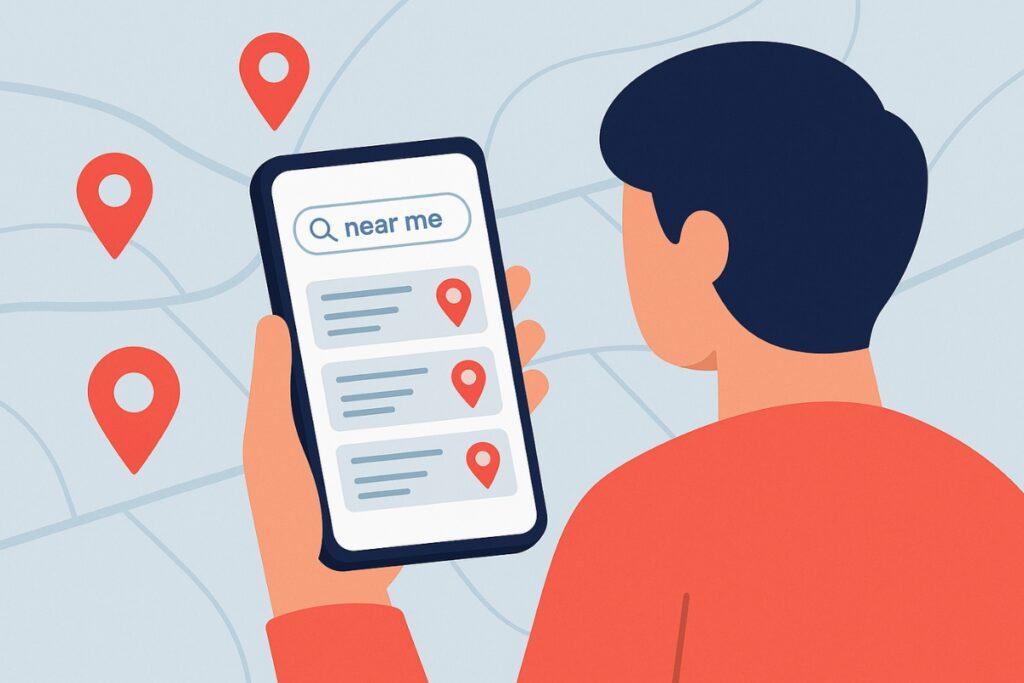
Make mobile your priority.
Most local searches happen on smartphones. Your site must load fast, look clean, and make it easy for users to call, find directions, or fill out a form without pinching or zooming.
Start Small, Stay Consistent, and Win Locally
Content strategy is not just for big brands or national campaigns. It is a practical approach that helps local service providers show up in search results, answer real customer questions, and build long-term trust within their communities.
The goal is not to publish daily or follow every trend. It is to create helpful, locally focused content that supports your business week by week. Whether you write a blog post about your services, optimize your Google Business Profile, or publish a guide comparing local directories, each piece works together to support your visibility.
Start simple. Stay consistent. Focus on being useful. And when the time is right, tools like GoHighLevel can help you automate the heavy lifting and grow more efficiently.
Your future customers are already searching for solutions. A strong content strategy ensures they find yours.
Frequently Asked Questions

It’s a plan that helps local businesses create and organize content to attract customers in their area. The goal is to rank higher in local searches and convert more visitors into leads.
A content strategy ensures every blog, page, or listing serves a clear purpose. It helps you reach the right audience and avoid wasting effort on random posts that don’t rank.
Service pages, location pages, reviews, and local guides all help search engines understand your business area. Photos, videos, and testimonials also boost visibility and trust.
Once or twice a month is enough if the content is high quality and relevant. Consistent posting helps build long-term visibility and authority.
Use tools like Google Analytics and Search Console to monitor traffic and leads. Focus on improvements in local search rankings and customer inquiries.