Managing local franchise SEO for a business with multiple locations can feel like juggling flaming torches—exciting, attention-grabbing, but risky if you don’t have a solid grip on things. With multiple moving parts, locations, and local market nuances, it’s easy to get overwhelmed or even burn out.
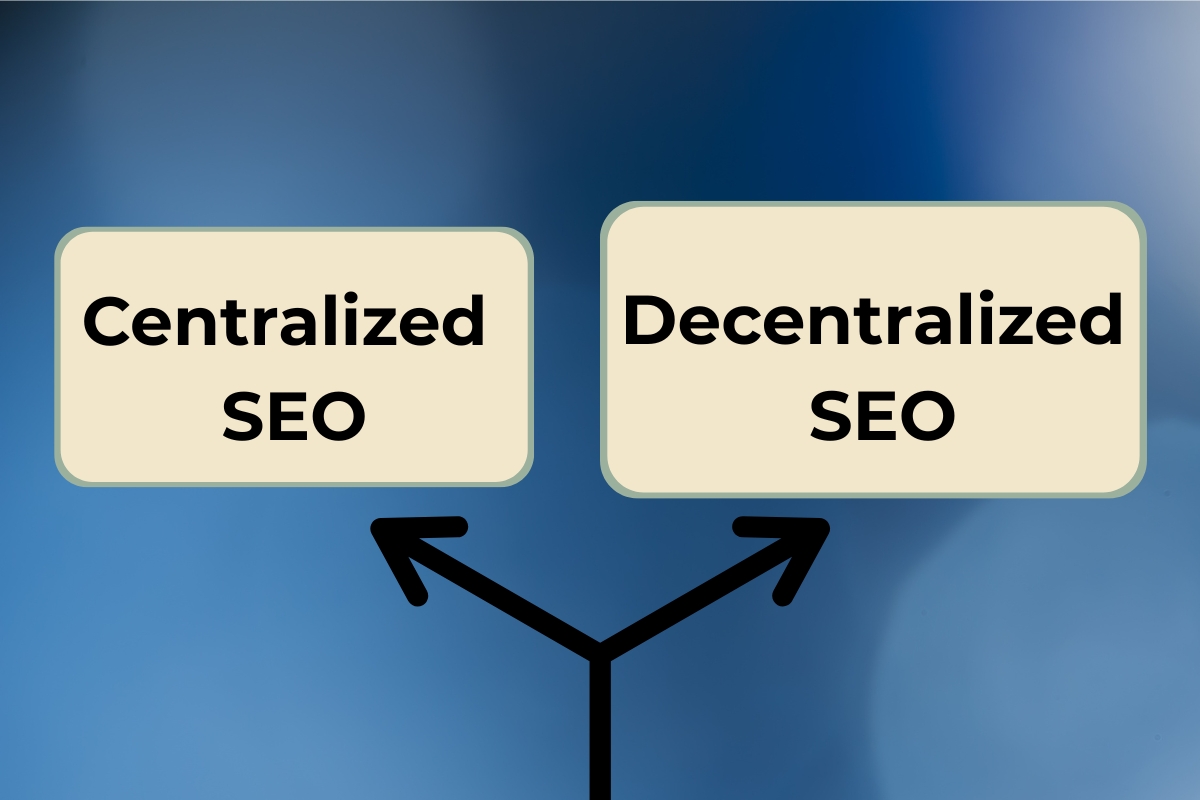
The big question every franchise faces is: should you control everything centrally (centralized) or empower each location to handle its own SEO strategy (decentralized)? Each approach has its pros and cons, and the right choice depends on your specific goals and resources.
Let’s break it down clearly and simply to help you make the best decision.
Understanding Centralized SEO

In a centralized SEO strategy, the main headquarters manages all search engine optimization efforts across franchise locations. Think of this as your “command center,” where one team develops and applies consistent SEO methods, maintaining uniformity and clarity throughout your entire brand.
Pros:
- Brand Consistency:
All your locations speak with one unified voice, ensuring customers have the same experience wherever they interact with your brand online. This coherence helps build trust and a stronger overall brand identity.
- Efficiency:
Centralized teams can quickly roll out SEO updates, content changes, and new strategies without delays or confusion, saving both time and resources.
- Expertise:
You can afford to invest in specialized, experienced SEO professionals who deeply understand complex SEO strategies and industry trends, making your brand competitive on a broader scale.
Cons:
- Lack of Local Insight:
Central teams may overlook critical local trends, community preferences, or specific market needs, causing you to potentially miss out on localized opportunities.
- Slower Response:
Centralized teams might respond slower to local market changes or specific regional issues, reducing agility and potentially impacting local performance.
- Limited Flexibility:
Tailoring content specifically for different local audiences can be challenging, resulting in less personalized and impactful messaging.
Decentralized SEO Explained

A decentralized SEO model empowers individual franchise locations to manage their own SEO strategies. Each location operates independently, crafting and executing strategies based on local insights and specific market demands.
Pros:
- Local Relevance:
Each franchise can produce content specifically relevant to local events, culture, preferences, and community interests, significantly boosting local engagement and visibility.
- Agility:
Local teams can react swiftly to market changes, customer feedback, and competitive threats, capitalizing on opportunities as soon as they arise.
- Empowerment:
Franchise owners and local teams feel greater responsibility, ownership, and investment in their SEO success, often leading to improved motivation and proactive local marketing efforts.
Cons:
- Inconsistency:
Without centralized oversight, brand messaging and quality can vary significantly between locations, potentially weakening your overall brand identity and causing confusion among customers.
- Resource Intensive:
Each location needs its own SEO expertise, tools, and resources, making it potentially expensive and challenging for smaller or less experienced franchises.
- Quality Control:
Ensuring each franchise meets high-quality standards for content, optimization, and engagement becomes much harder, risking your overall brand reputation.
- Inconsistency:
Without centralized oversight, brand messaging and quality can vary significantly between locations, potentially weakening your overall brand identity and causing confusion among customers.
- Resource Intensive:
Each location needs its own SEO expertise, tools, and resources, making it potentially expensive and challenging for smaller or less experienced franchises.
- Quality Control:
Ensuring each franchise meets high-quality standards for content, optimization, and engagement becomes much harder, risking your overall brand reputation.
Finding the Right Balance: Hybrid Approach

The hybrid SEO approach is often the most effective strategy for franchises. It blends centralized control with localized execution, giving you the best of both worlds. This method leverages the strengths of both models, providing stability while allowing adaptability.
How It Works:
- Central Guidelines:
Headquarters develops comprehensive SEO guidelines, including keyword strategies, content guidelines, and branding standards, creating a unified framework for all locations.
- Local Execution:
Franchise locations apply these guidelines but have to adapt strategies to better resonate with local audiences, ensuring content feels personalized and relevant.
- Shared Tools:
Franchises and central teams share common SEO tools and platforms, like GoHighLevel, for streamlined analytics, content management, and easier collaboration, ensuring stability and efficiency across all locations.
Think of hybrid SEO like a well-run garden. The head office provides the soil, seeds, and instructions—but each location tends its plot differently based on local sunlight, weather, and needs. The result? A thriving, consistent brand with deep local roots.
Step-by-Step Guide to Implementing a Hybrid SEO Strategy
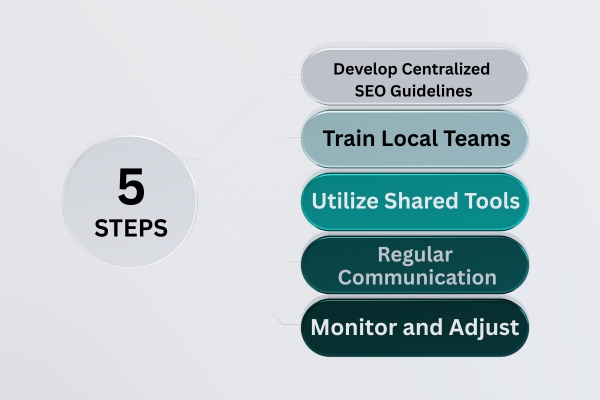
Step 1: Develop Centralized SEO Guidelines
Create a detailed SEO playbook including:
- Keyword selection and usage instructions.
- Content development standards (tone, length, quality).
- Branding guidelines (visuals, voice, messaging).
Step 2: Train Local Teams
Regular training sessions should be conducted to:
- Teach local teams about SEO best practices.
- Demonstrate how to apply central guidelines effectively.
- Share examples and templates for local content creation.
Step 3: Utilize Shared Tools
Adopt platforms like GoHighLevel, allowing:
- Central and local teams to track performance easily.
- Simplified analysis and reporting to guide decision-making.
- Collaborative content scheduling and distribution.
Step 4: Regular Communication
Establish frequent and structured communication:
- Regular check-ins (weekly/monthly) between central and local teams.
- Discussion on performance, challenges, adjustments, and successes.
- Sharing insights and strategies across locations.
Step 5: Monitor and Adjust
Ongoing assessment and optimization:
- Continuously track SEO performance at each location.
- Regularly review metrics like site traffic, local rankings, and conversions.
- Quickly adapt strategies based on data-driven insights.
Real-World Example: Starbucks
Starbucks employs a centralized SEO strategy, maintaining consistent branding and messaging across all locations. However, they also allow for local customization, such as promoting regional products or events, effectively blending centralized control with local relevance.
Common Pitfalls to Avoid

- Duplicate Content: Ensure each location’s content is unique to avoid SEO penalties.
- Neglecting Mobile Optimization: With the majority of searches happening on mobile, ensure all sites are mobile-friendly.
- Ignoring Local Reviews: Encourage and monitor customer reviews for each location to boost local SEO.
Key Takeaways:

- Centralized SEO offers control and alignment but can lack local nuance.
- Decentralized SEO brings agility and local relevance but may hurt brand unity.
- A hybrid SEO approach combines the best of both, giving structure and adaptability.
Clear guidance, the right tools, and regular communication keep both brand alignment and local traction in check.
Making the Right SEO Move for Your Franchise
The best local franchise SEO strategies often strike a balance between centralized alignment and localized flexibility. A hybrid approach offers the structure of a unified brand voice with the agility to connect with local audiences—making it the most effective solution for many growing franchises. By setting clear guidelines, enabling collaboration, and continuously optimizing, you can build a cohesive SEO strategy that works both globally and locally.
Frequently Asked Questions

The biggest mistake is creating duplicate content for multiple location pages. Make sure each page includes unique, locally relevant content to rank better.
A hybrid approach works best: one central website with unique, locally-optimized pages for each location, balancing brand coherence with local relevance.
Use Google’s Business Profile Manager for bulk updates and consistent management. Ensure each profile contains accurate and detailed local information.
Regularly monitor and respond to reviews on each location’s profile, encouraging positive feedback and promptly addressing negative ones to improve SEO and reputation.
Combining both approaches is usually ideal: centralize overall strategy for alignment and let local teams adapt tactics for better local relevance.