
Local SEO is supposed to help businesses show up when nearby customers are ready to buy. In theory, it sounds simple. Pay for an SEO package, rank higher on Google, get more calls.
In reality, many local businesses end up spending thousands of dollars on SEO packages that deliver little to no results. Even worse, some of these packages actively harm visibility and make recovery harder later on.
This article breaks down what businesses get wrong when choosing local SEO packages, why these offers fail, and what effective local SEO should actually look like in 2026. Everything is explained step by step, without technical jargon or complicated theories.
What a “Bad Local SEO Package” Usually Looks Like
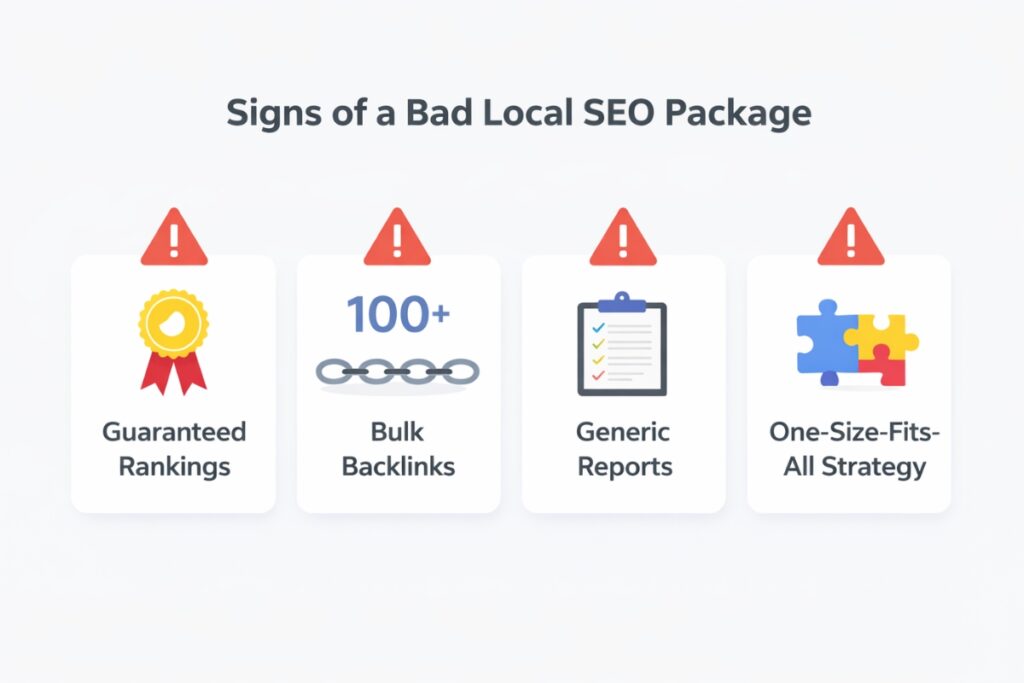
Bad local SEO packages tend to follow the same pattern, regardless of the agency or freelancer selling them.
They often promise:
- Fast rankings
- Guaranteed results
- Dozens of backlinks per month
- Hundreds of directory listings
- A one size fits all strategy
These packages are usually sold at a fixed monthly price with vague deliverables and little transparency. The problem is not always the price. The real issue is what the business is actually paying for.
These patterns often lead directly to the most common mistakes businesses make when choosing local SEO services.
Mistake 1: Buying SEO Based on Promises, Not Process
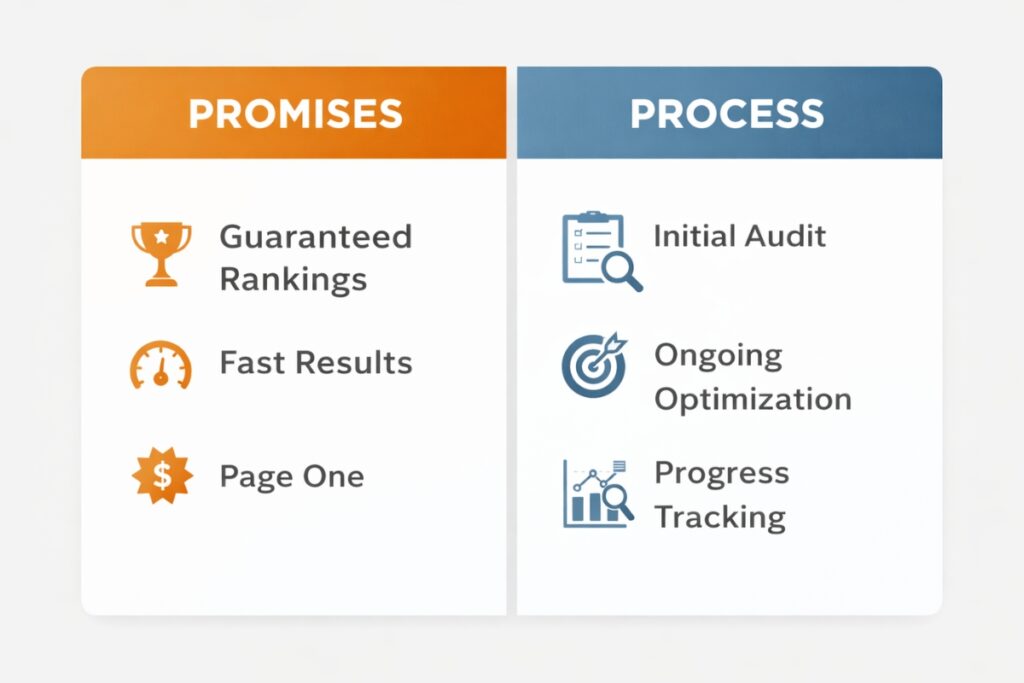
One of the most common reasons businesses end up stuck in bad local SEO packages is simple. The decision is made based on promises instead of understanding the process.
Many SEO offers sound convincing on the surface. Guaranteed rankings. Fast results. Page one placement. These claims appeal to business owners who want certainty and quick returns.
What is often missing from these offers is any explanation of how those results will be achieved. Instead of outlining specific steps, timelines, or responsibilities, the focus stays on outcomes alone.
This creates a disconnect between expectations and reality, where businesses commit to a service without understanding what work is actually being done behind the scenes.
Local SEO, however, does not work on fixed outcomes.
Search visibility depends on multiple factors, including competition, location, existing online presence, and consistency over time. Any package that skips analysis and jumps straight to guarantees is ignoring how search engines actually operate, especially without completing a proper local SEO audit first.
Why promises are a red flag
Bad SEO packages often rely on vague language. They promise results without explaining how those results will be achieved. When pressed for details, the explanation usually falls back on buzzwords or proprietary systems without real substance.
Promises become dangerous when:
- There is no initial audit
- No discussion of competition
- No review of existing listings or website
- No explanation of monthly work
Without a defined process, there is no way to evaluate progress or hold the provider accountable.
What a real local SEO process looks like
A legitimate local SEO strategy always starts with understanding the business and its environment.
A proper process usually includes:
- Reviewing current search visibility
- Analyzing competitors in the same service area
- Identifying realistic keyword opportunities
- Fixing foundational issues before chasing rankings
Instead of guarantees, good SEO focuses on repeatable actions that improve visibility over time. This includes ongoing optimization, testing, and refinement.
If a package cannot clearly explain the steps involved each month, it is not built for long-term success.
Mistake 2: Paying for Generic SEO Instead of Local SEO
Many businesses think SEO is SEO. That assumption alone leads to wasted budgets.
Generic SEO focuses on:
- Broad keywords
- Blog traffic from anywhere
- National or global rankings
Local SEO focuses on:
- Service areas
- Google Business Profile optimization
- Local intent searches
- Proximity and relevance
A bad local SEO package often uses a generic SEO checklist and applies it to a local business without adjusting for location, service area, or real customer intent.
If a package does not clearly address:
- Google Maps visibility
- Local keywords
- City or neighborhood relevance
- NAP consistency
Then it is not truly local SEO.
Not sure whether your SEO is actually local? This guide explains how to plan a DIY local SEO audit and identify what needs attention.Mistake 3: Overpaying for Backlinks That Do Not Help
Backlinks are often presented as the backbone of SEO, which makes them easy to misuse in low-quality local SEO packages.
Many bad packages justify their pricing by offering a high number of backlinks each month. The focus is placed on quantity instead of relevance, which creates the illusion of value without delivering real results.
Why most bulk backlinks fail
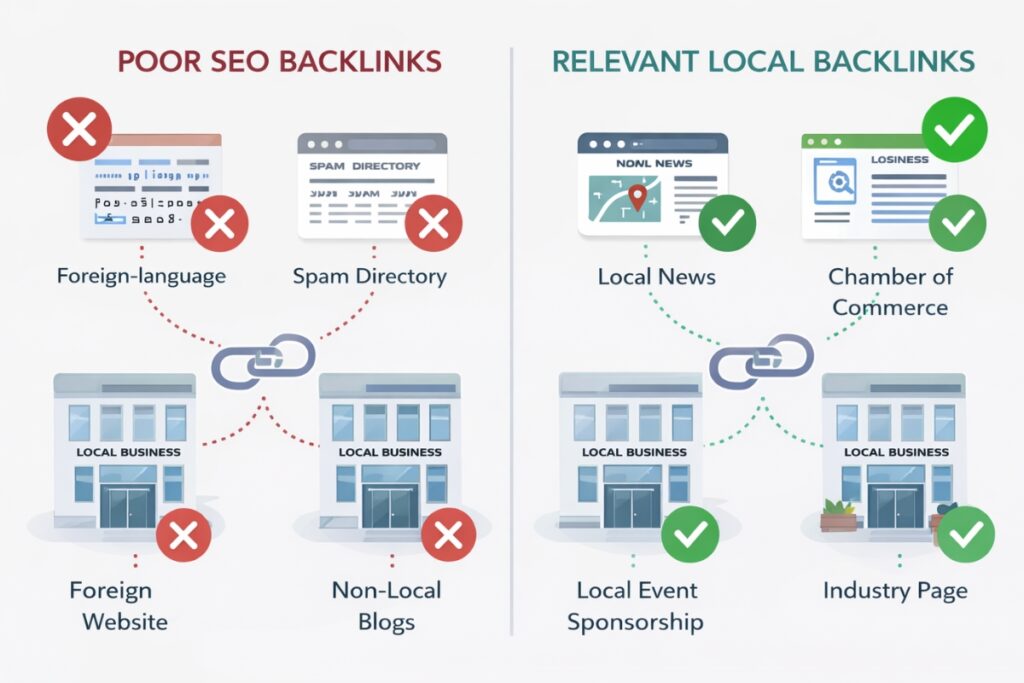
Search engines evaluate links based on context, relevance, and trust. Links from unrelated websites, spam directories, or auto-generated blogs rarely help a local business.
In some cases, they do nothing. In worse cases, they damage credibility and suppress rankings.
Bulk backlink packages often include:
- Links from unrelated niches
- Links from foreign websites
- Repeated anchor text
- Links built without content context
These links do not reflect real endorsements and are easy for search engines to ignore or devalue.
What relevant local links actually look like
For local SEO, relevance matters far more than volume.
Helpful links often come from:
- Local news or community websites
- Industry associations
- Business partners or suppliers
- Local sponsorships or events
- Chambers of commerce
Even a small number of these links can outperform hundreds of low-quality ones because they reinforce location and trust.
A good local SEO package prioritizes link opportunities that make sense for the business and follows proven local link building strategies instead of chasing numbers.
How to evaluate link work in a package
Before paying for backlinks, businesses should ask:
- Where will the links come from
- Why those sites matter
- How the links are placed
- How often new links are built
If the answer focuses on volume instead of relevance, the package is likely wasting money.
Mistake 4: Ignoring Google Business Profile Optimization
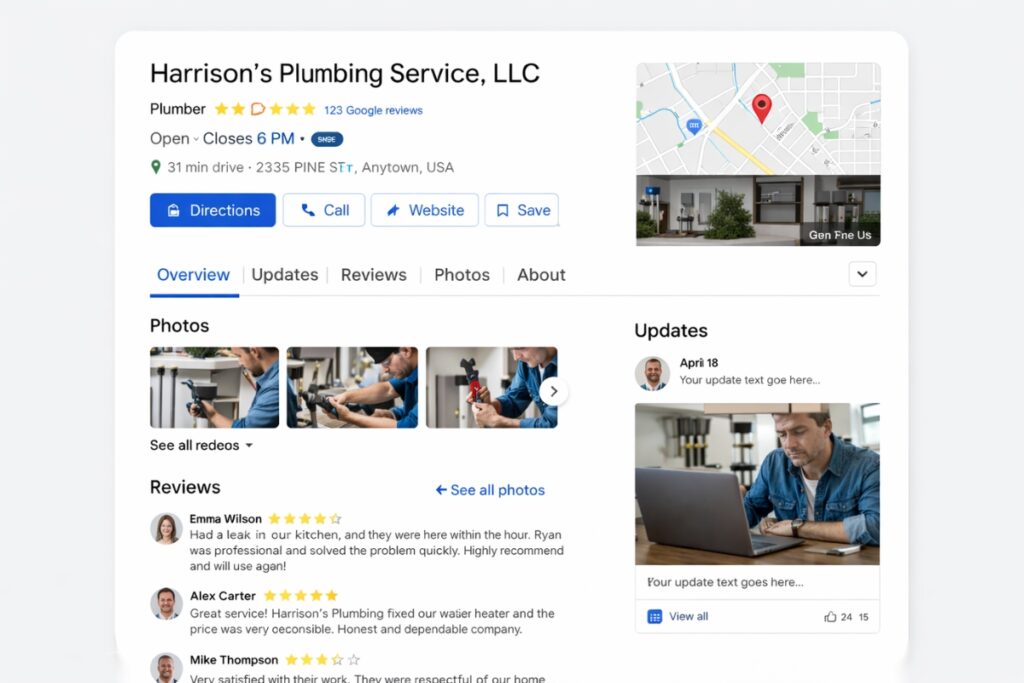
Google Business Profile plays a major role in how local businesses appear in search results, especially in map listings, and is influenced by several Google Business ranking factors.
Despite this, many local SEO packages still treat it as a one-time task.
Some providers set up the profile, fill in basic information, and then move on. Others include it in the package description but do little to maintain or improve it.
Why this profile matters so much
Google Business Profile helps search engines understand:
- What the business offers
- Where it is located
- When it should appear in local results
It also influences how customers interact with the business before ever visiting the website.
An under-optimized profile limits visibility, even if other SEO work is being done correctly.
Common areas bad packages ignore
Poor SEO packages often skip ongoing profile management, including:
- Regular posts and updates
- Accurate service listings
- Category optimization
- Question and answer monitoring
- Photo and image updates
- Review responses
Each of these elements sends signals to search engines about activity, relevance, and trust.
What proper optimization involves
Effective local SEO treats Google Business Profile as an active asset, not a static listing.
Ongoing optimization usually includes:
- Updating services as offerings change
- Posting regularly to highlight promotions or updates
- Adding new photos to reflect real activity
- Monitoring and responding to reviews
- Ensuring business details remain accurate
When this profile is maintained properly, it supports map visibility and improves the chances of appearing for high intent local searches.
Any SEO package that does not clearly include ongoing work here is missing a critical piece of local search success and can even increase the risk of Google Business Profile issues or suspensions.
Mistake 5: Using Mass Citations Without Accuracy Checks
Citations are mentions of a business name, address, and phone number across the web. They matter, but only when done correctly.
Bad SEO packages often:
- Submit to hundreds of directories at once
- Use outdated or incorrect business information
- Never audit existing listings
- Never clean duplicates
This creates inconsistent data across the internet, which confuses search engines and weakens NAP consistency instead of helping rankings.
Effective citation work starts with:
- Auditing existing listings
- Fixing errors
- Removing duplicates
- Submitting only to relevant platforms
More listings do not equal better results if the data is wrong.
Mistake 6: No Clear Reporting or Meaningful Metrics
Many businesses stay in bad SEO contracts because they receive reports that look impressive but mean nothing.
Common examples:
- Rankings for keywords that bring no leads
- Traffic reports without context
- Screenshots instead of data
- No explanation of changes or impact
A good SEO report answers simple questions:
- Are calls increasing
- Are directions requests improving
- Are form submissions growing
- Are map views trending up
If a report cannot connect SEO work to business outcomes, the package is failing its purpose.
Mistake 7: One Size Fits All Content Strategies
Content plays a role in local SEO, but ineffective packages often treat it as filler.
Typical issues include:
- Generic blog posts
- AI-generated content with no local relevance
- Articles written for search engines, not customers
- No connection to services or locations
Local content should:
- Address local problems
- Answer customer questions
- Support specific services
- Reinforce expertise and trust
Publishing content without purpose does not improve local rankings and often wastes time and money.
What Effective Local SEO Actually Looks Like
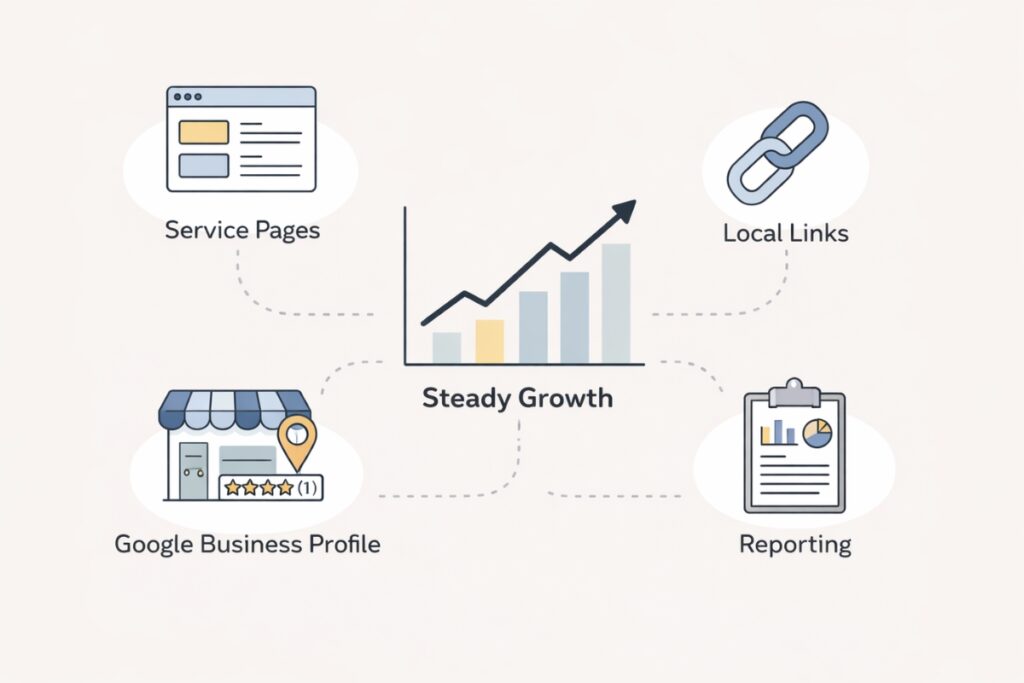
Understanding what works helps businesses avoid bad packages moving forward.
Effective local SEO focuses on:
- Clear service pages for each offering
- Location-specific optimization
- Accurate business information everywhere
- Ongoing Google Business Profile management
- Quality local links
- Reporting that focuses on leads and visibility, not vanity metrics
It’s not flashy. It’s consistent and intentional. Each element supports the others to build trust and relevance over time.
Progress usually looks like:
- Gradual ranking improvements
- More calls over time
- Increased visibility in maps
- Better quality leads, not just more traffic
This approach takes patience, but it builds long-term value.
How to Evaluate a Local SEO Package Before Buying
Before committing to any SEO service, businesses should ask simple questions, especially when deciding whether to hire a local SEO consultant or handle SEO in-house.
Key questions include:
- What specific work will be done each month
- How does this help local visibility
- Which metrics are tracked and why
- How success is measured
- What happens if results stall
If answers are vague, defensive, or filled with buzzwords, it’s best to walk away.
Transparency is based on results and clarity not promises.
Why Cheap SEO Often Becomes the Most Expensive Option Over Time
Low-priced SEO packages often cost more in the long run.
They can lead to:
- Cleanup fees
- Lost rankings
- Rebuilding trust with Google
- Starting over from scratch
Recovering from bad SEO takes time and often costs more than doing it right the first time.
This is why understanding what to avoid is just as important as knowing what to buy.
Avoiding Bad Local SEO Packages Moving Forward
Bad local SEO packages fail because they prioritize shortcuts over strategy. They rely on automation, generic tactics, and empty promises instead of understanding how local search actually works.
Local SEO success comes from clarity, consistency, and relevance. Businesses that understand this are far less likely to waste money and far more likely to see sustainable growth.
Choosing the right approach may take more effort upfront, but it protects both visibility and budget in the long run. Understanding how local SEO actually works gives businesses control over their growth instead of leaving results to guesswork.
Frequently Asked Questions
A bad local SEO package focuses on shortcuts instead of strategy. It often includes generic tactics like bulk backlinks, mass directory submissions, and vague monthly reports without improving real local visibility, calls, or leads.
Warning signs include little to no increase in calls or inquiries, rankings that fluctuate without explanation, reports filled with vanity metrics, and no clear description of what work is being done each month.
Cheap local SEO packages are rarely a good value. While they may seem affordable upfront, they often rely on automation and low-quality tactics that require expensive cleanup later and delay real growth.
Local SEO usually takes several months to show meaningful results. Early improvements may appear within the first few months, but consistent visibility and lead growth typically require ongoing optimization and patience.
Yes. A Google Business Profile is essential, but it works best when supported by accurate business information, relevant service pages, local content, and consistent signals across the web.
A quality local SEO package should include Google Business Profile optimization, accurate citations, locally relevant content, transparent reporting tied to leads, and a clear explanation of ongoing monthly work.