Evergreen content is like that one houseplant you barely water but still thrives—it’s reliable, low-maintenance, and keeps giving. In the world of blogging and marketing, evergreen content is your blog’s best friend. It brings in traffic consistently, answers timeless questions, and saves you from constantly churning out new posts.
If you’ve ever asked yourself, “What should I write about next?” or “How can I get traffic on autopilot?” — this is for you.
Let’s break down how to build an evergreen content strategy without overthinking it.
Understand What Evergreen Content Actually Means
Evergreen content doesn’t go out of style. Think “how to train a puppy,” “best productivity hacks,” or “DIY pantry organization tips.” Compare that to something like “Best iPhone 13 Cases in 2021”—relevant for a few months, then it dies off.
Evergreen content is:
- Timeless (or at least stays relevant for 1–3 years)
- Solves recurring problems or answers ongoing questions
- Can be updated occasionally without rewriting from scratch
If you’re doing research before you start a blog or are busy building a content library that brings in long-term traffic, evergreen should be your foundation.
Example: A post on “How to Create a Morning Routine That Sticks” will outlast any trend-based post like “Top TikTok Morning Routines of 2025.”
Ready to build yours? Let’s walk through the simple steps to create an evergreen content strategy that actually works.
Step 1: Brainstorm Evergreen Topics Based on What You Know (and What People Ask)

Start with what you already know. If people ask you the same questions again and again—or if you’re constantly Googling something—that’s likely an evergreen topic worth covering.
Start here:
- What do you help people with the most?
- What do your clients, friends, or community always need explained?
- What problems are your readers always trying to solve?
You can also check:
- Google’s “People Also Ask” section
- Reddit forums related to your niche
- Quora questions with a lot of views
- Pinterest search autocomplete (great for lifestyle, food, DIY)
Example for a fitness blog: Instead of “My Workout Routine This Month,” go for “How to Build a Beginner Workout Plan at Home.”
Step 2: Choose 3–5 Core Evergreen Categories
If your blog covers everything from recipes to SEO to parenting, it’s time to group them.
Choose 3–5 broad evergreen themes your brand will always talk about. These become your “content pillars.” They help organize your blog, simplify planning, and support SEO.
For example:
- A wellness blog: Sleep, Fitness, Nutrition, Mental Health
- A pet blog: Dog Training, Pet Health, Feeding Tips, Product Reviews
- A business blog: Email Marketing, SEO, Automation, Funnels
When every evergreen post supports one of these categories, you’re not just writing random articles—you’re building a strategy.
Step 3: Map Out Evergreen Post Types (Templates You Can Reuse)
You don’t need to reinvent the wheel. Most evergreen content falls into a few go-to formats:
- How-to guides (“How to Build a Capsule Wardrobe”)
- Tutorials (“How to Set Up Email Automation in 5 Steps”)
- Best practices (“Blog SEO Best Practices for Beginners”)
- Checklists (“Monthly Cleaning Checklist for Busy Parents”)
- FAQs (“What Is the Best Diet for Dogs?”)
- Resources/tools lists (“Top Tools for Managing Client Work”)
These are reader-friendly and easy to update over time. Bonus? They’re SEO goldmines when done right.
Each of these different types of posts should serve a different function in your content funnel depending on what your goal is.
For example, are you looking for more affiliate conversions from your blog? Your posts should help move your reader from learning about their problem to comparing the options to solve it, and then to choosing the best option for them.
Avoid creating surface level content only that doesn’t help move your reader on to the next natural step or piece of content.
Don’t be afraid to write long-form content. Google loves detailed posts that fully answer a query. Aim for 1,000–2,000 words per post if you can.
Step 4: Create a Simple Content Calendar (Don’t Overwhelm Yourself)
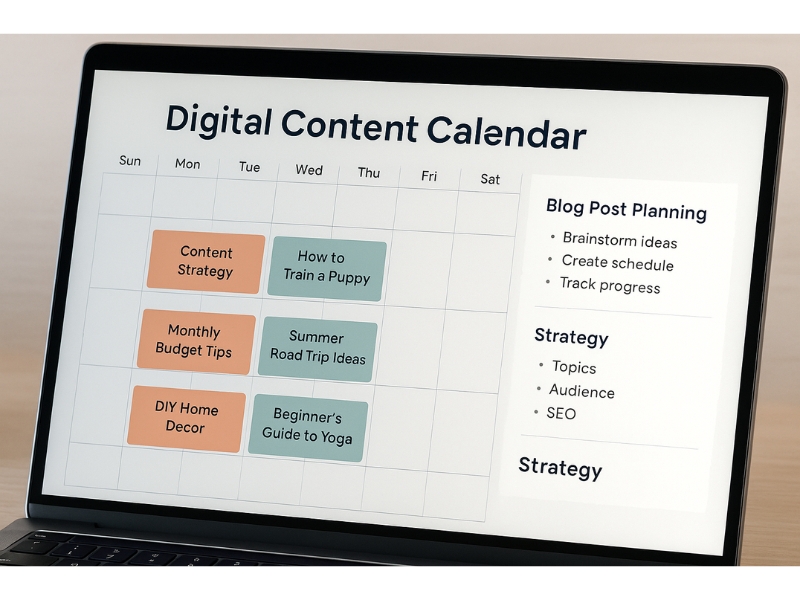
Now that you know what kinds of posts to create, it’s time to plan. Planning doesn’t need to be overwhelming. A light, flexible content calendar can keep you consistent without feeling like a chore.
Try this:
- Plan 4 evergreen blog posts per month
- Rotate between your content pillars
- Use a tool like Notion or even Google Sheets to track ideas, publish dates, and updates
Once you have your evergreen blog content written it’ll be easy to repurpose that content or cross-promote your posts.
Step 5: Optimize for Evergreen SEO (Without Keyword Stuffing)
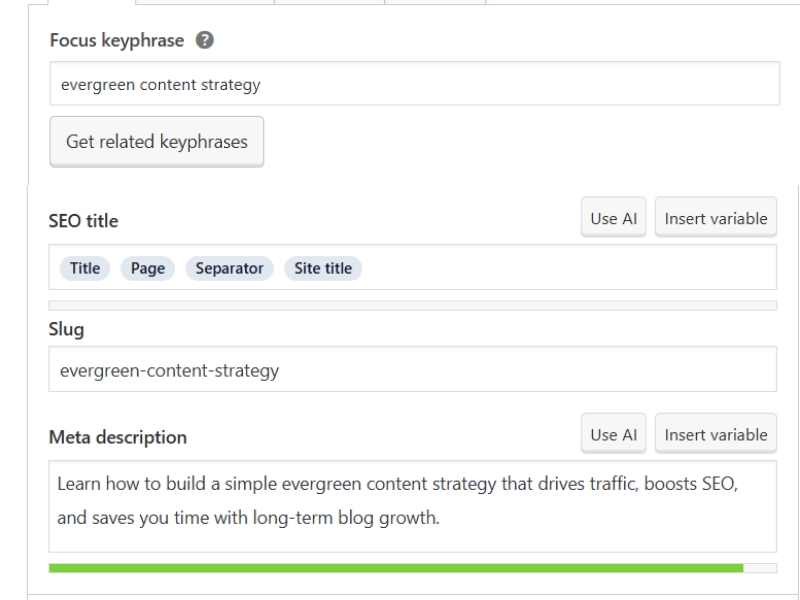
SEO can feel overwhelming, but for evergreen content, just focus on the basics:
- Use your keyword in the title, URL, meta description, and intro
- Write clear subheadings with related keywords
- Add a FAQ section at the bottom to hit extra long-tail terms
- Link to related evergreen posts (interlinking helps rankings)
- Use descriptive image names and alt tags to boost searchability
Example: A post titled “How to Potty Train a Puppy” should also cover related searches like “puppy crate training,” “potty schedule,” and “accident cleanup.”
Step 6: Update Evergreen Content Every 6–12 Months

Set a reminder to review each post. Update stats, screenshots, improve your internal linking, or tools mentioned. Even changing the publish date can give your post a small SEO refresh.
This is what makes evergreen content so powerful: A few small updates can stretch one post’s impact for months—no need to constantly write from scratch.
Not sure what to update? Check Google Search Console for posts losing clicks—those might need a boost.
Step 7: Make It Easy to Share and Repurpose

Once your evergreen post is live, don’t let it sit quietly.
Repurpose it into:
- Pinterest Pins or Idea Pins
- Instagram carousels
- Short tip-based videos for Reels or TikTok
- Email newsletter segments
- Podcast talking points
- Even a freebie or opt-in
If you use tools like Canva or Repurpose.io, batching this content becomes way easier.
Reminder: The goal is not more content, it’s more mileage from the content you already created.
Final Thoughts: Keep It Simple, Consistent, and Searchable
Evergreen content is your blog’s quiet workhorse. With just a few smart moves, it becomes the backbone of a long-term content strategy
By focusing on timeless topics, organizing your ideas into clear categories, and leaning on proven formats like how-tos and checklists, you create content that stays useful long after it’s published. You don’t need to churn out new posts every week.
Just a few well-planned evergreen posts each month—paired with occasional updates and repurposing—can quietly build momentum that compounds over time.
You don’t need to publish constantly to stay relevant. A few well-planned evergreen posts can quietly build lasting momentum for your blog or brand.
Think of evergreen content like planting a small tree—nurture it once in a while, and it’ll quietly grow while you sleep.
Frequently Asked Questions

Evergreen content stays relevant over time and doesn’t rely on trends or dates. It continues to bring in traffic months or even years after it’s published.
Aim for 2–4 strong evergreen posts monthly, depending on your schedule. Consistency matters more than volume.
Yes, especially if it answers specific search queries well and uses smart on-page SEO. But backlinks do help speed up visibility.
Definitely—updating stats, images, or tools every 6–12 months keeps it fresh for readers and search engines. Small tweaks go a long way.
Absolutely. As long as your content solves recurring problems or answers timeless questions, it can be evergreen—even in lifestyle or hobby niches.