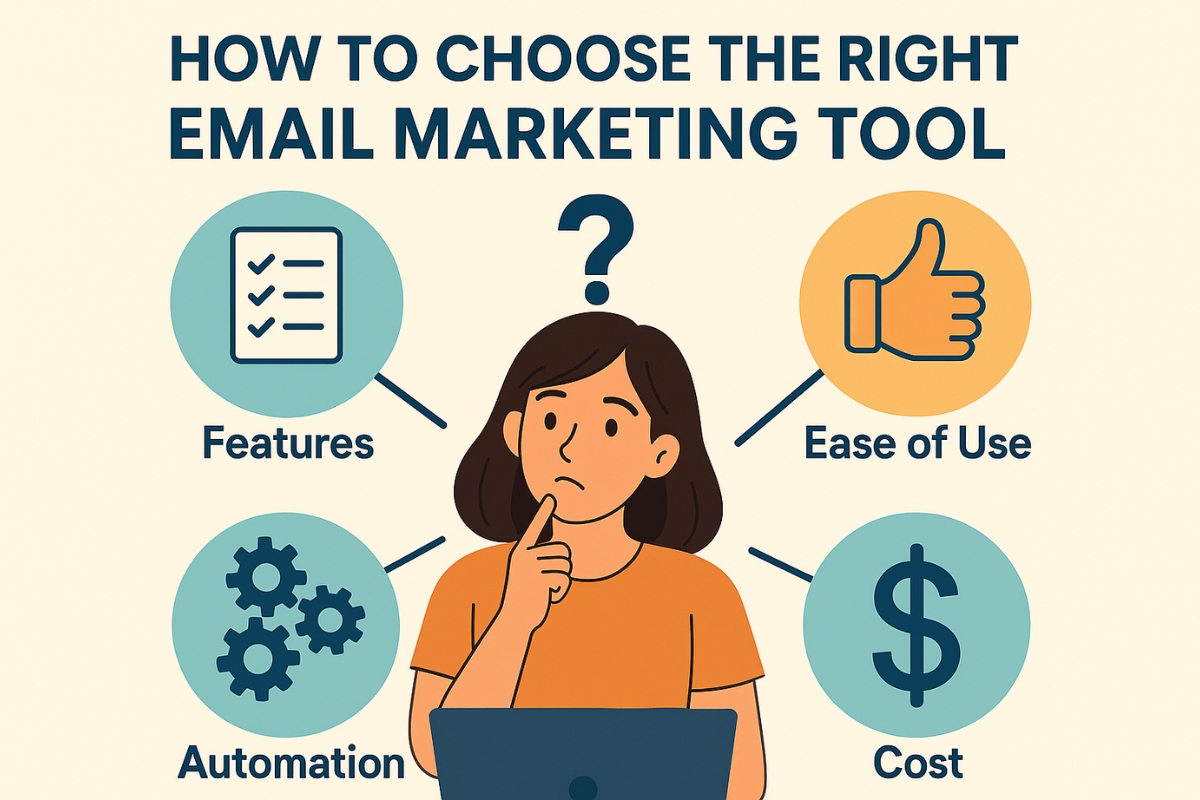
Choosing the right email marketing tool can feel overwhelming with hundreds of options out there. The wrong choice wastes time, money, and results.
This guide gives you all the information you need to choose the best option, including what to expect and what not to, as well as how to make the best choices.
Why Choosing the Right Email Marketing Tool Matters
Impact on engagement and ROI
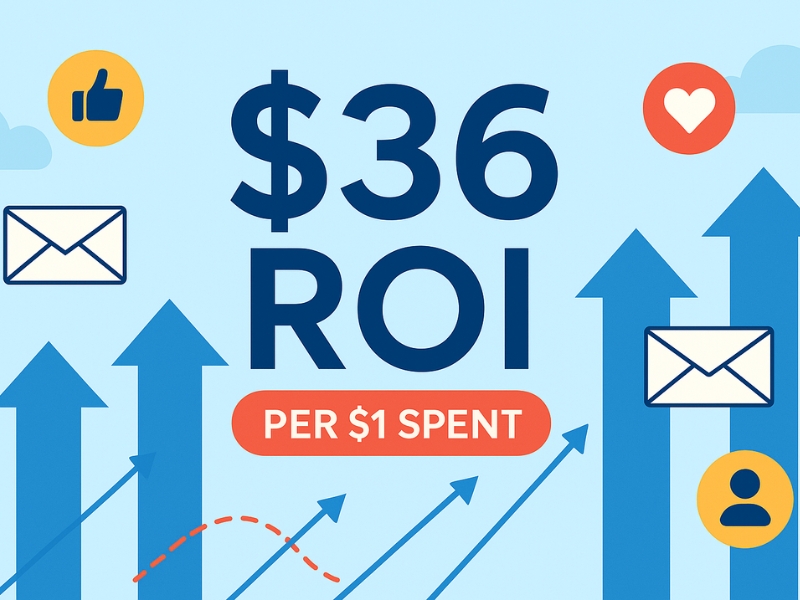
Email marketing is still the most effective way to get a return. Litmus (2023) suggests marketers make $36 return on every dollar spent on email marketing.
Of course, this massive ROI does not occur by accident. It depends on using the platform effectively that you choose.
Critical mass engagement capabilities like A/B testing, dynamic content creation or behaviour tracking, will not be achievable by many tools on the market.
When you work with the right tool, it enables multichannel communication with a targeted consumer in a way that feels very personal, increasing open rates and click-through percentages.
This allows for increased consumer engagement, opportunities for more lead generation, conversion and customer retention, and revenue generation long after the campaign is complete.
At the end of the day, the tool you are using is not just a tool—it’s a performance driver that supports long-term campaigns, including your evergreen content strategy, helping you achieve or miss KPIs.
Time savings through automation
Automation isn’t a nice add-on anymore—it’s a must-have. Time-consuming tasks need a more efficient and repeatable way to be done.
According to GetResponse’s 2023 benchmarks, automated emails reached 39.64% open rates and 3.2% click-through rates.
The time savings can be repurposed to:
- Create better copy
- Create better content
- Analyzing campaign reporting
- Improving list segmentation
Without automation, your team could be spending hours on work that a decent tool could complete in seconds.
Efficiencies lead to better campaigns, in-flight launches, and potential productivity lift across an organization.
Scaling communication as your business grows
Growth in your business is great but it does complicate things. More customers, leads, and segments require a more robust communication system.
A tool built for smaller lists won’t help you serve a growing customer base with continuously changing needs.
Choosing the right tool ensures that whether you’re sending 100 emails or 1 million, you’ll see consistent performance results.
Dynamic content features allow you to personalize across dozens of segments inside of any given campaign.
That gives you the ability to provide relevance instead of duplication, which becomes crucial as your business starts to diversify into different markets and you refine your content funnel as you scale.
Scalability in your email marketing tool is important not only for ensuring seamless growth in your business, but also for deliverability which protects you from potential issues and bottlenecks in your systems due to your growing contact list.
Selecting the right email marketing platform today makes sure you’ll be successful in the future.
Key Factors to Consider When Evaluating Tools
Automation and AI capabilities
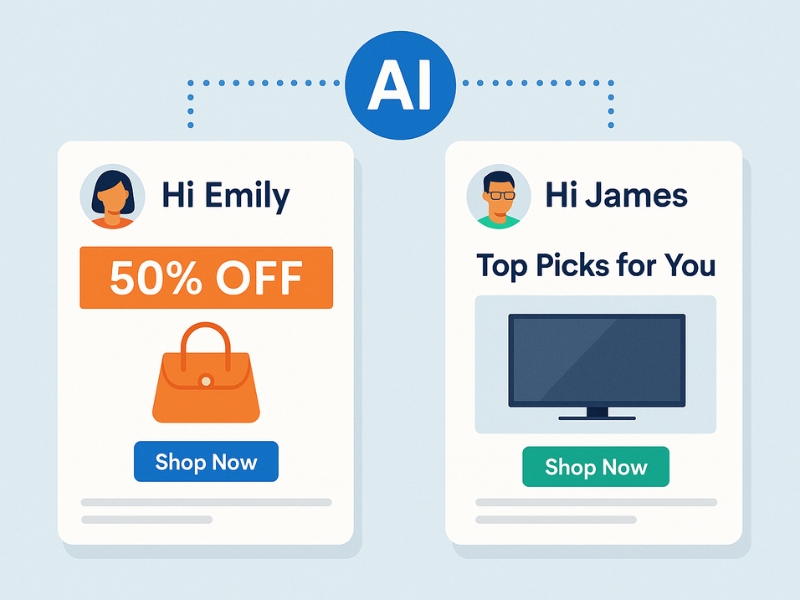
AI gives marketers new capabilities in how they plan and deliver on campaigns. It reduces guesswork and dramatically improves campaign targeting and delivery.
Tools that offer AI capabilities in things like send-time optimization, predictive lead scoring and content recommendations are proven to increase engagement.
In addition, platforms that support custom automation workflows let you create unique sequences for each step of your customer’s journey.
Many of these tools even automatically adjust in real-time based on user engagement which can improve results as your engagement grows. This saves you time (and not to mention the headspace) from needing to go in and make these adjustments manually.
None of these engagement tools matter much if the emails you send don’t make it into your lead’s inbox. This highlights an important part of email automation that’s often overlooked – ensuring optimal email deliverability through warm-up processes.
Tools like the Snovio email warmup tool can automate warming up your new domains or IPs, protecting your campaigns from landing in spam folders and improving engagement from the start.
According to Salesforce’s 9th State of Marketing Report (2024), 75% of marketers are either implementing or experimenting with AI, and top-performing teams are 2.5× more likely to have fully implemented AI in their marketing strategies
Email automation also reduces human error and helps standardize your communication across thousands of emails so your brand voice stays consistent.
Personalization and segmentation options
With the number of emails that land in your lead’s inbox each day, relevance is important. The greater degree of personalization given, the better chance you have to grab attention and achieve a click.
Generic, one size fits all emails typically go directly to the trash as they don’t make an immediate connection with their recipient. Serving your leads customized content increases open rates and conversion rates.
Your email platform should support advanced segmentation features based on:
- Purchase behavior
- Browsing history
- Email interaction patterns
In addition to providing:
- Dynamic content blocks
- Demographic targeting
- Geographic segmentation
This ensures your subscribers only receive emails that match their specific needs or interests increasingly the likelihood that they’ll engage.
Advanced tools even allow behavior-triggered emails, like product recommendations based on their recent views.
This level of personalization at scale is only possible with the right tool, and it pays off with better user engagement.
Analytics and reporting
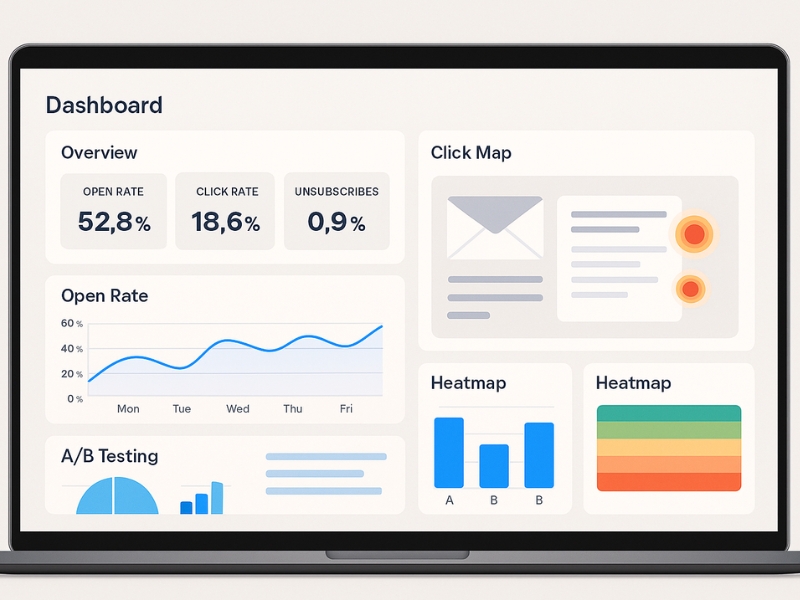
Without data, you’re flying blind. Reports show what’s working and what needs to be adjusted for better performance, whether it’s campaign ROI or proving your website worth through email-driven conversions.
Your email platform should offer:
- Customizable dashboards
- Real-time campaign metrics
- Click maps and heat tracking
- A/B and multivariate testing
And track key performance indicators such as:
- Open rates
- Click-through rates
- Bounce rates
- Unsubscribes
- Conversion rates
These insights help shape your strategy and allow you to make data informed decisions, as opposed to simply taking a guess at what’s working with your email strategy.
Good reporting tools can also identify issues earlier, like deliverability problems, subject lines that are not getting clicks, etc.
Ease of use and integration
Even powerful tools are useless if your team can’t use them effectively. Usability greatly affects adoption and efficiency.
Look for platforms that offer:
- Drag-and-drop builders
- Built-in tutorials
- Responsive customer support
Smooth UI and a short learning curve help teams launch faster and avoid technical bottlenecks.
Since you’re likely using multiple services to manage different aspects of your business, the ease of integration with your other tools is also important.
Your email tool should work with:
- CRM systems
- eCommerce platforms
- Analytics suites
- Ad networks
- Customer support platforms
The right integrations save time, reduce data silos, and offer a full view of customer behavior.
Pricing and scalability
Budget is important, but cost shouldn’t be the only factor. Focus on the value the platform delivers over time and how easy it is to scale.
Entry-level plans might appear attractive, but many hide essential features behind paywalls or user caps.
When comparing pricing, evaluate:
- Monthly email volume
- Subscriber limits
- Access to automation and reporting
- Number of users included
Also, consider add-ons and API access, which may be necessary as your operations grow.
Scalability is vital and you’ll want to avoid having to start over with another email tool as your list grows. Choose a tool that can grow with your business without forcing expensive plan upgrades.
Some tools charge per contact, others per send. Match the model to your usage for cost-efficiency.
Look for flexible plans that adjust with your contact list, user needs, and campaign frequency.
Steps to Find the Best Fit for Your Business

Define your email marketing goals
Start by outlining your objectives. Are you focused on lead nurturing, eCommerce sales, or content promotion? Clarifying this makes it easier to align campaigns with content ideas that actually resonate with your audience.
Your goals define what features you’ll need. Examples:
- For sales: automation and CRM integration
- For content: design flexibility and RSS feed support
- For B2B: segmentation and behavior triggers
Clear goals reduce the risk of choosing the wrong platform.
Identify must-have vs. nice-to-have features
Make a checklist. What’s non-negotiable for your campaigns?
Must-have features may include:
- Automation workflows
- List segmentation
- A/B testing
- Compliance tools
Nice-to-haves could be:
- Social media scheduling
- Landing page builders
- SMS marketing
This helps narrow down the options and avoid unnecessary costs.
Test with free trials and demos
Never commit without testing. Most top platforms offer trials or demo versions.
During trials, evaluate:
- User experience
- Feature performance
- Speed and reliability
Ask for a guided demo if available. It shows you how the tool works in real use cases.
Use your free trial period to test automation, reporting, and integrations to make sure it’s a good fit before your commit.
Gather feedback from your team
Marketing tools affect multiple departments. Get input from all stakeholders before making a decision.
Ask:
- Is the platform easy to use?
- Does it support our workflow?
- Is it compatible with existing tools?
Team feedback ensures smoother adoption and better results.
Common Mistakes to Avoid in Tool Selection

Even with clear goals and careful research, it’s easy to make mistakes when choosing an email marketing tool.
Many businesses overlook critical factors that impact long-term success, such as integration capabilities or deliverability features.
The most common pitfalls are:
- Choosing based on price alone: Low-cost tools often lack critical features. Long-term, this limits growth and effectiveness.
- Ignoring integration needs: A platform that doesn’t work with your CRM or sales system can cause workflow issues.
- Overlooking deliverability support: If your emails don’t reach inboxes, you lose potential revenue.
Ensure your platform supports deliverability features like:- IP warming
- Reputation monitoring
- Email validation
- Skipping the warm-up process: A new domain or IP needs warming up to avoid spam folders.
- Neglecting scalability: Choose a tool that can handle larger lists and higher volume as your business expands.
- Failing to check support quality: When issues arise, fast support matters. Make sure the vendor offers responsive, helpful service.
Conclusion
Selecting the right email marketing tool is essential for long-term growth and performance.
To succeed, define your goals clearly, test platforms thoroughly, and use data to guide your choice.
Don’t forget warm-up processes. They’re crucial for deliverability success. Tools like Snovio email warmup tool can help you start strong.
Take your time. The right platform is an investment in your marketing future.