Small businesses often assume they cannot compete with big brands because large companies have bigger budgets, larger teams, and more resources.
This belief often causes small businesses to delay content efforts or avoid them entirely, assuming results are out of reach without significant investment. In reality, budget size is not the deciding factor in content performance.
Yet when it comes to content, a small business content strategy can outperform big brands in ways large companies struggle to match.
Content rewards relevance, clarity, and usefulness. Search engines and customers prioritize answers that solve real problems, not content backed by the largest budget or the most polished production.
Small businesses can move faster, sound more human, and create content that speaks directly to what customers need right now.
This flexibility allows small businesses to respond to trends, questions, and customer concerns immediately, instead of waiting for approvals or navigating layered processes.
With a simple, focused small business content strategy, even a lean team can attract loyal followers, build authority, and rank higher in search results.
Success does not come from producing more content, but from producing the right content in a consistent and intentional way.
This guide breaks the process into clear, practical steps any small business can follow, even without a marketing team.
Key Takeaways
- A small business content strategy works best when it focuses on clarity, relevance, and consistency rather than scale
- Clear goals and content pillars make it easier to create content that supports business growth
- Customer questions are one of the most reliable sources for high-performing content ideas
- Simple, search-friendly structure helps small businesses compete with larger brands
- A repeatable weekly content system supports long-term visibility without overwhelm
Table of Contents
- Why Content Strategy Matters More for Small Businesses
- Step 1: Start With One Clear Content Goal
- Step 2: Pick Content Pillars That Support the Goal
- Step 3: Build Your Content Around Customer Questions
- Step 4: Create Simple, Search-Friendly Content
- Step 5: Build a Weekly Content System That Is Easy to Maintain
- Step 6: Publish Consistently and Track What Works
- Step 7: Engage Like a Human, Not a Corporation
- Step 8: Update Existing Content to Increase Visibility
- Frequently Asked Questions
Why Content Strategy Matters More for Small Businesses
Big brands rely on scale, but small businesses win through connection. Customers trust businesses that communicate clearly and understand their needs.
This trust is built through repeated, helpful interactions over time. When customers consistently find useful answers, guidance, or clarity from a business, they begin to associate that brand with reliability and competence before any direct sales interaction occurs.
Content is how that trust is built before a sale ever happens.
A strong content strategy helps small businesses:
- build long-term authority with evergreen content
- show expertise in a simple, friendly way
- answer questions customers are already searching for
- stay visible even in competitive markets
- build long-term authority
- create a steady flow of leads
Big brands often produce generic content because they have to appeal to many audiences.
This broad approach limits how specific their messaging can be. Small businesses, on the other hand, can narrow their focus, address specific situations, and tailor content to a clearly defined customer group without dilution.
A small business can be specific, fast, and deeply helpful. That’s a competitive edge money can’t buy.
Step 1: Start With One Clear Content Goal
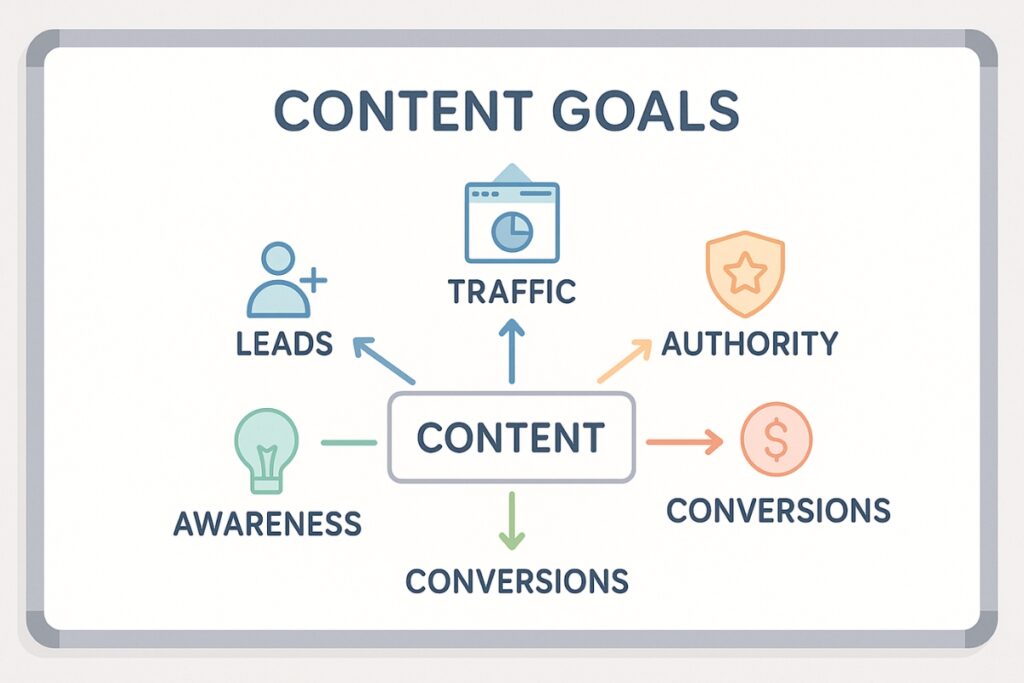
Choosing one main goal keeps the strategy simple and easier to execute, forming a simple content plan that guides everything else.
Without a clear goal, content efforts often become scattered. Businesses may post inconsistently, switch topics frequently, or create content that does not support a measurable outcome. A single goal acts as a filter for deciding what content to create and what to skip.
Most small businesses fall into one of these goals:
- attract local or online traffic
- generate leads for a service
- build authority in a niche
- increase product awareness
- convert followers into buyers
Everything becomes easier when the goal is specific.
A defined goal helps determine content topics, formats, and calls to action. It also makes it easier to evaluate whether the content is working, since success is measured against one clear objective instead of multiple competing priorities.
The content becomes sharper, the message becomes clearer, and the strategy becomes more efficient.
Step 2: Pick Content Pillars That Support the Goal
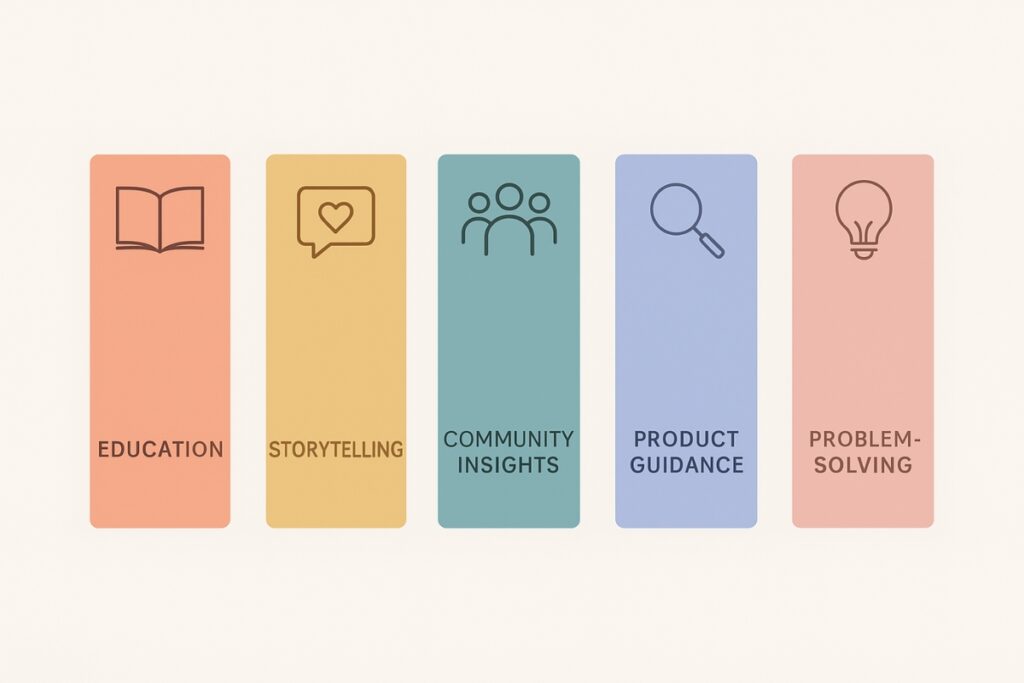
Content pillars are the topics a business talks about repeatedly. They guide every blog post, video, reel, or email. Three to five pillars are enough.
Examples for small businesses include:
- how to choose the right product or service
- beginner-friendly guides
- common problems customers face
- local insights and community topics
- behind the scenes and storytelling
Pillars help customers recognize the business as a helpful authority.
When a business consistently publishes content within a defined set of pillars, audiences begin to associate that brand with specific areas of knowledge. Over time, this consistency builds familiarity and reinforces the business’s role as a reliable source rather than a one-off content publisher.
They also make the content creation process easier because the topics are always aligned with what customers want to learn.
Step 3: Build Your Content Around Customer Questions

Small businesses create their strongest content by paying attention to what customers already ask. These questions reveal pain points, confusion, desires, and decision triggers.
Because these questions come directly from real interactions, they reflect what customers actually care about, not what a business assumes they want to know. This makes the resulting content more relevant and more likely to resonate.
Big brands often overlook these details because they create content at scale, while small businesses can listen closely and respond quickly.
Types of questions customers commonly ask:
- How to choose the right product or service ?
- What the process looks like ?
- Common mistakes beginners should avoid
- Expected results or timelines
- Price-related concerns
- What makes one option better than another ?
Each question can be turned into a blog post, video, email, or social caption.
This flexibility allows a single idea to support multiple platforms without changing the core message, helping small businesses stay visible while saving time and effort.
When a business answers a real question clearly, customers feel understood and supported. Search engines also reward this type of content because it aligns with natural user intent.
Where businesses can find these questions:
- social media comments
- messages or emails from customers
- recurring questions during sales conversations
- online search suggestions
- customer hesitations or concerns
- common misunderstandings about the service
A simple way to stay organized is to keep a running list of questions in a notebook or content folder, since customer questions are one of the strongest content idea sources.
Keeping this list updated creates a ready-made content pipeline, reducing guesswork and making it easier to plan future posts around proven topics.
When a question appears more than once, it becomes a priority topic. These repeated questions often signal strong customer interest and high search potential.
Step 4: Create Simple, Search-Friendly Content
Small businesses don’t need complicated SEO tactics to compete with big brands. What matters most is clarity, structure, and usefulness.
Search engines are designed to surface content that best helps users solve a problem. Clear explanations, logical organization, and genuinely useful information make it easier for both readers and search engines to understand what a page is about and why it is relevant.
When content is easy to read and directly answers a customer’s problem, it naturally performs well in search results.
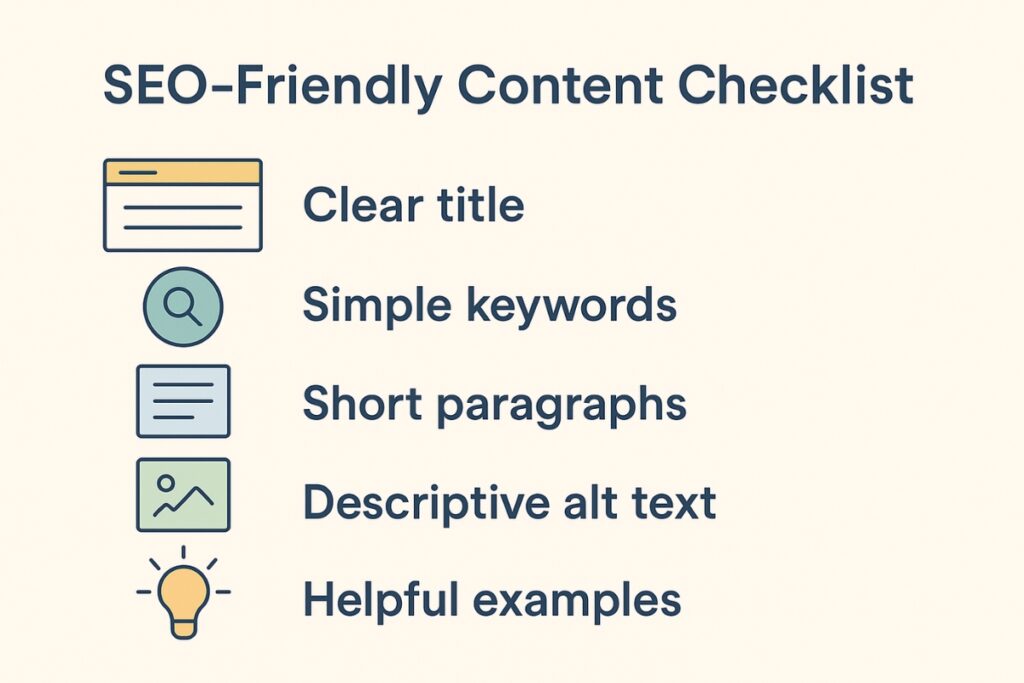
A strong search-friendly piece of content usually includes:
1. A clear title that sounds like something a customer would search
Titles that use everyday language tend to rank better. Examples include:
- Best way to choose a local service
- Simple guide for beginners
- How to avoid common mistakes
Avoid titles filled with industry jargon or overly clever wording. Search engines favor terms people actually type.
2. A short introduction that explains the value quickly
Readers decide within seconds if a page is helpful. A strong introduction reassures them they are in the right place.
3. Simple keywords placed naturally
The main keyword should appear:
- in the first paragraph
- in one subheading
- a few times throughout the content
- in the meta description
No keyword stuffing needed. Just natural usage that fits the flow of the explanation.
4. Short paragraphs and clear formatting
Small blocks of text, bullets, and subheadings improve readability. Search engines and readers both prefer content that is easy to skim.
5. Real examples or simple illustrations
Readers trust content that feels practical and grounded in real situations.
6. Descriptive alt text for images

Alt text helps search engines understand the image and improves accessibility. Examples:
- photo of small business owner writing content
- image of beginner-friendly content workflow
Alt text should describe the visual, not restate the title.
7. A structure that leads the reader step by step
Search engines favor content that guides the user toward solutions. Steps, checklists, and templates perform very well.
Search-friendly content works best when it answers questions clearly, uses simple formatting, and guides customers step by step.
Once the content is structured well, the next challenge is maintaining a steady publishing routine.
Step 5: Build a Weekly Content System That Is Easy to Maintain
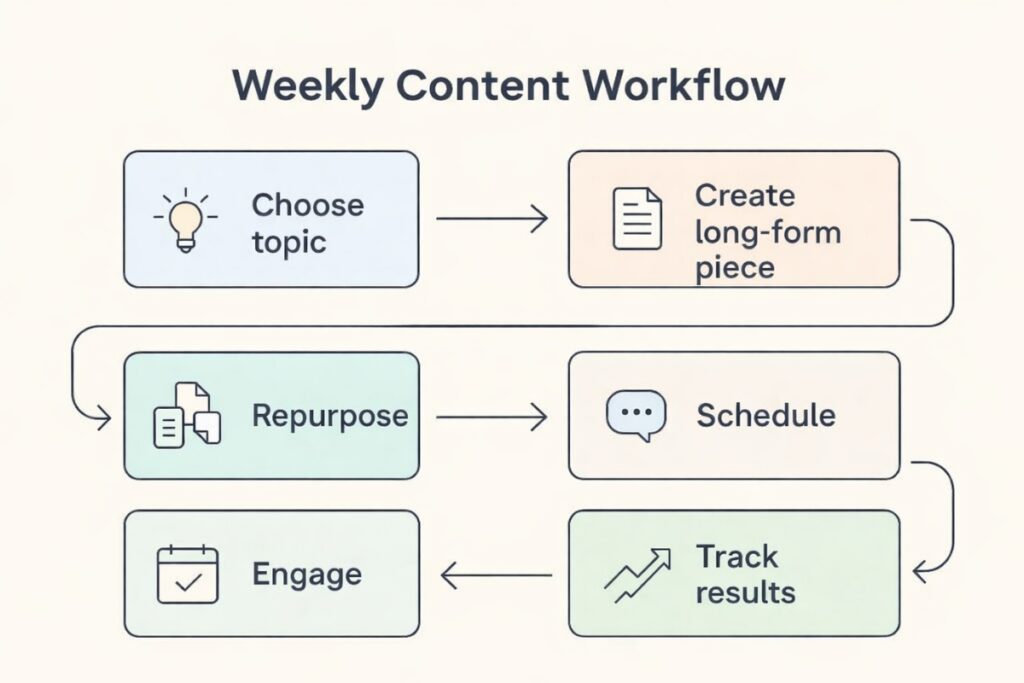
Small businesses stay ahead of bigger competitors by being consistent. A weekly content system doesn’t need to be complicated but it does need to be repeatable.
Each business’s content flow might look different but following simple content calendar is important. When content creation becomes part of a routine, visibility grows steadily.
Example content plan for a small business:
Choose one main topic for the week
This topic should come from customer questions, product benefits, or seasonal needs. One topic is enough to generate multiple content pieces.
Create one long-form piece based on that topic
This could be:
- a blog post
- a detailed guide
- a how-to walkthrough
- a comparison or checklist
This long-form piece becomes the foundation for all other content that week.
Break the long-form content into smaller formats
Repurposing saves time and increases reach. From one piece of content, a business can create:
- social captions
- short videos
- tips and reminders
- email snippets
- FAQs
- infographics
This method allows small businesses to appear active and consistent without creating everything from scratch.
Schedule the posts for the week
Posting manually every day is overwhelming. Simple scheduling tools keep the content flowing even during busy periods.
Engage with comments and questions
Engagement signals relevance to both readers and search engines. A quick daily check-in is enough to stay connected.
Review what performed well at the end of each week
Tracking does not require advanced analytics. The most useful details include:
- which posts gained the most reactions
- which formats customers preferred
- which topics generated questions
- which posts drove clicks or leads
These insights guide the next week’s content and help refine the system over time.
With a simple weekly workflow, a small business can maintain steady visibility without feeling overwhelmed. Consistency beats volume, and a simple weekly routine is often more effective than scattered bursts of content.
Step 6: Publish Consistently and Track What Works
Content strategy is a long game. A small business can outperform bigger competitors simply by staying consistent over time.
Tracking does not need to be complicated. The most useful metrics include:
- which posts get the most engagement
- which topics get the most questions
- which formats customers respond to
- which content brings website clicks or leads
These insights help shape better content decisions each month. Instead of guessing, the business produces more of what works and less of what does not.
Step 7: Engage Like a Human, Not a Corporation

This is where small businesses shine the most.
Because engagement happens in real time, it gives small businesses the opportunity to build relationships instead of just visibility. Every reply, comment, or message becomes a chance to reinforce trust and show that there is a real person behind the brand.
Big brands cannot respond with personality or warmth. They operate through policies and scripted replies.
These limitations often result in slow responses or generic messages that feel impersonal. Small businesses are not bound by the same layers of approval, allowing them to communicate more naturally and adapt their tone to each situation.
A small business can respond like a real person, and customers appreciate that.
Effective engagement includes:
- replying to comments with friendly detail
- addressing genuine concerns
- answering questions with care
- sharing helpful advice
- speaking in a tone that feels natural
This kind of genuine interaction makes a small business memorable, trustworthy, and easier for customers to connect with.
Step 8: Update Existing Content to Increase Visibility
Publishing content is not the final step. Once a piece is live, it should continue to be reviewed and improved over time. Small businesses can gain additional visibility by updating existing content instead of constantly creating something new.
Search engines favor content that stays accurate, relevant, and current. Regular updates signal that a page is still useful, which can help improve rankings and maintain visibility in competitive search results.
Examples of simple content updates include:
- refreshing outdated information or statistics
- adding new examples or clarifications
- improving formatting for readability
- expanding sections that receive frequent questions
- updating internal links to newer content
These updates do not require a full rewrite. Even small improvements can make a noticeable difference in performance.
Keeping published content up to date ensures that it continues to serve customers effectively while supporting long-term SEO growth. For small businesses with limited time and resources, updating existing posts is one of the most efficient ways to strengthen visibility without increasing workload.
Small Businesses Can Outperform Big Brands Through Smart Content
Small businesses don’t need large budgets to compete. A simple and focused content strategy allows them to stand out, educate customers, and build loyalty.
When content is intentional, it reduces wasted effort and makes every piece work harder. Instead of spreading resources thin, small businesses can concentrate on creating content that directly supports their goals and speaks to a clearly defined audience.
By choosing clear goals, creating helpful content, staying consistent, and engaging like a real human, small businesses gain a competitive advantage that big brands cannot replicate.
Readers who want to build long-term visibility may consider establishing a blog, as it provides a home for evergreen content that continues working even when the business is not actively posting elsewhere.
A blog also creates a central place to update, refine, and expand content over time, making it easier to build authority and improve search performance without starting from scratch.
With steady improvement and a simple weekly system, small businesses can become the go-to authority in their niche and confidently outperform larger competitors.
Frequently Asked Questions

The most effective content focuses on solving real customer problems, explaining services clearly, and sharing practical guidance. This type of content performs better than promotional posts and often outranks big brand articles.
A consistent schedule matters more than posting daily. One high-quality long-form piece each week, supported by a few repurposed social posts, is enough to build momentum and improve visibility over time.
Small businesses communicate in a more relatable and human way. This makes the content easier to understand, more trustworthy, and better aligned with what customers are actually searching for. Big brands struggle to match this level of personal connection.
Yes. A blog strengthens search visibility, builds authority, and provides evergreen content that continues working in the background. It also gives customers a trusted place to learn more before making a decision.
Businesses should prioritize platforms where their ideal customers already spend time. This often includes search engines, social media, and email. A simple distribution routine ensures content reaches more people without requiring a large marketing team.
The most helpful metrics include website visits, search impressions, engagement on posts, leads generated, and recurring questions from customers. Tracking these indicators helps identify what content performs best and what to improve next.