
Professionals like lawyers, doctors, and consultants face a unique challenge when creating content. They sell expertise, not products.
Unlike physical products, professional services cannot be evaluated immediately. Potential clients must rely on trust, credibility, and clear communication before deciding to move forward. This makes content one of the most important tools for demonstrating knowledge, experience, and reliability before the first conversation ever happens.
Their audience is cautious, selective, and looking for clear answers before committing to a consultation. This is why a strong content strategy matters. It helps position a brand as trustworthy while educating potential clients and guiding them toward taking action.
Many professional service providers jump straight into posting online without a plan. They upload random updates, share occasional tips, or rely heavily on word of mouth.
While these efforts may bring occasional visibility, they rarely create consistent results. Without a clear strategy, content often feels disconnected, fails to address real client questions, and does not support long-term growth or lead generation.
The result is inconsistent visibility and low engagement. A good content strategy for professional services changes that. It creates structure, builds authority, and ensures every piece of content works with purpose.
Here’s a simple, practical framework any professional service provider can follow.
Step 1: Define Your Ideal Client Clearly

Everything starts with understanding who the content is for. Professional services often serve a broad audience, but content performs better when it speaks to one specific type of client.
Consider factors like:
- What problems do these clients need solved
- What information they’re searching for
- What objections they usually have
- What makes them trust a provider
Examples:
- Lawyers often serve people in stressful situations who need clarity.
- Doctors attract individuals searching for reliable, science-based health information.
- Consultants work with business owners who want strategy, structure, or growth.
A clear understanding of your target audience ensures that all content connects with the right people. It helps the message feel direct, relevant, and trustworthy.
Step 2: Research Competitors and Choose Your Core Content Themes
Before deciding what content to create, professional service providers should look at what is already working in their space. Competitor research helps identify the topics, formats, and questions that are already ranking and attracting the type of clients they want to reach.
This does not mean copying competitors or reinventing the wheel. It means understanding what search engines and audiences respond to, then creating clearer, more helpful, or more experience-driven content based on your own expertise.
You can explore this further through a detailed local SEO competitor analysis that explains how to evaluate what is already ranking in your space.
Professionals shouldn’t try to cover every topic. Content themes help create focus and give you reliable sources of content ideas you can build on consistently.
By narrowing content around a few clear themes, professional service providers avoid scattered messaging and make it easier for potential clients to understand what they specialize in. Focused themes also help search engines associate the brand with specific topics, which improves topical authority and long-term visibility.
Common, high-performing themes for professional services include:
• Education
• Process explanations
• Frequently asked questions
• Case studies
• Common mistakes
• Industry myths
• How the service works
• Step-by-step guides
• Costs, timelines, and expectations
Examples:
• A lawyer may focus on rights, processes, legal timelines, or common misconceptions.
• A doctor may cover symptoms, treatments, prevention, or lifestyle education.
• A consultant may share frameworks, workflows, or industry insights.
Choosing three to five themes makes the entire content plan easier to execute. It also signals expertise to both readers and search engines.
Step 3: Build Trust Through Transparency and Social Proof
Trust is one of the strongest currencies in professional services. People want to feel confident and informed before choosing a provider, especially when the service involves personal, legal, financial, or health-related decisions.
Transparency helps reduce uncertainty by showing potential clients what to expect. Clear explanations, realistic timelines, and honest communication make services feel more approachable and less intimidating.
Simple ways to build trust through transparency include:
• Explaining processes in plain language
• Showing what happens during consultations or evaluations
• Clarifying pricing ranges when possible
• Breaking down timelines and expectations
• Addressing common fears or misconceptions
• Using examples that reflect real client concerns
Trust does not come from technical terms or complicated explanations. It comes from clarity and openness. Straightforward content helps potential clients feel more at ease as they navigate unfamiliar decisions, especially when supported by local content marketing that reflects real community needs.
Social proof strengthens that trust by showing how others have experienced the service. When people see feedback, patterns of success, or shared outcomes, it reassures them that they are making a well-informed choice.
Effective forms of social proof for professional services include:
• Client testimonials
• Reviews and ratings
• Case highlights or anonymized outcomes
• Common results clients report after working with you
• General feedback themes without revealing sensitive details
You can explore this further through a detailed guide on online reviews that explains how client feedback builds credibility and trust for professional services.
When transparency and social proof work together, content feels honest, reassuring, and credible. This combination helps potential clients move forward with confidence rather than hesitation.
Step 4: Create a Simple Content Funnel
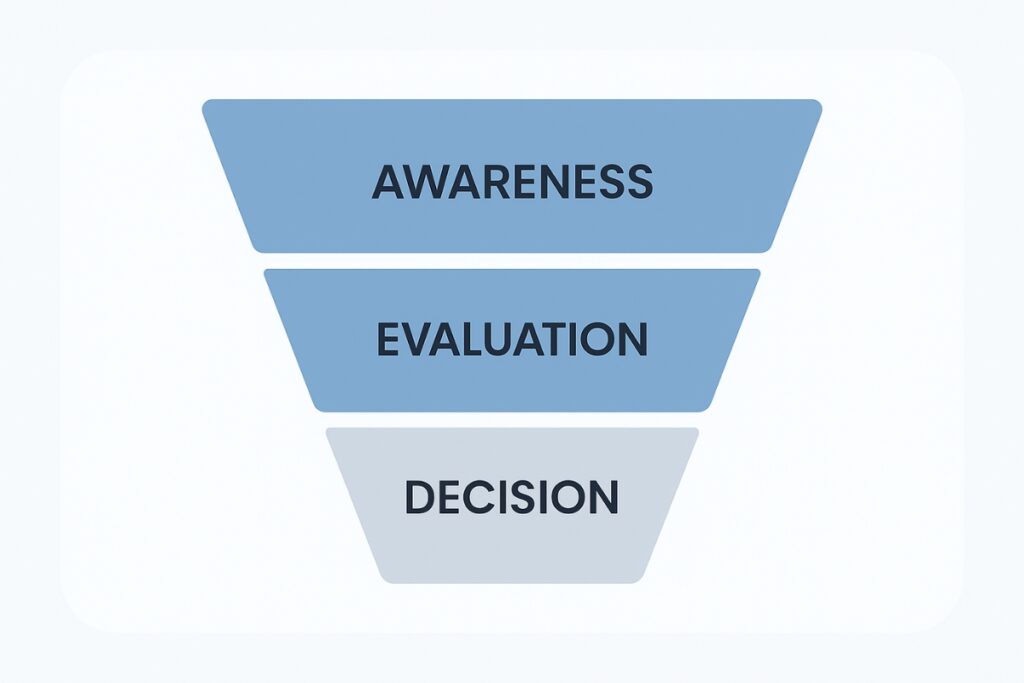
Professional services benefit the most from a clear structure because people often move slowly and cautiously before choosing a provider. A simple funnel helps your content meet people at the right stage without sounding promotional and helps you avoid common funnel mistakes that confuse potential clients.
A content funnel only works if the language used matches how potential clients actually search. Professional service providers should avoid internal terminology and instead use the exact words, phrases, and questions people type into search engines when they are looking for help.
This includes using real search terms in page titles, headings, and content, and framing information around common questions rather than industry jargon. When content mirrors search behavior, it becomes easier for people to find and understand.
Use the Words People Are Actually Searching For: Keyword research helps identify the terms people use at each stage of the funnel, while People Also Ask questions reveal the specific concerns and follow-up questions prospects want answered before moving forward.
Top of the Funnel (Awareness)
This is where potential clients first learn about a topic or start recognizing a problem. Content should be clear, easy to understand, and focused on education.
Strong examples:
- Legal rights explainers
- Basic symptom awareness guides
- Business challenges or myths
- Simple definitions or checklists
This stage helps readers feel understood before they ever think about booking a service.
These awareness pieces create the foundation for different stages of the content funnel and keep your messaging structured.
Middle of the Funnel (Evaluation)
People now understand their situation and want to know how the service works. They compare providers, research processes, and look for reassurance.
Useful content ideas:
- “What to expect” guides
- Process timelines
- Criteria for choosing a provider
- Frameworks or step-by-step breakdowns
This is where you reduce uncertainty and give readers the clarity they need to feel confident.
Bottom of the Funnel (Decision)
Readers are ready to take action. Content here should make the next step straightforward and comfortable.
Examples:
- Service breakdowns
- Pricing ranges when applicable
- Case highlights or testimonials
- A simple “how to begin” explanation
A well-structured funnel makes content feel like a guided journey rather than scattered information, which leads to better engagement and smoother conversions.
Step 5: Use Simple Formats That Perform Well
Content themes define what you talk about, while content formats determine how that information is presented. Once your themes are clear, choosing the right format helps make that content easier to consume, understand, and engage with.
Professional service providers do not need fancy production. Simple formats work best because they focus on clarity, structure, and accessibility rather than design complexity.
Here are formats that consistently work:
• Checklists
• Step-by-step guides
• Short explainer videos
• Web pages answering common questions
• Infographics that simplify complex topics
• Before-and-after frameworks or processes
• Short blog posts or educational articles
• Carousel posts breaking down concepts
The key is clarity. Audiences appreciate content that respects their time and delivers information quickly.
Step 6: Answer High-Intent Questions Directly
One of the easiest ways to rank in search and attract qualified leads is to answer the questions people often ask before booking a service.
These questions usually signal strong intent because the person is already evaluating options and looking for reassurance, clarity, or confirmation before taking the next step. Addressing them directly helps filter in more qualified leads who are closer to making a decision, rather than just browsing for general information.
These questions usually start with:
- How
- Why
- When
- What
- Cost
- Timeline
Examples of high-intent questions:
• What happens during a consultation
• How much does this service usually cost
• When to consider hiring a lawyer or consultant
• Why certain symptoms should not be ignored
• How long a typical process takes
Answering these questions builds authority and reduces friction. It also helps the content show up in search results more often.
Step 7: Repurpose Content for Multiple Channels
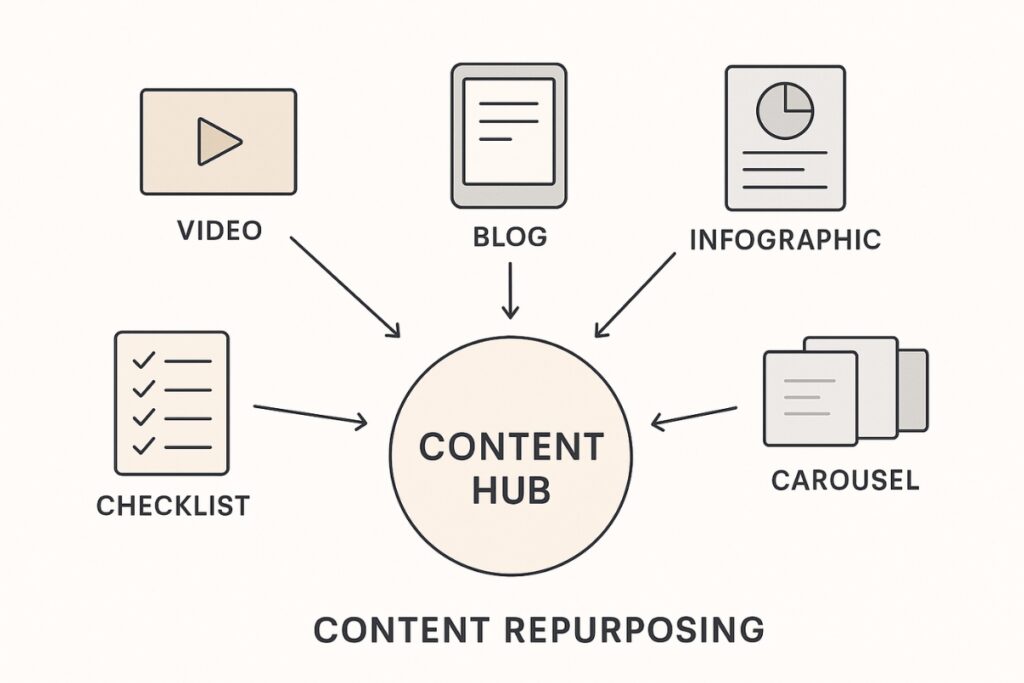
Repurposing allows professionals to share more content without increasing workload and gives you the building blocks for a simple evergreen content approach.
By repurposing content intentionally, professional service providers reduce the pressure to constantly create something new. One well-planned piece can continue working long after it is published, reinforcing key messages, supporting different stages of the funnel, and keeping expertise visible without additional time investment.
It keeps messaging consistent and helps reach people who prefer different formats.
Start With One Core Piece
Create one main content piece first, such as a simple guide, a client question breakdown, or a process explanation. Then break it into smaller pieces.
Example workflow:
- Create one main guide.
- Turn each main point into short social posts.
- Convert the guide into an infographic.
- Pull out key questions for standalone FAQs.
- Record short clips summarizing sections.
- Use highlights in newsletters or resource pages.
- Turn the steps into a downloadable checklist.
This approach takes one idea and multiplies it across channels without extra brainstorming.
Choose Formats That Fit Each Profession
Different service providers benefit from different content types:
For lawyers: Rights explainers, process timelines, FAQ videos.
For doctors: Preventive tips, symptom checklists, treatment overviews.
For consultants: Business frameworks, mistake lists, productivity breakdowns.
Matching the format to the profession helps the content feel meaningful and easy to understand.
Consistency Without Overwhelm
Because professional schedules are demanding, repurposing creates consistency even when time is limited. It keeps your presence active without requiring constant creation.
Step 8: Keep the Messaging Simple and Human
Professional service content often becomes formal or overly technical. Simple language connects better.
Tips for improving clarity:
- Use short sentences
- Avoid jargon unless necessary
- Explain complex terms in plain language
- Use examples and analogies
- Speak to real-life scenarios
- Maintain a calm, confident tone
People prefer content that feels human and easy to digest, especially during stressful or confusing situations.
Step 9: Make It Easy for Someone to Take the Next Step
A strong content strategy guides readers smoothly toward action. This does not require sales language. It simply requires clarity.
Offer Simple Micro-Steps
Not everyone is ready to book immediately. Provide smaller steps that build trust and help them learn more:
• A service overview
• A process timeline
• A checklist or short guide
• Answers to common concerns
These small steps reduce hesitation and help people feel prepared.
Remove Confusion About What Comes Next
Clearly explain how someone can begin. Many potential clients pause because they are unsure what the first step looks like.
Helpful details include:
• How to get started
• What information is needed
• What the first meeting includes
• Approximate timelines
Clear next steps make it easier for potential clients to move forward confidently.
Place the Next Step Naturally
Guide readers at the end of a section, in a sidebar, or below an FAQ. The placement should feel helpful, not promotional.
Next steps should align with the content funnel. Awareness-stage readers may need a guide or checklist, evaluation-stage readers may want process clarity, and decision-stage readers are often ready for a direct action.
When calls to action match funnel stages, content feels supportive and encourages confident, natural progress.
Bringing Your Content Strategy Together
Professional services rely heavily on trust, clarity, and credibility. A well-structured content strategy strengthens these qualities by offering simple explanations, helpful guidance, and consistent messaging.
When each piece of content serves a clear purpose, it becomes easier for potential clients to understand both the service and the provider behind it. Instead of feeling overwhelmed or unsure, readers move through information in a way that feels guided, reassuring, and aligned with their needs.
When content feels easy to understand and focuses on real client questions, it becomes more effective at building confidence. Lawyers, doctors, and consultants who follow a clear local SEO content strategy see stronger visibility, better engagement, and smoother conversions because potential clients know what to expect and feel supported at every stage.
Frequently Asked Questions

It is a structured plan that helps lawyers, doctors, and consultants share information that builds trust, educates clients, and supports their service process. It focuses on clear messaging, consistent content, and guiding potential clients toward the next step.
Professional services rely heavily on credibility. Clear, educational content helps reduce confusion, answers common questions, and positions the provider as a trusted expert. This increases visibility and confidence, which leads to more inquiries.
Simple, educational formats perform best. Step-by-step guides, FAQs, process explanations, short videos, checklists, and basic how-to content help potential clients understand what to expect and feel more prepared.
A consistent pace works better than posting often. Whether it is weekly or twice a month, the goal is to maintain a schedule that can be sustained over time. Consistency builds trust and improves search visibility.
A blog can be helpful for long, educational content, but it is not required. The platform should match the strategy. If the content fits naturally into articles, use a blog. If not, focus on videos, FAQs, guides, or simple web pages.