At its core, Substack is a platform that lets writers publish newsletters, combining the feel of a blog + the direct reach of email. You write posts, send them to subscribers, and optionally offer paid content. It handles hosting, subscription payments, analytics, and more.
Unlike social media, Substack gives you full control over your content and subscriber list. This means even if Substack changes, your audience stays yours.
Step‑by‑Step: Setting Up Your Substack
Here’s a simple path to get started without overwhelm.
Step 1: Create your account & publication
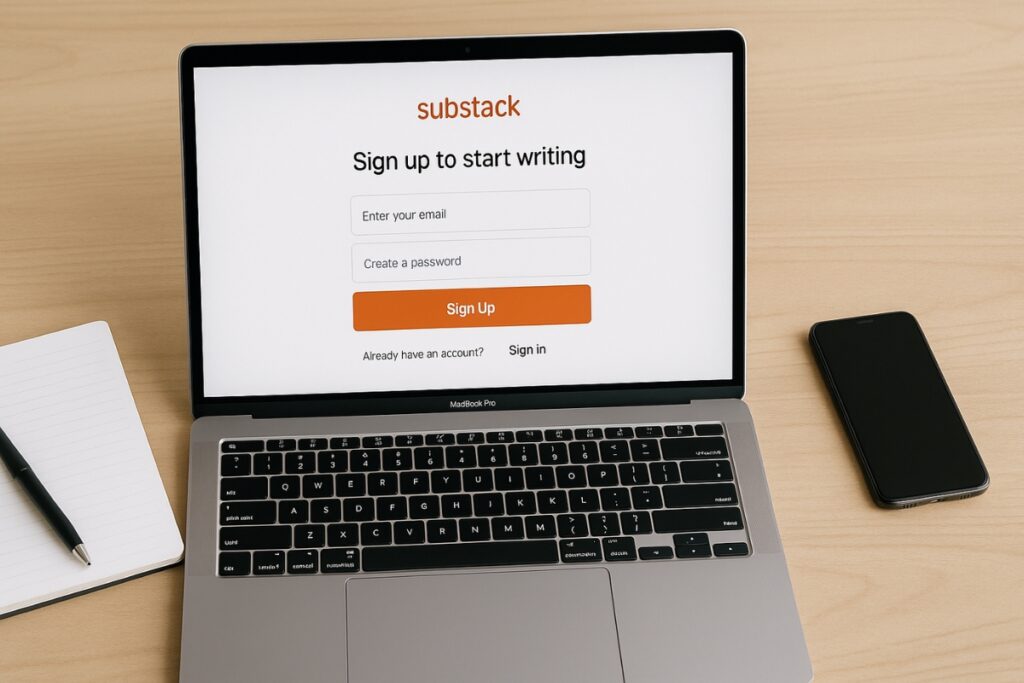
- Go to Substack’s signup page and register (email + password).
- Choose a publication name (something clear and niche‑friendly).
- Add a tagline/description so visitors immediately understand what your Substack offers.
Step 2: Configure basic settings
- Upload a logo or header image (optional but helps branding).
- Pick your theme or layout (Substack offers simple templates).
- Decide whether your publication is free only or mix of free + paid (you can enable paid later).
- Connect payment (Stripe) if you plan to monetize.
- Consider connecting a custom domain (so your Substack URL looks professional).
Step 3: Write your first posts (seed content)

- Before launching publicly, write 2–3 posts to showcase your voice and content style. This gives early visitors something to engage with and sets expectations.
- Basic keyword research helps shape your content around what your ideal readers are actually searching for.
Stuck on topics? There are simple ways to find endless content ideas to keep your Substack fresh and engaging.
Step 4: Publish & launch
- Send your first post to yourself first to preview (check formatting, images, subject line).
- Once satisfied, publish and send to subscribers (initially maybe just you + a few testers).
- Share your newsletter across your social platforms and personal network.
How to Grow Your Substack and Get Subscribers
Once your Substack is live, the next challenge is growing your audience. Here are some proven strategies:
1: Use Substack “Notes”
Substack has a micro‑blogging feature called Notes (short posts, interactions) that functions somewhat like a social feed. Post short insights or prompts, engage with others, and use it to drive interest to your main newsletter.
2: Promote on social media & your own network
- Share each newsletter issue or excerpt on Twitter, LinkedIn, Instagram, etc.
- Ask friends, colleagues, or early followers to subscribe and share.
- Repurpose content (for example, turn your newsletter into blog posts or social posts) to reach new eyes.
Over time, creating an evergreen content strategy helps you generate value long after the publish date.
3: Stay consistent and publish regularly
- Aim to post short Notes often, and publish longer newsletters 1 – 2 times a week.
- The more you publish, the more discoverable your content becomes.
- Staying consistent becomes easier with a simple content calendar to plan your posts in advance.
4: Offer value (free + bonus)
- Free content must offer real value, tips, lessons, stories and insights.
- Occasionally include bonus content or deeper material to make people want to stick around.
- Encourage feedback: surveys, questions in your newsletter, ask what topics people want.
- Consider mapping out a simple content marketing plan to align your newsletter topics with long-term goals.
How to Monetize Your Substack Newsletter
Once your audience grows, you can explore ways to monetize.
1: Paid subscriptions
Substack allows you to put posts behind a paywall. Subscribers pay monthly or yearly to access premium content.
You decide which content is free vs paid. Many successful Substackers keep most content free and reserve extras for paid.
2: Tips or donations
Some Substack users enable a “tip” or “supporter” option where people can donate to support free content.
3: Cross‑selling products or services
If you offer courses, coaching, or digital products, your newsletter can act as a funnel. Free content builds trust, and soft mentions inside your posts can lead to sales.
Avoid These Common Substack Mistakes

As you build momentum, it’s also important to avoid common pitfalls:
| Pitfall | Why it hurts | How to avoid |
| Starting with paid content immediately | Scares off readers before building trust | Begin free; only consider paid later |
| Publishing inconsistently | Readers lose interest or forget about your newsletter | Pick a schedule you can maintain (even if modest) |
| Overthinking design or perfection | Delays launch and kills momentum | Use a simple theme and prioritize content |
| Ignoring reader feedback | Misses chances to improve or connect | Ask readers what they want more or less of |
| Relying solely on one platform | If Substack changes, your audience access could suffer | Mirror key content elsewhere and back up your subscriber list |
Summary & What to Do Right Now
Here’s your quick checklist to move forward:
- Sign up to Substack and set up your publication
- Write a few quality posts before launching to showcase your content
- Share your newsletter via your social channels, contacts, and audience
- Use Notes to post micro content and interact
- Keep a regular posting rhythm that readers can rely on
- Consider light monetization strategies once you’ve built trust with your audience.
- Some creators integrate systems like GoHighLevel to streamline lead capture, content delivery, and follow-ups as their audience scales.
With the right systems, it’s possible to use automations and content marketing together to drive consistent growth.
As your newsletter gains traction, some creators choose to pair it with a simple blog or a system to manage content, capture leads, or offer bonus resources. Tools that support this kind of growth can make things smoother as your platform evolves.
By following these steps with patience and purpose, you’ll steadily build an engaged audience and possibly turn your writing into something even more impactful.
Don’t just plan – publish your first Substack post and start building your audience today.
Frequently Asked Questions About Substack
Yes. Substack is free to use. Fees only apply if you enable paid subscriptions (10% cut + Stripe fees).
Yes. You can earn through paid subscriptions, tips, or by offering your own services or products within your content.
No. Substack is beginner-friendly and handles all the tech for you, no coding or web design needed.
Promote consistently, use Notes for engagement, and focus on delivering valuable content. Quality + consistency = growth.
How-to guides, insights, personal stories, curated tips – especially in niche topics – perform well.
Not necessarily. But as your audience grows, pairing your Substack with a blog or system can help expand your reach and manage your content more efficiently.