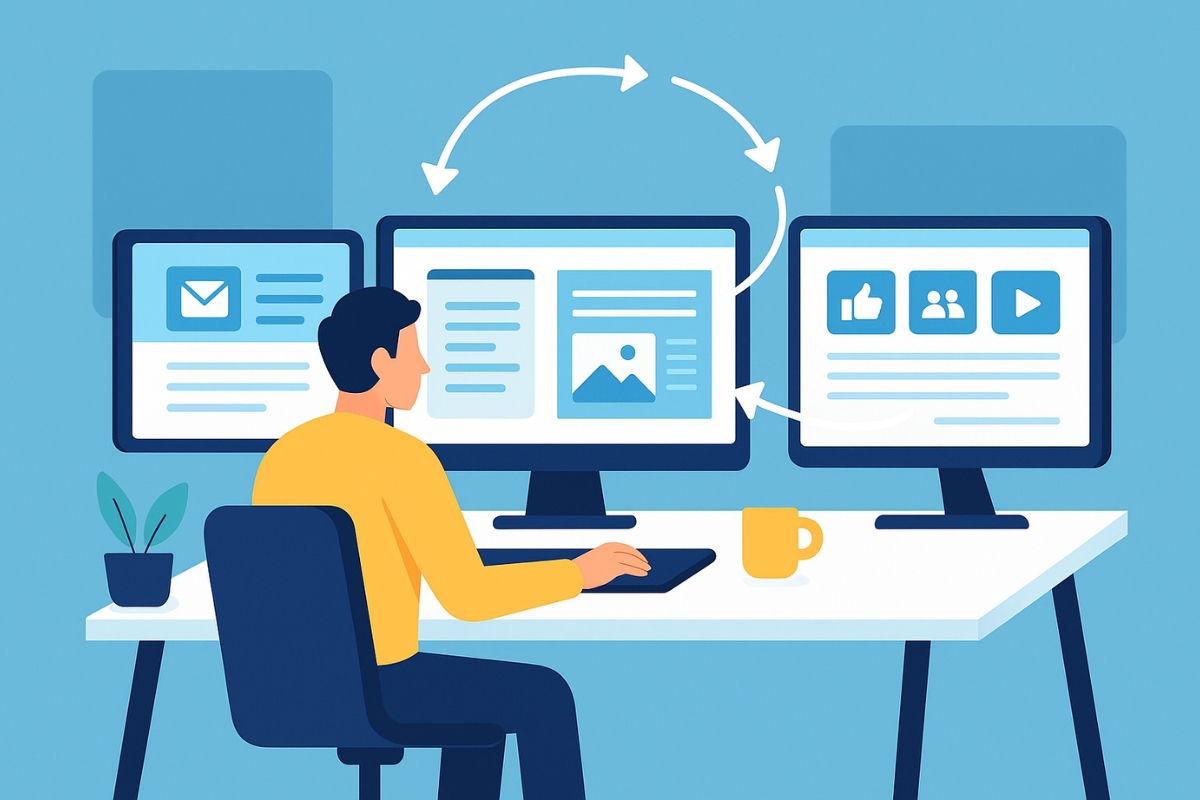
Generating leads once meant long hours of manual work. Writing emails, updating spreadsheets, and posting content by hand. Today, automation and content marketing turn that effort into a streamlined system.
This guide breaks the process down step by step. No complex setups. Just a clear path to building a system that consistently brings in new leads.
Step 1: Map the Customer Journey
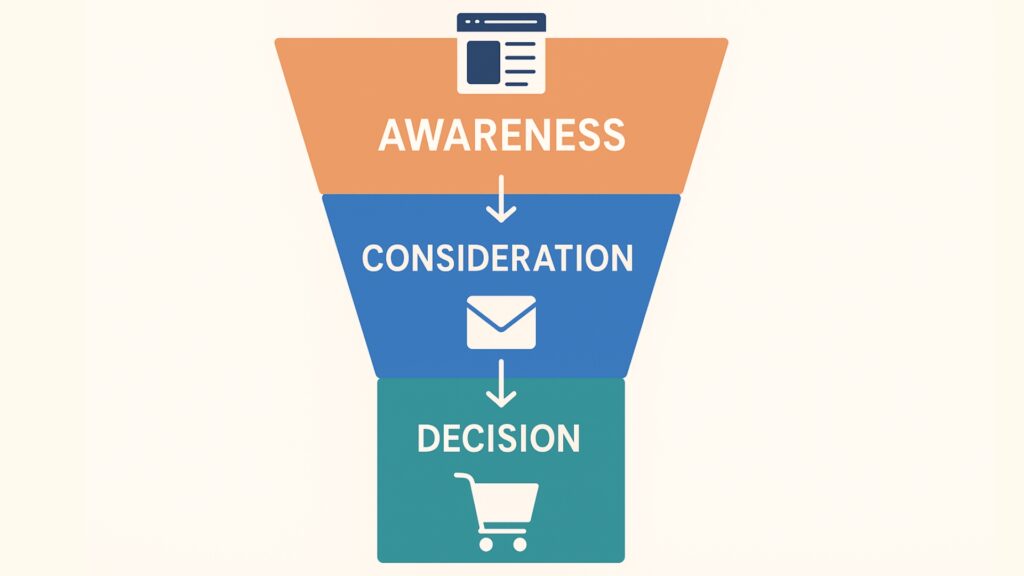
Before creating any content or setting up tools, outline the path someone takes from stranger to customer. This journey usually has three stages:
- Awareness – They discover your content.
- Consideration – They consume more content and engage with your brand.
- Decision – They’re ready to buy and need a gentle nudge.
Automation works best when each stage has dedicated content. For example:
- Awareness: Blog post + newsletter signup
- Consideration: Automated welcome email + product guide
- Decision: Case studies or testimonials delivered through email
Mapping this out ensures your automation flows feel natural, not forced. Some marketers call this the TOFU, MOFU, BOFU funnel- top, middle, and bottom of the funnel. Automation helps content move seamlessly from one stage to the next.
Step 2: Lay the Foundation with Content
Every great automation starts with content, because once the journey is mapped, you’ll know exactly what to create for each stage. Blogs, videos, social posts, and guides provide the first touchpoints with potential customers. Without content, there’s nothing to automate.
- Blog posts capture search traffic and answer common questions with the blog post title and description determining whether you get the click through or not.
- Lead magnets like eBooks, checklists, or free templates encourage people to share their email address.
- Social media content spreads awareness and drives traffic back to your site.
Think of content as the fuel. Automation simply delivers it at the right moment. A strong mix of evergreen strategy and timely posts ensures your system always has something valuable to distribute.
Step 3: Choose the Right Tools
Automation doesn’t mean complex coding or expensive systems. There are user-friendly tools built to make this process simple.
- Email platforms like MailerLite, ConvertKit, or ActiveCampaign make it easy to set up automated workflows.
- All-in-one systems like GoHighLevel (GHL) combine email, SMS, funnels, and CRM into one dashboard, which is useful for businesses that want everything in one place.
- Scheduling tools like Buffer or Later handle automated posting across social platforms.
Choosing the right email marketing tools keeps your automation efficient and scalable. Pick what works for your business size and goals.
Step 4: Build an Automated Welcome Flow
Once someone subscribes to your list, you have a small window to capture attention. A welcome sequence is the perfect way to do this automatically.
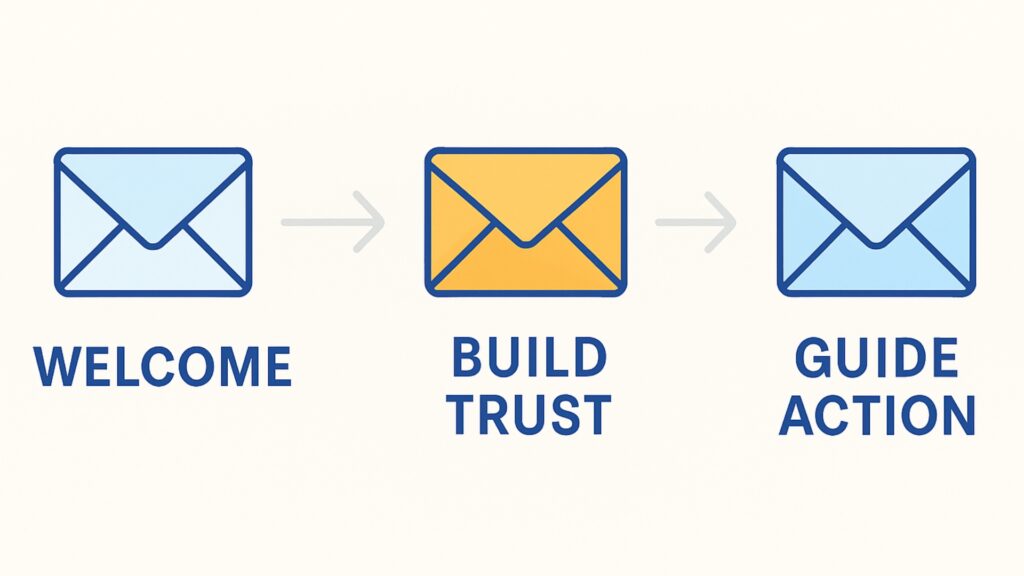
A simple three-part sequence might look like this:
- Welcome & value – Thank them for subscribing, and link to your best resources.
- Build trust – Share a success story or insider tip.
- Guide action – Encourage the next step, like downloading a free guide or checking out a product page.
This flow runs on autopilot, feels personal, and often makes the difference between a casual visitor and a qualified lead.
Step 5: Use Lead Magnets to Drive Signups
Automations rely on having people in your system. Now that you have a simple welcome sequence in place, it’s time to pull people in. That’s where lead magnets shine.
Examples include:
- Free checklist or cheat sheet
- Short email course
- Case study or whitepaper
- Exclusive video training
Tie the lead magnet directly to your service or product. For example, a fitness coach offering a “7-Day Meal Plan” naturally attracts people who might later buy training sessions.
Automation kicks in once someone downloads the resource, delivering follow-ups without you lifting a finger.
Step 6: Automate Content Distribution
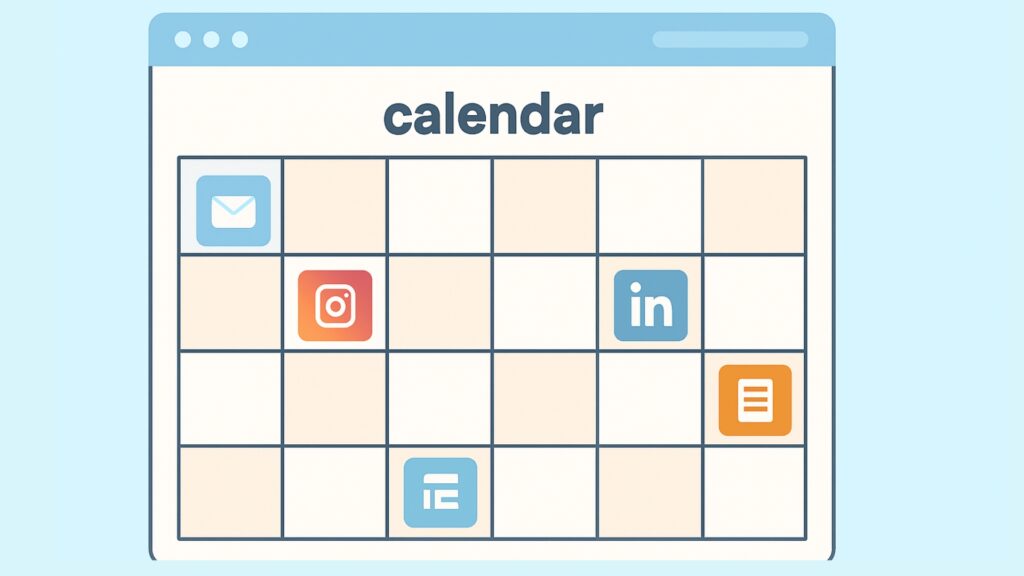
Writing great content is only half the battle. It needs to reach your audience. Automation makes distribution easier:
- Email newsletters can automatically send new blog posts to subscribers.
- RSS-to-email feeds share updates without manual work.
- Social scheduling tools post snippets across multiple channels.
This works especially well when built on top of a content calendar, so campaigns roll out consistently.
Step 7: Segment and Personalize
One of the biggest advantages of automation is personalization at scale. Instead of sending the same message to everyone, segment your list:
- By behavior (clicked a link, downloaded a guide, visited a page)
- By demographics (location, industry, role)
- By stage of the journey (new subscriber vs. returning reader)
Example: Someone who downloaded a beginner’s guide shouldn’t get the same emails as someone who’s already requested a demo.
For service-based businesses, pairing local content marketing with segmented automation can also improve local SEO. For service-based businesses, pairing local content marketing with segmented automation can also improve local SEO. By delivering location-specific blog posts, landing pages, or guides alongside automated follow-ups that segment leads based on service type or geography, businesses can create a seamless journey from discovery to conversion.
It’s the same principle behind local link building or keeping your Google Business Profile optimized – tailored, relevant messaging always works better than one-size-fits-all.
Step 8: Nurture with Drip Campaigns
A drip campaign is a series of pre-written emails that “drip” out over time. They’re excellent for building relationships.
A basic drip campaign might include:
- Educational content (blog highlights, quick tips)
- Proof of results (testimonials, case studies)
- Gentle promotion (discounts, free trials, consultations)
- Address common objections (if you’re selling a product or service)
Because it’s automated, you’re consistently staying in front of leads without manually sending each individual message.
Step 9: Track and Optimize
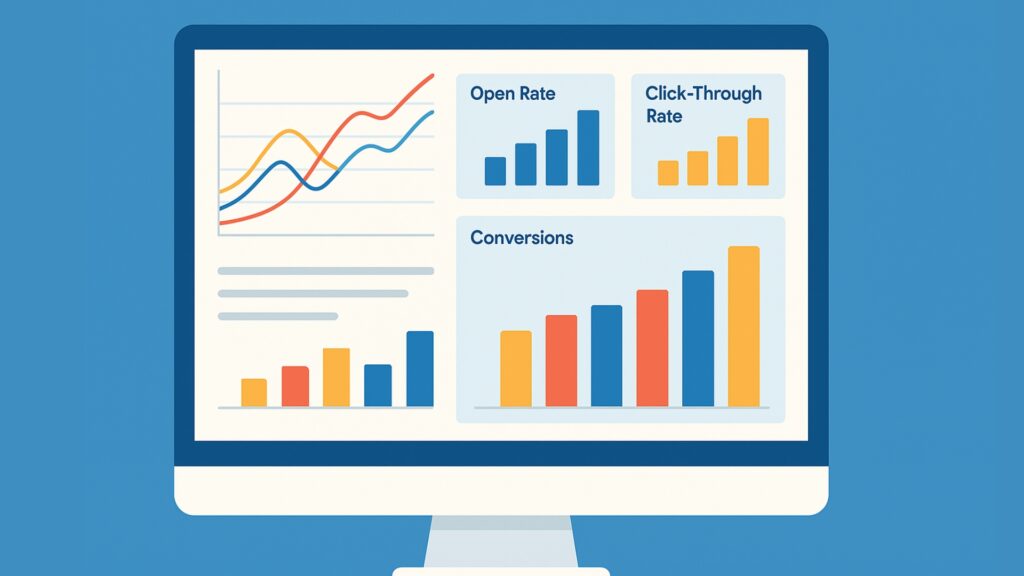
Automation is not a set-and-forget solution. Monitor performance and make adjustments. Key metrics to track:
- Open rates – Are subject lines engaging?
- Click-through rates – Is your content driving action?
- Conversions – Are leads becoming customers?
Here’s a quick checklist to strengthen your local SEO:
- For local businesses, keyword tools like Google Keyword Planner are great for keyword research to help identify what people are searching for.
- On-page optimizations, local schema markup, and consistent messaging improve performance over time.
Step 10: Scale with Advanced Automation
Once the basics are in place, scale your system:
- Trigger emails based on website behavior (abandoned cart, product page visits).
- Score leads automatically to identify hot prospects.
- Integrate SMS reminders or retargeting ads.
Platforms like GoHighLevel or ActiveCampaign make these advanced flows possible. For local businesses, they’re especially helpful in managing multiple service areas or franchises by keeping automation and multi-location SEO organized. For online businesses, the same tools support content marketing, personalized email sequences, and segmented campaigns that help reach the right audience and scale faster.
Why Content Automation Boosts Lead Generation
Content sparks interest, and automation carries it forward. Rather than chasing new leads one by one, automated workflows keep the conversation going, build trust, and move people closer to buying. The result is a system that captures more leads and works around the clock without extra effort.
Final Thoughts
Automation and content marketing don’t have to be overwhelming. By following a step-by-step process, creating content, mapping the customer journey, setting up simple tools, and optimizing over time. Any business can build a lead-generating system that runs consistently.
Start small. Add automation where it saves the most time. As the system grows, it becomes one of the most powerful assets in your marketing toolkit.
Frequently Asked Questions

It is the use of tools and workflows to deliver content to the right audience at the right time without needing constant manual work. It allows businesses to stay consistent and build stronger connections with potential customers.
Yes. Even a simple setup such as a welcome email or scheduled blog updates on social media can save time and improve consistency. For small businesses, these small steps often create a big advantage.
Evergreen content such as how to guides, checklists, and resource pages performs well because it remains useful over time. Mixing evergreen content with seasonal or trending pieces helps keep the system fresh and engaging.
Pay attention to open rates, click through rates, and conversions. If leads are moving from first discovering your brand to taking meaningful actions such as booking a call or making a purchase, the system is working.
Not if it is done thoughtfully. Personalization such as segmenting based on behavior or location keeps automated messages relevant and human. The goal is to deliver value in a way that feels natural, not robotic.