Understanding the difference between content strategy vs content marketing is one of the most important foundations in digital growth.
Many brands struggle because they create content without a clear direction, or they build a plan but never follow through with consistent execution. When these two concepts are mixed up, businesses often end up guessing what to post, who to target, and which topics truly support their goals. Clarifying the role of each one early on helps teams stay organized, save time, and build content that’s actually aligned with growth.
Many businesses treat them as the same thing, which often leads to inconsistent publishing, low engagement, and content that does not drive results. Knowing how these two work together can simplify the entire content creation process and help brands stay consistent.
This guide breaks everything down into simple explanations, clear examples, and beginner-friendly insights that are easy to follow.
What Content Strategy Means
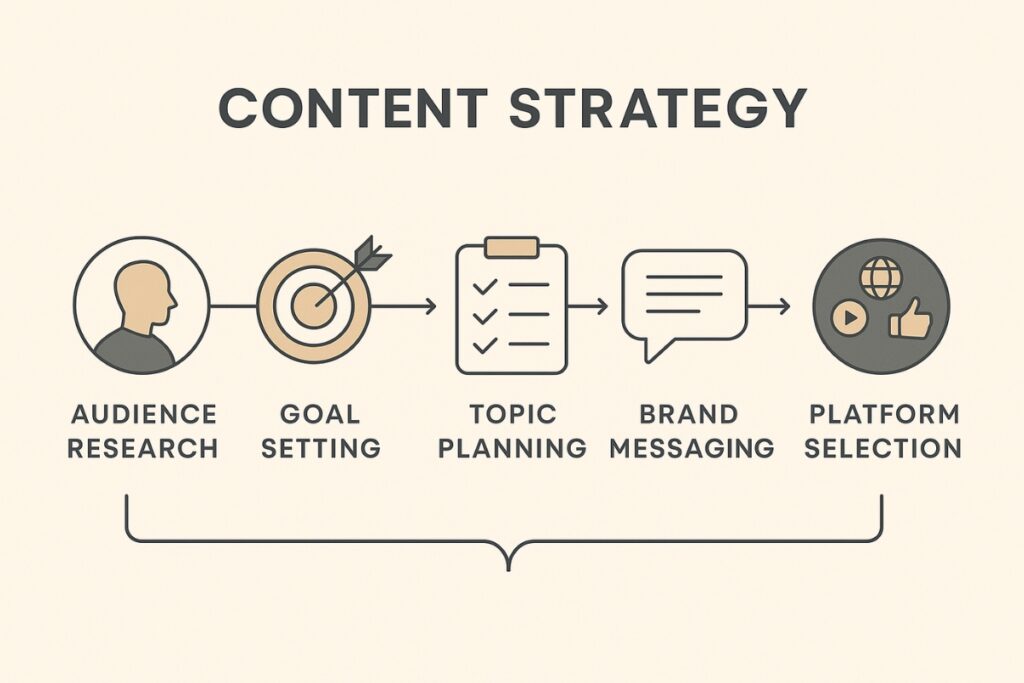
Content strategy is the long-term plan behind every piece of content a business creates, forming the foundation of any content marketing plan.
A strong strategy gives teams clarity before they produce anything. It defines why content is being created and how it will support business goals. Instead of jumping straight into posting, strategy ensures every future piece has a purpose, a clear message, and a specific audience in mind. With this direction set early, businesses avoid guesswork and build content that feels intentional rather than random.
It answers the questions that shape direction, tone, and purpose. Without a strategy, content often becomes random or disconnected.
Content Strategy Answers Questions Like:
- Who is the target audience
- What topics matter the most to them
- What problems need to be solved
- What type of content fits the brand
- What platforms should the content appear on
- What goals each piece of content supports
Think of strategy as the roadmap, similar to how a beginner-friendly content strategy guide lays out the steps. It creates the structure before any writing, posting, or recording begins. Businesses that skip this step often struggle to stay consistent because they don’t have a clear plan guiding what to publish.
What Content Marketing Means

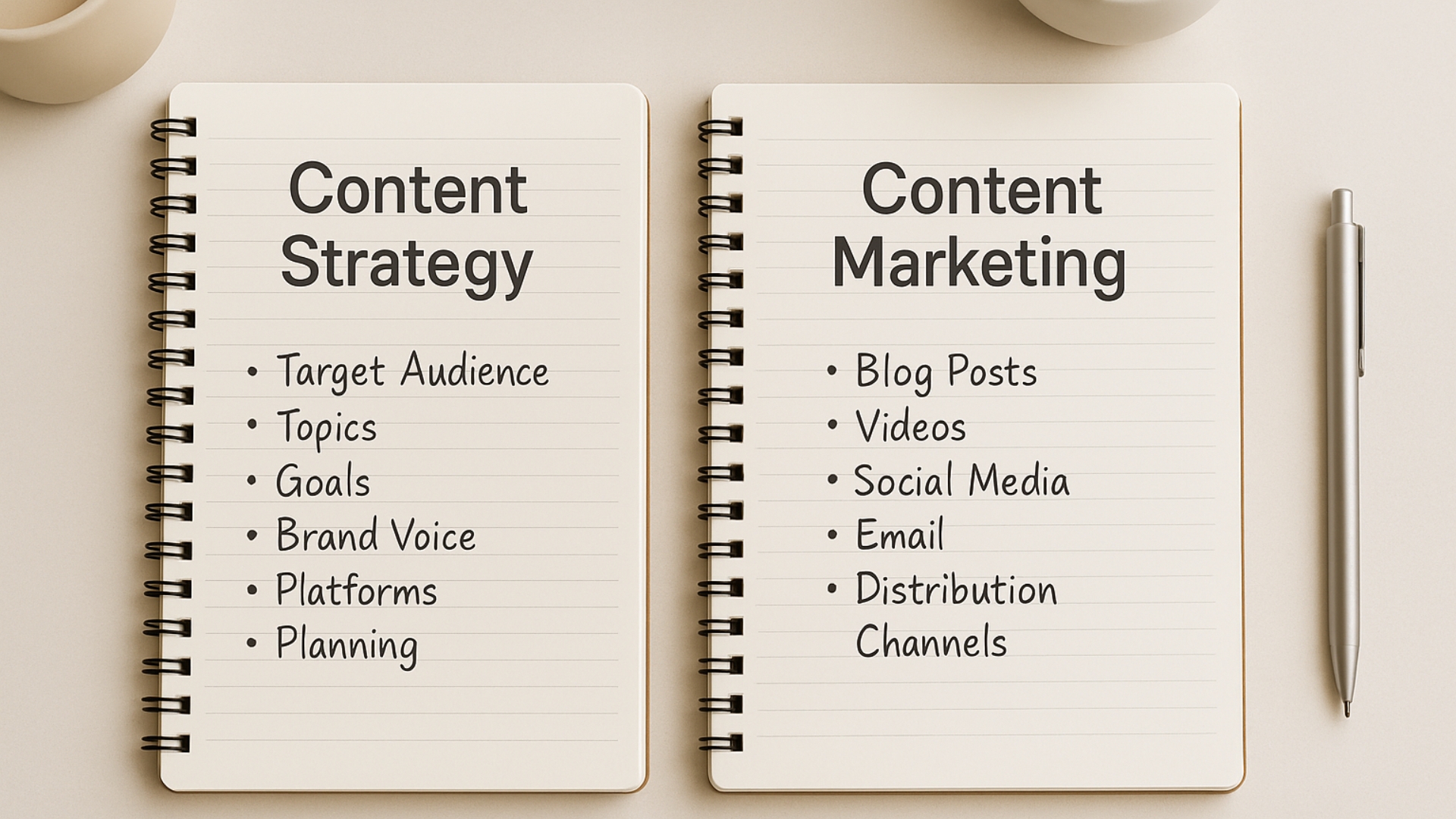
Content marketing is the active execution of the strategy. It involves creating and distributing content across platforms where the audience already spends time.
Content Marketing Includes:
- Writing blog posts
- Publishing videos
- Sharing social media content
- Sending email newsletters
- Posting infographics
- Creating lead magnets
Marketing is the action. It turns the strategic plan into visible content that reaches people. Without marketing, even the best strategy remains unused. Without strategy, marketing becomes guesswork.
Simple Way to Remember Their Roles
A beginner-friendly way to simplify the relationship is this:
Content Strategy = the plan
Content Marketing = the execution
One cannot work well without the other. When both are aligned, a business can publish consistently and build momentum.
Why Many Businesses Confuse the Two
The confusion usually comes from the fact that both involve “content”. But the difference is in their purpose.
Another reason the two get mixed up is that planning and creating often happen at the same time inside a business. Teams may brainstorm topics while producing posts, which makes the roles feel blended. Without separating the planning stage from the execution stage, it becomes easy to assume they serve the same function.
Content strategy is about defining direction. Content marketing is about spreading the message.
Many businesses mistakenly start with marketing. They jump straight into making content because it feels productive.
This usually happens because brands feel pressure to publish quickly. Staying active online can feel like the priority, so teams focus on posting rather than planning. While it creates the appearance of progress, the content often lacks alignment with long-term goals.
However, when there is no strategy, the content lacks clarity, consistency, and purpose. This is one of the most common reasons brands struggle with long-term growth.
Start With Audience Understanding

Every effective strategy begins with knowing who the content is for. This step influences all future actions in the content process.
Identify Audience Details:
- Age, interests, location
- Problems they want solved
- Content formats they enjoy
- Keywords they are already searching, which becomes easier when using beginner keyword research techniques.
- What motivates them to take action
When audiences are clearly identified, content becomes more targeted and easier to plan. This step is essential before any marketing effort begins.
Set Clear Content Goals
Goals give strategy direction and help produce content that actually supports business growth. Without clear goals, content becomes scattered and difficult to measure.
Content goals should be specific, measurable, and tied to real outcomes.
Instead of saying “increase traffic,” a clearer goal would be “increase organic traffic by 20 percent in three months.”
Good content goals should:
- Guide your tone and message (educate, attract, convert, etc.)
- Clarify what success looks like so the team knows what to aim for
- Help you choose the right content types
- Identify the best platforms to focus on
- Act as a filter for topic selection, so you only create content that supports your objectives
- Keep teams aligned and prevent random, disconnected posting
When goals are defined, it becomes easier to plan content that has purpose and contributes to long-term growth.
Choose the Right Content Formats

Not every type of content works for every audience. The goal is to choose formats based on where the audience spends time and how they prefer to consume information.
Short videos often perform well on social platforms because they are quick, visual, easy to share, and often inspired by simple content idea sources.
Different formats also serve different stages of the customer journey. For example, short videos can quickly attract attention at the top of the funnel, while more detailed formats like guides or case studies are better for users who are already comparing solutions. Matching the content type to the user’s stage ensures every piece serves a clear purpose instead of posting just for visibility.
Long-form articles work better for people searching for detailed information through Google. Infographics are useful for breaking down complex ideas into digestible visuals.
It also helps to look at past performance. Reviewing which formats have historically driven the most engagement, clicks, or saves gives insight into what your audience values. Some brands discover that tutorials outperform inspirational content, while others see stronger results from storytelling formats. These insights guide smarter format decisions moving forward.
Email newsletters help nurture existing relationships and maintain consistent communication.
Brands also need to consider their own capacity. A good strategy picks formats that can be created consistently, especially when developing an evergreen content strategy that stays relevant long term.
Another factor to consider is the resources required for each format. Some formats, such as high-quality videos or interactive content, may require more time, tools, and skills. Others are easier to produce. Choosing formats that match the team’s actual capabilities helps prevent burnout and supports consistent publishing over time.
When formats match both audience preferences and brand resources, the content performs significantly better.
Once the strategy sets the direction, the content plan turns that direction into a clear publishing schedule.
Build a Content Plan or Calendar

A content calendar is more than a schedule. It is a system that brings structure to the strategy and helps teams maintain consistency even during busy periods. With a calendar in place, content creation becomes predictable instead of rushed.
A strong content calendar typically outlines topics, keywords, publishing dates, and assigned team members. Some calendars also include notes on visuals, captions, and target platforms.
A good calendar also helps teams stay aligned on priorities. Instead of debating what to post each week, everyone understands the purpose behind each piece of content and how it supports the bigger strategy. This clarity reduces confusion, saves time during planning, and keeps the entire workflow moving in the same direction.
This level of planning prevents last-minute ideas that do not align with the strategy and pairs well with content scheduling tools that keep teams organized.
Beginners often forget to build in time for revisions, approvals, and repurposing. Adding these elements to the calendar creates a realistic workflow and reduces stress.
Tools like GoHighLevel work best for managing audience relationships and automating content delivery through emails, SMS, and social messages. Instead of planning content, it helps nurture leads by sending the right messages at the right time. This makes it a useful support system alongside your content calendar.
Create Content That Matches Strategy

Creating content becomes easier when the strategy is clear. This is where content marketing takes over by producing pieces that support the goals set during planning.
Content should be aligned with the chosen tone, audience needs, and topic direction, especially when planning your different content stages according to your customer’s journey.
A strong strategy also helps creators stay focused on the purpose behind each piece of content. Instead of producing content just to stay active online, teams can connect every post to a clear goal. This could be to educate, build trust, nurture interest, or encourage action. With this clarity, each piece supports the audience at the right stage of their journey.
For example, if the strategy focuses on educating beginners, the content should avoid jargon and break down concepts into simple explanations. If the strategy focuses on conversion, the content may include clearer calls to action or case studies.
Misaligned content is a common issue. A team may publish a trending topic because it’s popular, but if it doesn’t support the brand’s goals, it may bring attention without meaningful results.
This is why reviewing topics through the lens of your strategy is important. Before publishing, teams can ask simple checks such as: Does this support our goals? Does it speak to our target audience? Does it move people closer to the next step? These quick questions help maintain consistency and keep content purposeful instead of reactive.
Staying aligned with strategy ensures that every piece of content contributes to long-term growth.
Analyze Performance and Adjust Strategy

Regular analysis helps determine whether content is performing well or needs improvement. Looking at key metrics provides insight into what the audience engages with most and what needs refinement.
Beginners often focus on vanity metrics like likes or views. While these numbers can be encouraging, they do not always reflect real business impact.
This is why it’s important to look at metrics that show user intent and behavior, not just surface-level reactions. For example, analyzing how long someone stays on a page, what they click next, or whether they return later helps you understand whether the content is truly valuable. These insights give a clearer picture of what actually supports business goals.
More meaningful metrics include organic traffic, conversions, time on page, and search performance. These numbers show whether content is attracting the right audience and encouraging deeper engagement.
Strategy adjustments should be made based on the collected data. If a topic consistently performs well, it can be expanded into more formats.
Patterns in performance make it easier to decide where to focus. When certain topics or content types continue to bring positive results, they can become stronger priorities within the content plan. This allows brands to put more energy into what works instead of spreading efforts too thin.
If certain posts underperform, the strategy may need clearer targeting or new angles. Reviewing analytics every few weeks or monthly helps keep the content strategy fresh, relevant, and effective.
Content Strategy vs Content Marketing: Side-by-Side Comparison

Content Strategy
- Long-term planning
- Defines target audience
- Identifies goals
- Chooses platforms
- Sets brand voice and direction
- Determines content topics
- Creates structure for consistency
Content Marketing
- Executes the plan
- Creates and publishes content
- Drives traffic and engagement
- Improves brand visibility
- Builds trust
- Converts readers into customers
A strategy without marketing is unused. Marketing without strategy is unfocused.
Realistic Example for Beginners
Imagine a brand decides to grow through blogging. Without a strategy, the team may publish topics without alignment, resulting in low traffic and confused messaging.
With strategy:
- The team understands who they are writing for
- There is a clear list of topics supporting the brand
- Keywords are chosen based on search intent
- Posts follow a consistent tone
- Each article supports long-term goals
With marketing:
- Articles are written and published consistently
- Posts are shared on social platforms
- Emails promote new content
- Traffic is tracked
- Content gets refined over time
This combined approach leads to sustainable growth.
Why Both Are Important for Long-Term Success
Businesses that invest in both strategy and marketing see stronger results because their content:
- Reaches the right audience
- Builds trust faster
- Supports brand growth
- Improves search rankings
- Drives conversions
- Maintains clarity and direction
When strategy and marketing work together, content becomes predictable, consistent, and scalable.
Strategy vs Marketing: Final Note
Understanding the difference between content strategy and content marketing helps businesses stay consistent, improve clarity, and create content that supports real goals.
When a business knows which role each one plays, it becomes easier to make decisions about what to publish, why it matters, and how it contributes to long-term growth. This clarity also helps teams avoid guesswork and stay aligned, even as trends or priorities change.
Strategy provides the direction.
A clear strategy outlines the purpose behind every piece of content, making sure each topic, format, and message supports the brand’s bigger picture. It acts as a filter that helps teams focus on what matters instead of chasing every new trend.
Content marketing brings that direction to life.
Through consistent publishing, distribution, and optimization, content marketing turns strategic ideas into real results. It ensures the message reaches the right audience at the right time, helping the strategy move from planning into measurable action.
When both work together, brands can communicate effectively, grow steadily, and produce content that stays valuable over time.
Frequently Asked Questions

Content strategy is the long-term plan that defines goals, audience, topics, and messaging. Content marketing is the execution of that plan through publishing and distributing content.
Yes, but results are usually inconsistent. Without strategy, content is often random, off-topic, or misaligned with business goals, which limits long-term growth.
Absolutely. A simple strategy guides consistency, and even basic marketing efforts like blogs or social posts become more effective when backed by a clear plan.
The strategy sets the direction, explains what to create, and defines the purpose of each piece. Content marketing turns that direction into action by publishing, promoting, and optimizing content across platforms.
Content strategy always comes first. It provides the foundation for all marketing efforts and helps ensure every piece of content supports a specific goal.
Most brands revisit their content strategy every three to six months. Adjustments are based on analytics, audience behavior, and performance insights to keep the content relevant and effective.