If you’re just getting started with online marketing for your coaching or consulting business many terms sound technical, overlap with one another, or are explained in ways that assume prior knowledge.
This guide breaks down essential digital marketing terms for coaches and consultants in a simple, step-by-step way. Each term is explained in plain language, with a clear purpose and real-world relevance for service-based businesses.
Key Takeaways
- Digital marketing terms explain how visibility, content, leads, and conversions work together
- Visibility and traffic matter, but results come from turning attention into action
- Content and SEO are most effective when they focus on clear answers to real questions
- Leads and email make it possible to follow up beyond social media
- Simple, organized marketing systems are easier to maintain and more effective over time
Table of Contents
- Why Understanding Digital Marketing Terms Matters
- Visibility and Traffic Terms
- Content and Authority Terms
- Lead Generation Terms
- Conversion and Action Terms
- Email and Relationship-Building Terms
- Performance and Measurement Terms
- Systems and Structure Terms
- How These Terms Work Together
- A Practical Next Step
- Digital Marketing Terms Coaches and Consultants Should Understand
- Frequently Asked Questions
Why Understanding Digital Marketing Terms Matters
Many coaches and consultants struggle because:
- They hear advice but do not understand the terminology
- They invest time in the wrong activities
- They confuse visibility with results
- They rely on social media without a foundation
Understanding basic digital marketing terms removes guesswork. It helps clarify what actions matter, what can be ignored, and how all the pieces fit together.
Visibility and Traffic Terms
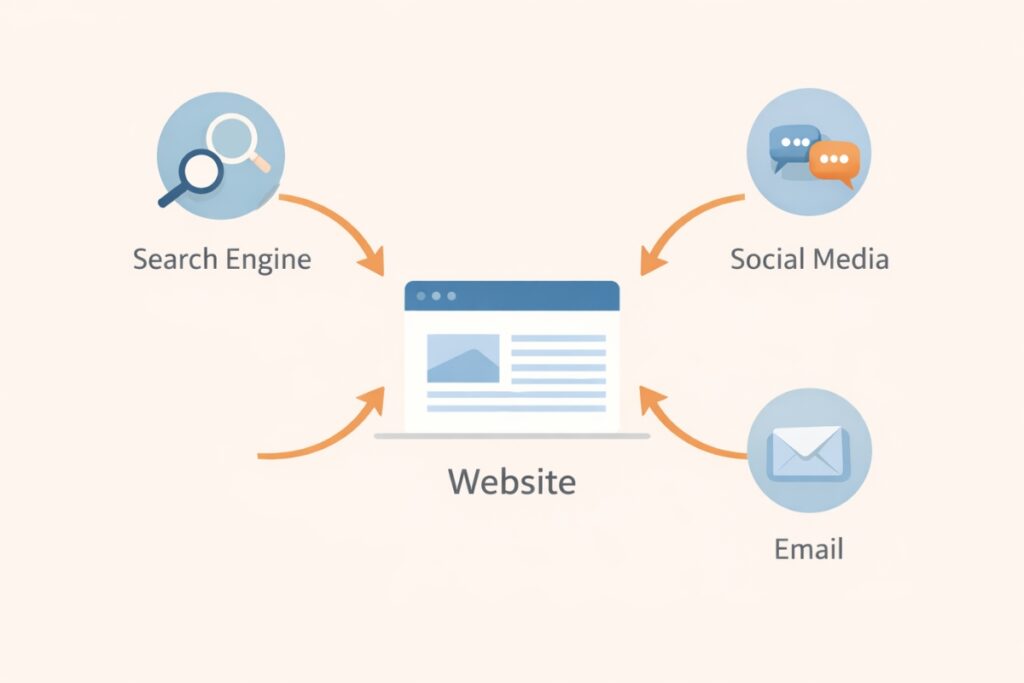
Visibility is the starting point of all digital marketing. If people cannot find content, nothing else in the process works.
Many coaches and consultants struggle here because they expect results before visibility is established. Digital marketing works in order, not all at once.
Traffic
Traffic refers to the number of people who visit a website, blog, or page.
Traffic alone does not guarantee results. The quality of traffic matters more than volume, especially for coaches and consultants who serve a specific type of client.
Different sources of traffic include:
- Search engines
- Social media
- Email links
- Referrals from other sites
Each source behaves differently, but search traffic is often the most consistent long-term.
Organic Traffic
Organic traffic comes from unpaid search results.
This type of traffic is earned by publishing helpful content that answers real questions.
For coaches and consultants, organic traffic supports:
- Long-term visibility
- Trust building
- Higher-quality leads
Resources:
SEO (Search Engine Optimization)
SEO is the process of optimizing content so it appears in search engine results.
For coaches and consultants, SEO usually focuses on:
- Blog articles
- Service pages
- Educational guides
- Long-term visibility
SEO works best when content matches search intent. This means understanding what someone wants to learn, not just what words they type.
SEO is not about tricks. It is about clarity, structure, and relevance.
Keywords
Keywords are the words and phrases people type into search engines.
A primary keyword defines the main topic of a page. Secondary keywords support that topic and help search engines understand context.
Choosing the right keywords helps content reach people who are already looking for solutions, instead of trying to attract everyone.
Keyword Intent
Keyword intent refers to the reason behind a search query. It helps explain what someone is trying to accomplish when they type a phrase into a search engine.
For coaches and consultants, understanding keyword intent helps ensure content matches what a potential client is actually looking for, whether that is information, guidance, or a next step. When intent and content align, search traffic is more likely to result in meaningful engagement.
Content and Authority Terms

Content builds trust before a conversation ever happens.
Content Marketing
Content marketing uses educational content to attract and nurture an audience over time. It helps potential clients understand problems, solutions, and next steps before they ever reach out.
For coaches and consultants, content marketing helps:
- Build trust before sales conversations
- Show expertise through clear explanations
- Create long-term visibility through helpful content
Content marketing works best when it is supported by simple systems like evergreen content, content planning, and a clear content strategy.
Blog
A blog is a section of a website where educational content is published.
Blogging helps coaches and consultants:
- Explain concepts clearly
- Show expertise over time
- Support SEO efforts
- Create long-term visibility
A blog also makes content easier to organize and reuse across email, social media, and lead generation.
→ Learn Blogging: A Beginner’s Guide
Evergreen Content
Evergreen content is content that stays relevant over time instead of becoming outdated quickly. It often answers common questions and supports consistent traffic long after it is published.
Content Strategy
Content strategy is the plan behind what content is created and why. It helps coaches and consultants choose topics that match their audience, services, and business goals.
Content Planning and Content Calendar
Content planning is the process of organizing what content will be created and when. A content calendar is a simple way to keep topics consistent, avoid last-minute posting, and support long-term visibility.
Authority
Authority is the perception of credibility and expertise.
Authority is built through:
- Consistent publishing
- Clear explanations
- Depth over volume
- Helpful, accurate information
Search engines and readers both favor content that demonstrates understanding rather than promotion.
Lead Generation Terms
Visibility alone does not create clients. Lead generation turns attention into opportunity.
Many coaches and consultants build an audience but struggle to convert it into conversations. Leads solve this gap.
Lead
A lead is someone who has shown interest and shared contact information.
This can happen through:
- Email signups
- Contact forms
- Consultation requests
Leads matter more than followers because they allow direct communication. Without leads, interest disappears as soon as someone leaves the page.
Opt-in
An opt-in is the action someone takes to agree to receive communication, usually by submitting their email address through a form.
For coaches and consultants, opt-ins create permission-based relationships. Instead of relying on platforms or algorithms, opt-ins allow direct follow-up through email or messaging, making lead generation more reliable and measurable.
Lead Magnet
A lead magnet is a free resource offered in exchange for an email address.
Common lead magnets include:
- Checklists
- Templates
- Short guides
- Resource lists
Effective lead magnets focus on one clear problem. Broad or generic offers usually perform poorly.
Landing Page
A landing page is a focused page designed for one action, typically an opt-in or sales page.
Unlike a homepage, a landing page removes distractions and focuses on explaning one offer clearly.This ultimately mproves the likelihood that the visitor will sign up or purchase from you.
Conversion and Action Terms
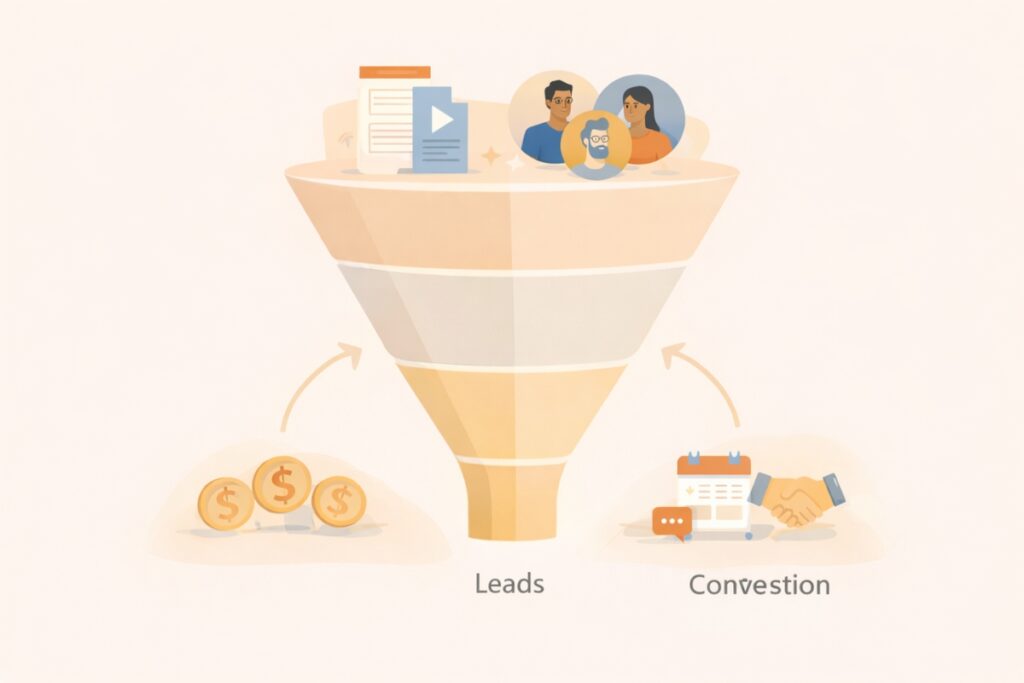
These terms explain how interest turns into measurable results.
Conversions do not always mean sales. They represent progress in the relationship.
Conversion
A conversion occurs when a visitor takes a desired action.
Examples include:
- Signing up for an email list
- Downloading a resource
- Booking a consultation
Some conversions are small steps, while others are major actions. Both matter because they move someone closer to becoming a client.
CTA (Call to Action)
A call to action tells readers what to do next.
Examples:
- Download the guide
- Join the newsletter
- Book a consultation
- Start a blog
Weak or missing CTAs cause visitors to leave without acting. Clear CTAs guide readers forward without pressure.
Funnel
A funnel represents the journey from awareness to action, often structured through different types of content intended to guide your audience toward a sale.
A simple funnel might include:
- Educational content
- Email signup
- Follow-up emails
- A consultation invitation
Funnels create structure and reduce the need to sell immediately.
Resources:
Email and Relationship-Building Terms
Email remains one of the most effective marketing channels for service providers.
Email List
An email list is a group of subscribers who have chosen to receive communication.
Email lists allow direct contact without relying on algorithms or platforms.
Resources:
Nurture Sequence
A nurture sequence is a series of emails designed to build trust over time.
These emails often:
- Educate
- Answer common questions
- Address concerns
- Prepare leads for next steps
Nurture sequences reduce the need for constant selling.
Segmentation
Segmentation organizes subscribers into groups based on behavior or interests.
This allows messages to stay relevant instead of generic.
Performance and Measurement Terms
Understanding performance prevents wasted effort.
Analytics
Analytics track how users interact with content.
Common metrics include:
- Page views
- Time on page
- Conversion rates
Analytics help identify what is working and what needs improvement.
Bounce Rate
Bounce rate measures how many visitors leave after viewing one page.
A high bounce rate may indicate unclear messaging, poor relevance, or slow loading times.
Context matters, especially for informational content.
Engagement
Engagement refers to how users interact with content.
This includes:
- Scrolling
- Clicking
- Reading time
- Email replies
- Inbound Social Media Messages
High engagement signals value to search engines and readers.
Systems and Structure Terms
As marketing grows, structure becomes more important.
Workflow
A workflow is a sequence of steps that guide actions.
Examples include:
- Follow-up processes
- Content publishing routines
- Client onboarding steps
Workflows create consistency and reduce overwhelm.
CRM (Customer Relationship Management)
A CRM stores information about leads and clients.
CRMs help track conversations, follow-ups, and client history, which is useful as volume increases.
Tech Stack
A tech stack is the collection of tools used to run a business.
For early-stage coaches and consultants, simplicity is often more effective than complexity.
How These Terms Work Together
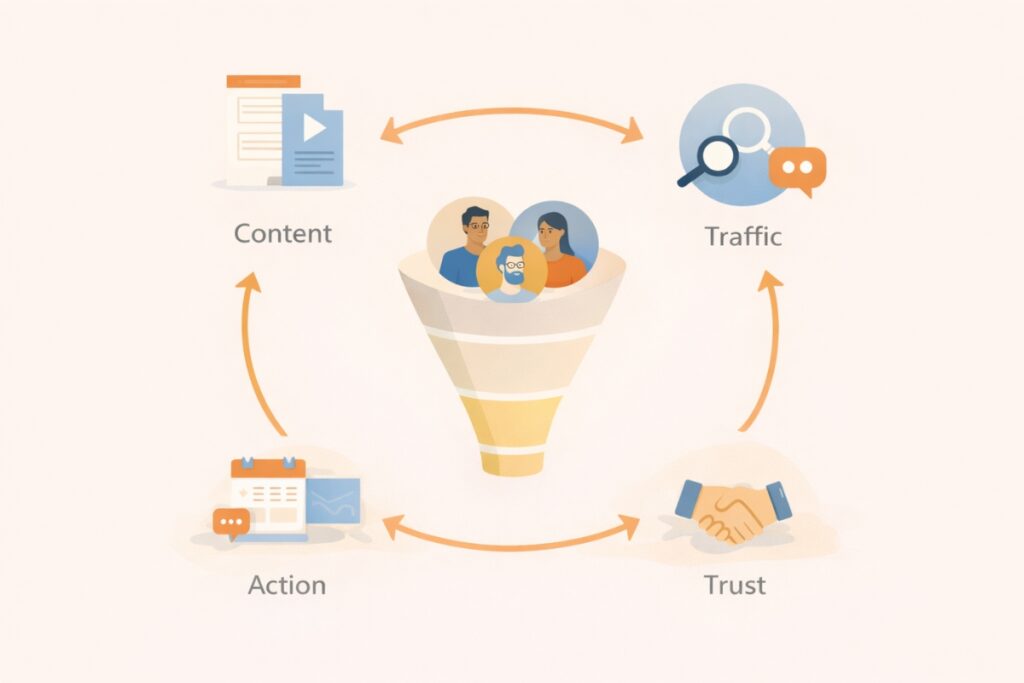
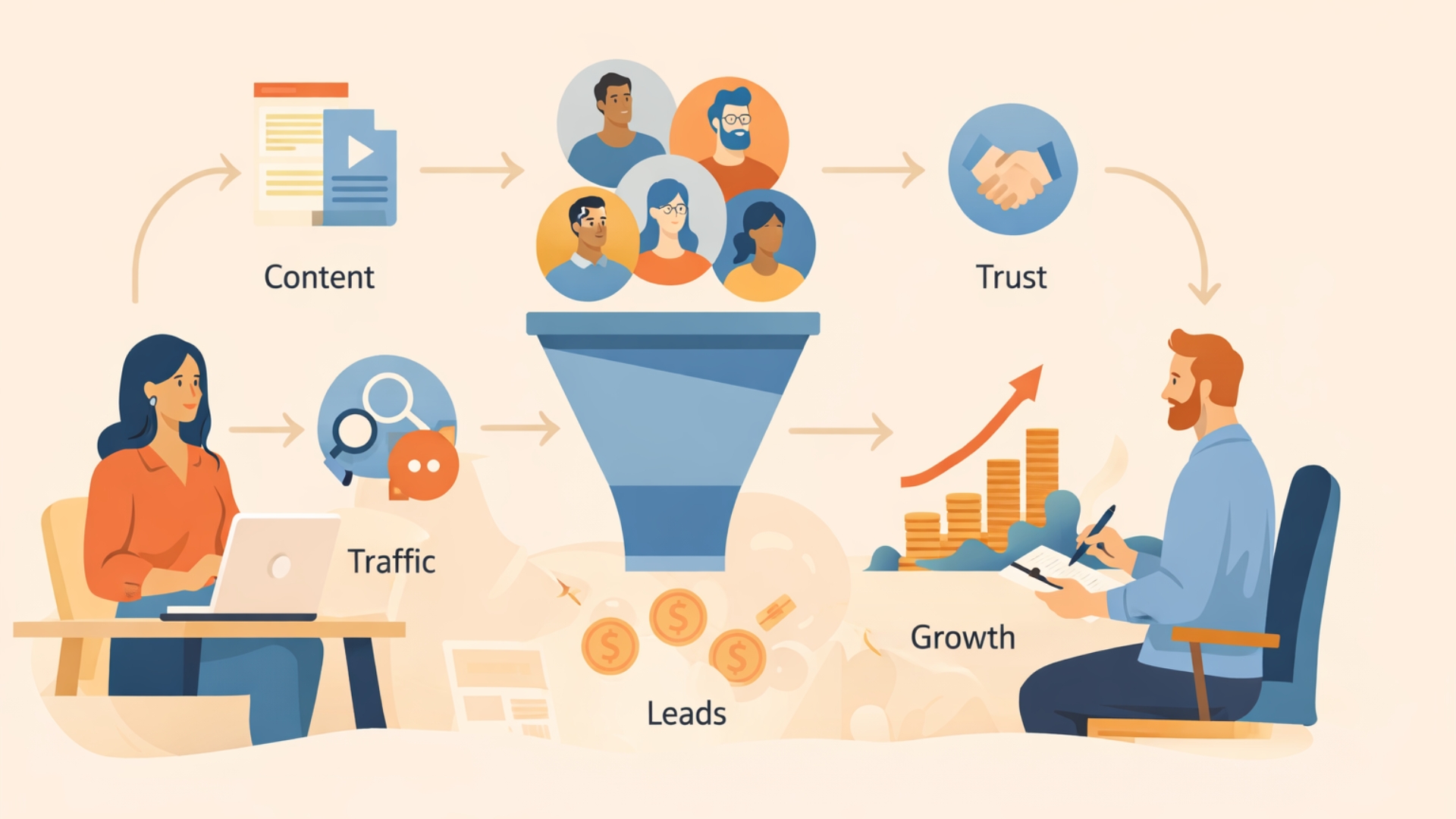
Digital marketing is not about mastering everything at once, but about building a clear content strategy that connects each step.
It is about understanding how each part supports the next step:
- Content creates visibility
- Visibility brings traffic
- Traffic becomes leads
- Leads build trust
- Trust leads to action
Skipping steps often leads to frustration and inconsistent results. When each term is applied in order, marketing feels more manageable and intentional.
Each concept works best when it supports the whole system rather than standing alone.
A Practical Next Step
For coaches and consultants who want long-term visibility, blogging is often the most accessible starting point.
A blog allows concepts like SEO, keywords, content marketing, and lead generation to work together naturally.
Even publishing one clear, helpful article consistently can create momentum over time.
Digital Marketing Terms Coaches and Consultants Should Understand
Digital marketing terms do not need to feel intimidating.
When explained clearly and applied step by step, each concept becomes easier to understand and use. Coaches and consultants benefit most from clarity, consistency, and systems that support growth rather than overwhelm it.
Understanding the language of digital marketing makes every future decision easier, more strategic, and more aligned with real business goals.
Frequently Asked Questions
Digital marketing terms are words and phrases that explain how online marketing works. They cover topics like traffic, content, leads, conversions, and performance.
Understanding digital marketing terms helps coaches and consultants make clearer marketing decisions. It also reduces confusion when creating content or working with marketing support.
Basic SEO knowledge helps content appear in search results over time. Understanding keywords and content structure is usually enough to start.
Blogging remains one of the most effective ways to build visibility and authority. It supports SEO and helps potential clients understand expertise before reaching out.
Traffic refers to people visiting a website or page. Leads are visitors who take action by sharing their contact information.
A funnel is the path someone takes from discovering content to becoming a client. It connects education, trust, and a clear next step.